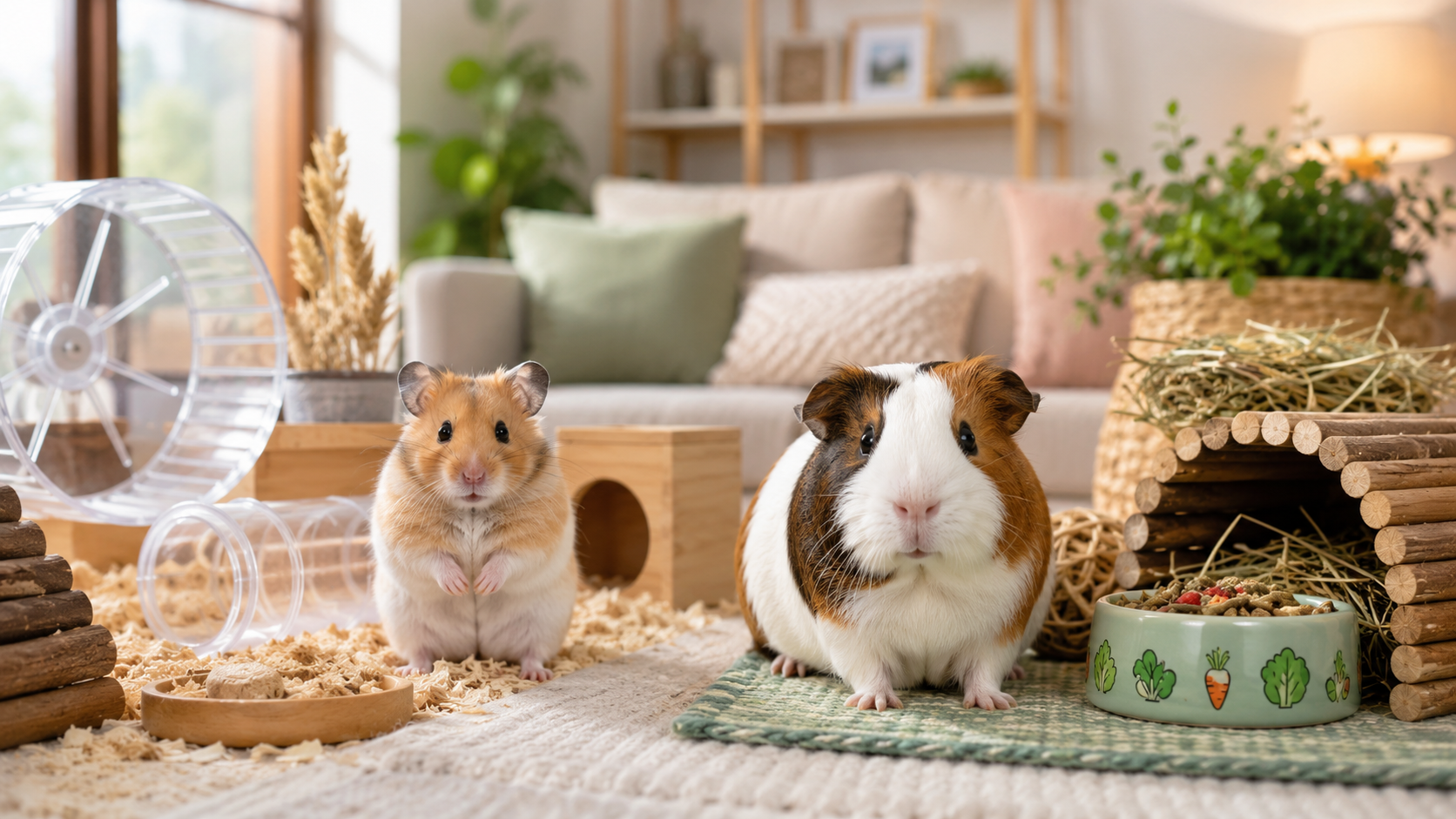
Hamster vs Guinea Pig: Which Small Pet Is Better for You?
Hamsters and guinea pigs are both cute small pets, but they are very different animals. A hamster may look easier because it is tiny, while a guinea pig may seem more social and family-friendly. But the best choice depends on your home, schedule, space, noise tolerance, and how much interaction you want.
If you are trying to choose between a hamster and a guinea pig, this guide will help you compare them in a realistic, beginner-friendly way.
Note: The Pet Room shares general pet lifestyle information. We do not provide veterinary or medical advice. For health concerns, always contact a qualified veterinarian.
Quick Answer: Hamster or Guinea Pig?
A hamster may be better if you want a small pet that needs less space, is interesting to watch, and does not require as much social interaction during the day.
A guinea pig may be better if you want a more social, daytime-active pet that is easier to observe and can be more interactive with gentle handling.
However, neither pet is “zero maintenance.” Both need proper housing, cleaning, enrichment, food, and daily attention.
Hamster vs Guinea Pig: Main Differences
Here is the simple version:
| Category | Hamster | Guinea Pig |
|---|---|---|
| Size | Very small | Larger |
| Space needs | Smaller setup, but still needs a proper enclosure | Needs a larger enclosure |
| Activity time | Often active at night | More active during the day |
| Social needs | Usually kept alone, depending on species | Very social, often kept in pairs |
| Handling | Can be quick and delicate | Usually easier to observe and handle gently |
| Noise | Usually quiet | Can make cute squeaks and sounds |
| Cleaning | Regular cage cleaning | More frequent cleaning due to larger setup |
| Best for | People who like watching small pets | Families wanting a more social small pet |
1. Size and Space Needs
Hamsters are much smaller than guinea pigs, but that does not mean they should live in a tiny cage. A hamster still needs enough space to explore, dig, hide, run on a wheel, and stay active.
Guinea pigs are larger and need a much bigger enclosure. They need floor space, hiding spots, food areas, hay access, and room to move comfortably.
Hamster space
A hamster setup should include:
- a proper enclosure
- safe bedding for digging
- a suitable wheel
- hiding spots
- chew toys
- enrichment items
- food and water
Guinea pig space
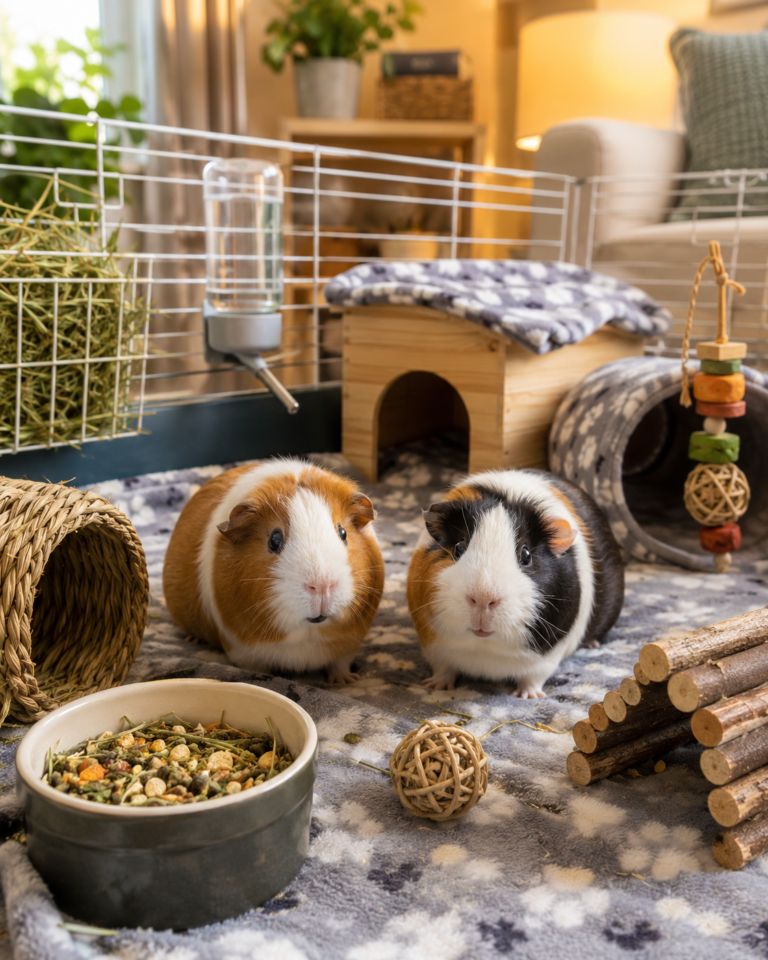
A guinea pig setup should include:
- a roomy enclosure
- soft bedding or fleece liners
- hay area
- hiding spots
- food and water
- safe floor time or playpen space
- enrichment toys
2. Personality and Interaction
Hamsters are often independent and can be fun to watch. They may explore tunnels, run on wheels, store food, dig, and create little routines.
Guinea pigs are usually more social and expressive. They may make sounds, recognize routines, and respond to food, voices, and familiar people.
Hamster personality
Hamsters can be:
- curious
- active
- independent
- quick
- fun to observe
- more private than guinea pigs
Some hamsters enjoy gentle handling, while others prefer to be watched rather than held often.
Guinea pig personality
Guinea pigs can be:
- social
- vocal
- gentle
- expressive
- routine-loving
- easier to observe during the day
They are often more interactive than hamsters, especially when handled gently and consistently.
3. Daytime vs Nighttime Activity
This is one of the biggest differences.
Hamsters are often more active in the evening or at night. This means they may sleep during the day when kids or owners want to interact with them.
Guinea pigs are more active during the day and evening, which can make them easier for families to enjoy.
If you want a pet to watch during the day
A guinea pig may be a better fit.
If you are okay with evening or nighttime activity
A hamster may still work well.
This matters a lot if the pet will live in a bedroom. A hamster wheel at night may bother light sleepers.
4. Handling and Kid-Friendliness
Both hamsters and guinea pigs need gentle handling, but guinea pigs are usually easier for children to observe and interact with under adult supervision.
Hamsters are tiny, quick, and delicate. They may be harder for younger kids to hold safely.
Guinea pigs are larger and often calmer, but they still need careful handling. They should not be squeezed, dropped, chased, or picked up roughly.
Better for younger kids?
Often, a guinea pig may be easier for supervised family interaction.
Better for older kids?
A hamster may be a good option for older children who understand gentle handling and nighttime activity.
Adults should always supervise pet care and handling.
5. Cleaning and Smell
Both pets need regular cleaning, but guinea pigs usually create more mess because they are larger and eat more.
Hamster enclosures need cleaning too, especially bedding, food areas, and bathroom spots. But a hamster setup may be smaller and easier to manage.
Guinea pigs need more frequent cleaning, especially if they live in a large enclosure with fleece, bedding, hay, and food areas.
Hamster cleaning
Typical cleaning needs may include:
- spot cleaning
- replacing dirty bedding
- cleaning food and water areas
- cleaning the wheel and hideouts
- full enclosure refresh as needed
Guinea pig cleaning
Typical cleaning needs may include:
- daily spot cleaning
- hay area cleanup
- bedding or fleece maintenance
- cleaning food and water areas
- regular enclosure cleaning
If you want the lower-cleaning option, a hamster may be easier. If you want a more social pet and accept more cleaning, a guinea pig may be better.
6. Noise Level
Hamsters are usually quiet, but they can make noise at night by running on a wheel, chewing, digging, or moving around their enclosure.
Guinea pigs can make more sounds during the day. They may squeak, whistle, rumble, or make soft noises when excited, hungry, or interacting.
Quieter overall
Hamsters are often quieter, but they may be active when people are sleeping.
More vocal and social
Guinea pigs are usually more expressive and can be fun for families who enjoy pet sounds.
7. Social Needs
Hamsters are often solitary, depending on the species. Many hamsters should be housed alone to avoid fighting or stress.
Guinea pigs are social animals and often do best with another guinea pig companion. This means families should plan for the space, cost, and care of more than one guinea pig if needed.
This is a major difference.
A hamster may be simpler if you want one small pet. A guinea pig may require more commitment because social needs can be more important.
8. Cost and Supplies
Both pets need more than just a cage and food.
Hamster supplies may include:
- proper hamster enclosure
- safe bedding
- hamster wheel
- hideouts
- chew toys
- food bowl
- water bottle or bowl
- sand bath, depending on setup
- enrichment toys
Guinea pig supplies may include:
- large guinea pig enclosure
- hay feeder
- bedding or fleece liners
- hideouts
- food bowl
- water bottle
- chew toys
- playpen
- grooming brush, depending on coat type
Guinea pigs often cost more overall because they need more space, more bedding or liners, more food, and possibly companionship.
9. Best for Apartments
Both hamsters and guinea pigs can work in apartments, but they fit different apartment lifestyles.
A hamster may be better for smaller apartments because the setup is more compact. However, if the enclosure is in a bedroom, nighttime activity can be an issue.
A guinea pig may need more floor space, but it can be a good apartment pet if you have enough room for a proper enclosure and do not mind daily cleaning.
If you live in a small space, you may also like our guide to the best pets for apartments.
10. Best for First-Time Owners
Both can work for beginners, but neither should be chosen without research.
A hamster can be a good first pet for someone who wants a smaller, quieter animal to observe and care for.
A guinea pig can be a good first pet for a family that wants a more social animal and is ready for more space and cleaning.
If this is your first pet, read our guide to the best pets for first-time owners.
11. Best for Kids
For many families, guinea pigs may be easier for kids to enjoy because they are larger, more social, and more active during the day.
Hamsters can still be good pets, especially for older children, but they are delicate, quick, and often active at night.
If you are choosing a pet for a child, see our guide to the best small pets for kids.
Hamster Pros and Cons
Pros
- small and cute
- usually quiet
- compact setup compared with guinea pigs
- fun to watch
- interesting nighttime activity
- often less expensive than guinea pigs
Cons
- often active at night
- tiny and delicate
- may not enjoy frequent handling
- can be hard for young kids to interact with
- still needs proper enrichment and cleaning
Guinea Pig Pros and Cons
Pros
- social and expressive
- active during the day
- easier to observe
- often more interactive than hamsters
- can be good for supervised family care
- cute sounds and routines
Cons
- needs more space
- often needs companionship
- more cleaning
- more supplies
- higher ongoing cost
- still needs gentle handling and adult supervision
Which Pet Is Easier?
If you mean less space and lower daily interaction, a hamster may be easier.
If you mean easier to observe, interact with, and enjoy during the day, a guinea pig may be easier.
So the answer depends on what “easy” means for your home.
Which Pet Is Better for Your Lifestyle?
Choose a hamster if:
- you have limited space
- you want a small pet to observe
- you are okay with nighttime activity
- you want a quieter pet
- you do not need a very interactive animal
Choose a guinea pig if:
- you have more space
- you want a social small pet
- you want daytime activity
- you are ready for more cleaning
- you want a pet that can be more engaging for a family
Final Verdict: Hamster or Guinea Pig?
A hamster may be better for people who want a smaller, quieter, more independent pet with a compact setup.
A guinea pig may be better for families or owners who want a more social, expressive, daytime-active pet and are ready for more space, cleaning, and daily care.
Both can be wonderful small pets. The better choice is the one that fits your home, routine, budget, and expectations.
Do not choose only by cuteness. Choose by lifestyle.
Helpful Small Pet Supplies to Consider
As an Amazon Associate, The Pet Room may earn from qualifying purchases.
When preparing for a hamster or guinea pig, useful supplies may include:
- a proper small pet enclosure
- safe bedding or fleece liners
- hideouts
- chew toys
- food and water bowls
- hay feeder for guinea pigs
- hamster wheel for hamsters
- playpen for supervised floor time
- cleaning supplies
Start with the correct setup before bringing any pet home.
Read Next
- Best Small Pets for Kids: Cute, Friendly, and Beginner-Friendly Options
- Best Pets for First-Time Owners: Beginner-Friendly Companion Animals
- Best Pets for Apartments: Friendly Options for Small Homes
- Rabbit as a Pet: Pros and Cons for Beginners
- Budgie as a Pet: Beginner-Friendly Guide
8 Comments