Bearded Dragon as a Pet: Is This Reptile Right for You?
A bearded dragon as a pet has become one of the most popular reptiles in the world, and it is easy to see why.
With their calm temperament, expressive personality, and surprisingly interactive nature, bearded dragons are often described as one of the most approachable reptiles for people who have never owned one before. They tolerate gentle handling well and can develop a real bond with their owner over time.
But a bearded dragon is not a low-effort pet. Its habitat requires precise heating, lighting, and humidity control, and getting that setup right is the single most important part of responsible ownership.
The Pet Room shares general pet lifestyle information. We do not provide veterinary or medical advice. For health concerns, appetite changes, shedding issues, or any sudden behavior changes, always speak with a qualified reptile veterinarian.
Quick Answer: Is a Bearded Dragon a Good Pet?
A bearded dragon as a pet may be a good fit if you want:
- a calm, generally docile reptile
- a pet that tolerates gentle handling
- an interactive companion with real personality
- a reptile that fits well in a dedicated terrarium space
A bearded dragon may not be ideal if you want:
- a low-cost, low-setup pet
- a pet that needs little daily attention
- a companion you can hold constantly like a cat or dog
- a pet with minimal equipment or maintenance
What Makes Bearded Dragons So Popular?
Bearded dragons have earned a reputation as one of the friendliest, most beginner-approachable reptiles available. Unlike many reptiles that prefer to avoid handling entirely, bearded dragons often tolerate and even seem to enjoy time outside their enclosure, which makes them feel more interactive than most people expect from a reptile.
Their expressive body language, including head bobbing, arm waving, and beard puffing, gives them a personality that many owners find surprisingly engaging compared to other reptile species.
Setting Up the Right Habitat
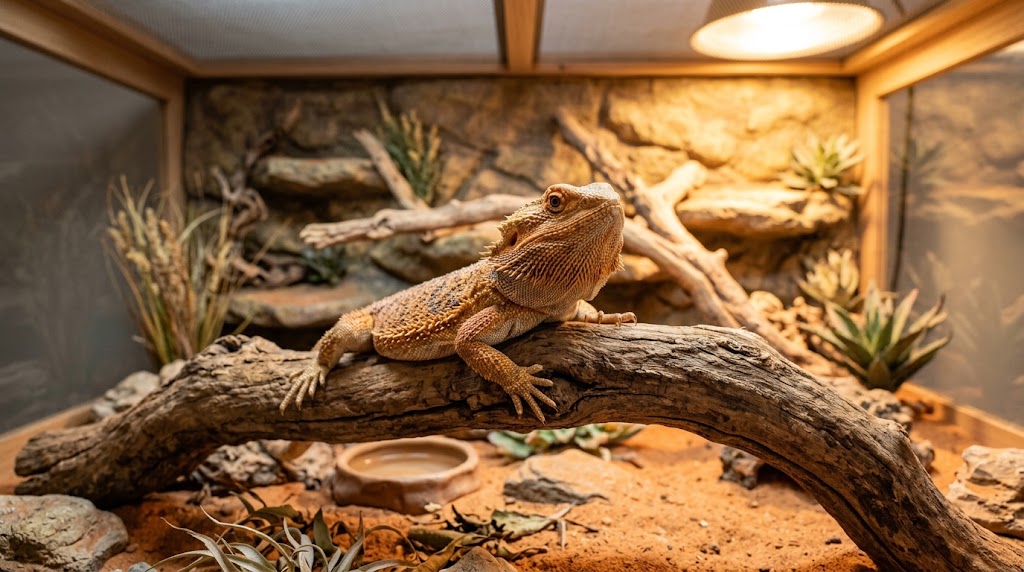
A proper enclosure setup is the foundation of bearded dragon care, and getting it right matters far more than any other single factor.
- a tank of at least 40 gallons for an adult, larger is generally better
- a basking spot reaching roughly 95-110°F, with a cooler side of the tank around 75-85°F
- a UVB light is essential, since bearded dragons need it to properly process calcium
- a consistent day and night light cycle
- substrate, hides, and climbing branches for enrichment
UVB lighting is one of the most commonly overlooked requirements. Without it, bearded dragons can develop serious health issues over time, which is why this is considered a non-negotiable part of setup.
Diet: What Do Bearded Dragons Eat?
Bearded dragons are omnivores, and their diet typically shifts as they grow.
- younger dragons generally eat more insects relative to vegetables
- adults generally shift toward more leafy greens and vegetables
- common feeder insects include crickets and dubia roaches
- calcium and vitamin supplementation is typically needed for proper bone health
- fresh water should be available at all times
Diet needs can vary by age and individual health, so following current, breed-specific feeding guidelines or consulting a reptile veterinarian is worthwhile for new owners.
Handling and Personality
Bearded dragons are known for being one of the more tolerant reptiles when it comes to handling.
- generally calm once acclimated to their owner and environment
- often described as curious and alert
- benefit from gradual, gentle handling starting slowly
- individual personality varies, some are more social than others
Even a generally docile reptile needs patience during the early bonding period. Rushing handling early on can create unnecessary stress for a new bearded dragon.
Daily and Weekly Care Routine
A realistic bearded dragon care routine includes:
- daily feeding appropriate to age
- daily fresh water
- monitoring basking and ambient temperatures
- regular tank cleaning and substrate maintenance
- replacing UVB bulbs on the manufacturer’s recommended schedule, since UVB output degrades over time even if the bulb still lights up
Temperature and lighting should be checked regularly, since equipment can fail or drift out of range without obvious visual signs.
Is a Bearded Dragon Good for Apartments?
Yes, a bearded dragon can be an excellent apartment pet, since its entire habitat is self-contained.
- does not need outdoor space or a yard
- silent, with no barking or vocal disturbances
- fits well in a dedicated corner or room with proper setup
If you are comparing other apartment-friendly pet options, read: Best Pets for Apartments: Friendly Options for Small Homes.
Is a Bearded Dragon Good for First-Time Reptile Owners?
Bearded dragons are commonly recommended as one of the better starter reptiles, but “beginner-friendly” still means real responsibility.
A beginner may do well with this pet if they are ready to:
- invest in proper heating and UVB equipment upfront
- monitor tank temperatures consistently
- commit to a varied, age-appropriate diet
- handle gently and patiently during the bonding period
For a broader look at beginner-friendly pets in general, read: Best Pets for First-Time Owners: Beginner-Friendly Companion Animals.
Common Mistakes New Bearded Dragon Owners Make
- skipping or using an inadequate UVB light
- not monitoring basking and ambient temperatures accurately
- feeding an unbalanced diet without enough variety or supplementation
- choosing a tank that is too small for an adult dragon
- forgetting to replace UVB bulbs on schedule, even if they still appear to work
- handling too much, too soon, before the dragon has acclimated
Best Home Fit for a Bearded Dragon
A bearded dragon may be a great fit for:
- apartment dwellers wanting a quiet, contained pet
- people interested in reptile care and habitat setup
- owners who enjoy a more hands-on, observational companion
- first-time reptile owners ready to learn proper husbandry
A bearded dragon may be a poor fit for:
- people wanting a low-cost, low-setup pet
- owners unwilling to monitor temperature and lighting consistently
- those wanting constant physical affection like a cat or dog
Final Verdict: Is a Bearded Dragon Right for You?
A bearded dragon as a pet can be a rewarding, surprisingly interactive companion for the right home, especially one ready to commit to proper habitat setup and ongoing care.
Choose a bearded dragon if you want a calm, engaging reptile and are ready to invest in the right heating, lighting, and diet from day one.
Choose a different pet if you want something low-cost, low-maintenance, or centered on constant physical affection.
Calm. Curious. A rewarding reptile for owners ready to do it right.