Chinchilla as a Pet: Is This Quiet but High-Care Small Pet Right for You?
A chinchilla looks like a quiet, soft, uncomplicated small pet.
The reality is more specific.
Chinchillas are often relatively quiet, usually most active around dusk and evening, and fascinating to observe. However, they need a cool and dry room, a spacious habitat with vertical movement, safe chewing materials, regular dust baths, patient interaction, and a routine that protects their delicate bodies.
A chinchilla may suit someone who enjoys calm observation and carefully planned pet care. It is less suitable for someone who wants an easy-to-handle pet, frequent cuddling, or a habitat that can remain in a warm room.
The most important question is not whether a chinchilla is adorable. It is whether your home can consistently meet its environmental and daily-care needs.
The Pet Room provides general pet lifestyle information, not veterinary diagnosis or treatment. Contact a qualified exotic-animal veterinarian for health concerns, unusual behavior, appetite changes, injuries, or significant changes in activity.
The Clear Answer: Who Is a Chinchilla Actually Right For?
A chinchilla may be a good match for a patient owner who can maintain a cool indoor environment, provide a roomy habitat, and enjoy interacting with a pet that may prefer exploration over being held.
It may not be the right choice if your home becomes hot or humid, you want a cuddly pet for young children, or you expect a low-effort cage setup.
A Chinchilla May Suit You If You:
- prefer a generally quiet indoor pet;
- are available during evening activity hours;
- enjoy observing natural behavior;
- can maintain a cool, dry room;
- have space for a tall and roomy habitat;
- are comfortable with regular cleaning;
- can provide supervised exercise;
- are patient about building trust.
Think Twice If You:
- want a pet that enjoys frequent restraint or cuddling;
- have a consistently warm home;
- need a very low-maintenance animal;
- expect a small tabletop cage to be enough;
- want a pet for rough or frequent handling;
- cannot access an exotic-animal veterinarian;
- are not ready for a potentially long commitment.
Individual temperament varies. Some chinchillas become comfortable climbing onto their owners or accepting gentle contact, while others may remain cautious about being picked up.
The Most Important Requirement Is the Room, Not the Cage
Many new owners focus first on cage size, toys, or appearance.
For a chinchilla, the surrounding room is equally important.
Their dense coat makes them poorly suited to hot and humid conditions. The enclosure should be kept indoors in a cool, dry, well-ventilated area away from direct sunlight, radiators, warm appliances, and sudden temperature changes.
A fan alone does not cool the air in the same way air conditioning does. In a home that becomes hot during summer, temperature control must be planned before bringing a chinchilla home.
A simple room thermometer near the enclosure can help you notice changing conditions instead of relying only on how the room feels to you.
Heat exposure or unusual lethargy should be treated seriously and discussed promptly with a veterinarian.
What a Practical Chinchilla Habitat Needs
Chinchillas are agile animals that typically benefit from both floor space and safe vertical movement.
A useful habitat is not simply tall. It also needs sensible spacing, solid resting platforms, secure doors, and an arrangement that reduces unsafe falls.
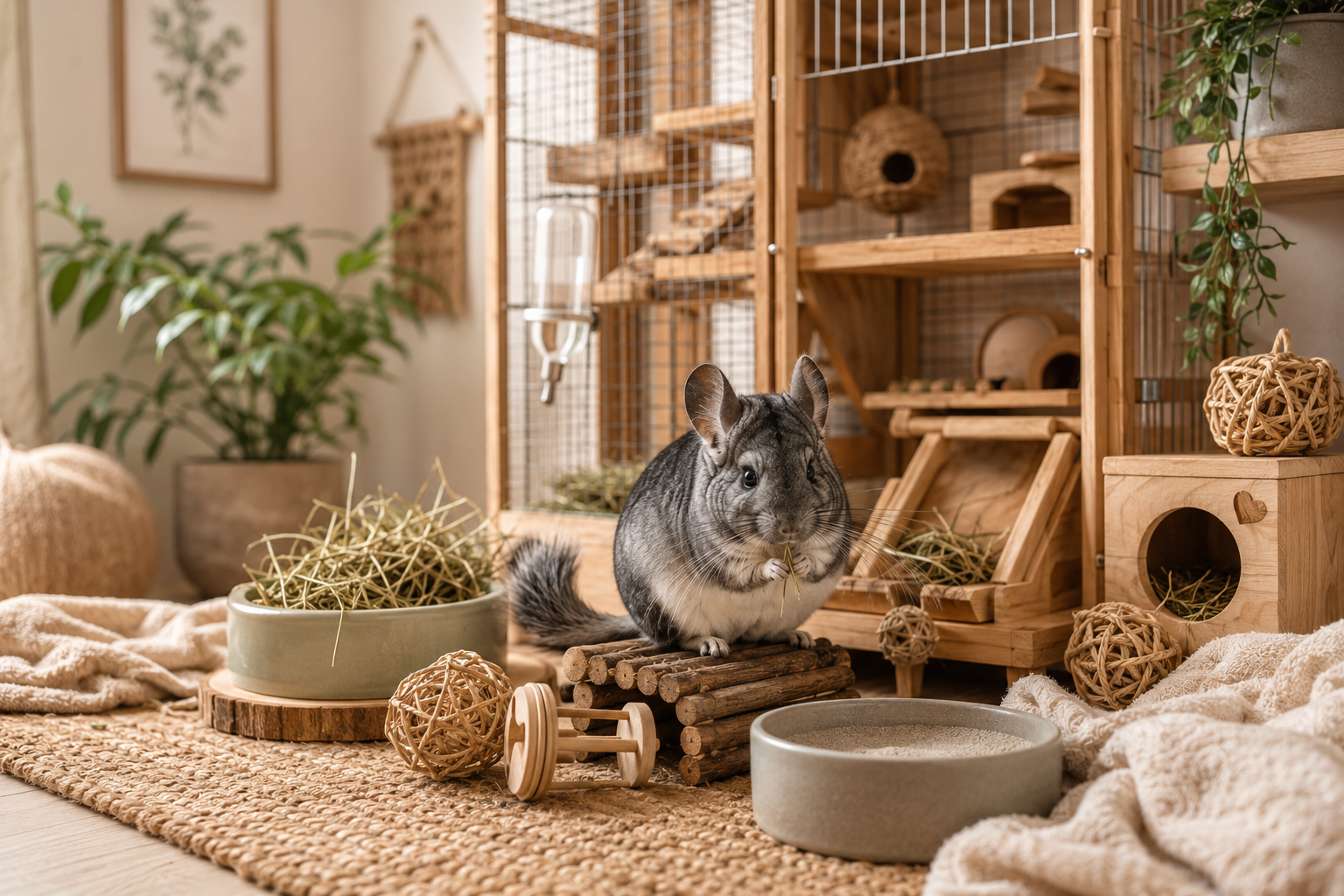
A practical setup may include:
- a spacious, well-ventilated enclosure;
- solid platforms and wooden ledges;
- a secure hide house;
- hay and water stations;
- a pellet bowl;
- safe chew items;
- comfortable resting surfaces;
- an appropriate exercise area;
- easy access for daily cleaning.
Wire flooring should be avoided because it can be uncomfortable and may create injury risks. Platforms should be secure, and large open drops should not dominate the layout.
The enclosure should feel functional rather than crowded.
Essential, Useful, and Optional Setup Items
Not every attractive accessory is equally valuable.
Essential
The basic habitat should prioritize:
- a spacious enclosure;
- solid platforms;
- hideout;
- fresh hay access;
- water;
- appropriate food bowl;
- safe chew materials;
- clean resting area.
Useful
Depending on the enclosure and the individual chinchilla, useful additions may include:
- a safe playpen;
- additional wooden ledges;
- a properly sized exercise wheel designed for chinchillas;
- a ceramic cooling surface;
- a covered dust-bath container;
- storage for hay and cleaning supplies.
Optional
Decorative accessories, extra hammocks, and elaborate themed furniture are optional. They should never replace space, ventilation, temperature control, and safe materials.
A simple habitat that is safe and easy to clean is better than an attractive setup filled with unsuitable objects.
Dust Baths: Necessary Grooming, Not Permanent Decor
Chinchillas maintain their dense coat through dust bathing rather than ordinary water bathing.
Use dust specifically produced for chinchillas and place it in a stable container with enough room for the animal to roll. The bath should be offered as a controlled session and removed afterward so that it does not become a litter area or remain continuously dusty.
Dust-bath frequency can vary according to humidity, coat condition, veterinary guidance, and the individual animal. Too little access may leave the coat oily, while excessive exposure may irritate the skin or eyes.
A practical routine is to:
- use chinchilla-specific dust;
- offer the bath for a limited session;
- supervise the first sessions;
- remove debris after use;
- replace soiled dust;
- keep the bath away from food and water;
- monitor for eye or skin irritation.
Do not use beach sand, playground sand, scented powder, or ordinary household dust.
What Daily Life With a Chinchilla Actually Looks Like
A chinchilla’s care routine is usually concentrated around brief morning checks and more active evening care.
Morning
The morning routine may include:
- refreshing water;
- checking hay and food;
- removing obvious mess;
- checking the room temperature;
- confirming that platforms and doors remain secure.
This does not need to become a long session, but it should happen consistently.
Daytime
Many chinchillas prefer quiet rest during much of the day.
Place the habitat away from loud speakers, constant foot traffic, excited pets, and repeated daytime disturbance. A hideout gives the animal a place to retreat.
Evening
Evening is often the most useful time for:
- supervised exercise;
- gentle interaction;
- a dust-bath session when scheduled;
- checking chew items;
- refreshing enrichment;
- observing normal movement and appetite.
Weekly Care
Weekly tasks may include:
- a deeper enclosure clean;
- washing appropriate fabric items;
- wiping platforms;
- checking wood for damage;
- cleaning bowls and water equipment;
- rotating safe enrichment;
- inspecting the room for hazards.
The daily workload is manageable for many people, but it is not zero.
Interaction: A Chinchilla Is Not a Plush Toy
The appearance of a chinchilla can create the wrong expectation.
Its coat looks extremely soft, but that does not mean the animal will enjoy being held frequently. Many chinchillas prefer to approach on their own terms, climb onto a person, accept brief contact, or explore nearby rather than remain restrained.
Trust-building should focus on:
- slow movements;
- a quiet voice;
- predictable routines;
- allowing the chinchilla to approach;
- short interaction sessions;
- secure support when handling is necessary;
- avoiding chasing inside the habitat;
- respecting attempts to move away.
Young children should not handle a chinchilla without close adult supervision. Their fast movement and delicate body make careless handling risky.
A person who wants frequent cuddling may be happier with a different companion animal.
Noise Level: Quiet Does Not Mean Silent
Chinchillas are often quieter than many birds or dogs, but the habitat can still produce nighttime noise.
Possible sounds include:
- jumping between platforms;
- chewing wood;
- moving bowls;
- running on a wheel;
- rearranging hay;
- brief vocal sounds.
A chinchilla enclosure may be unsuitable beside a light sleeper’s bed, even though the animal is not generally considered loud.
Apartment living can work when the room remains cool and the enclosure is positioned so that evening activity does not disturb neighbors or household members.
For more small-home considerations, read Best Pets for Apartments.
Apartment, House, and Yard Fit
Apartment
A chinchilla can fit an apartment when there is:
- enough vertical and floor space for the habitat;
- reliable cooling;
- a quiet resting location;
- room for supervised exercise;
- storage for hay, dust, and cleaning supplies.
Dust and hay can create some mess, so easy-to-clean flooring around the habitat is useful.
House
A house may offer more placement options, but the same temperature and safety requirements apply. A spare room can work well when it stays cool, dry, quiet, and secure.
Yard
A yard does not make a chinchilla setup better.
Chinchillas should not be treated as outdoor pets. Outdoor heat, humidity, predators, insects, plants, escape risks, and rapid weather changes make an indoor controlled environment the safer choice.
Feeding Basics Without Turning This Into a Diet Plan
A typical basic feeding setup centers on grass hay, chinchilla-appropriate pellets, and fresh water.
Keep the approach simple:
- provide consistent access to clean hay;
- use food intended for chinchillas;
- keep water fresh;
- clean bowls and bottles regularly;
- introduce changes cautiously;
- avoid offering random human snacks;
- ask an exotic veterinarian about quantities, treats, or individual dietary needs.
This article does not provide a medical or therapeutic diet. Appetite changes, drooling, difficulty eating, weight changes, or unusual stool should be discussed with a veterinarian.
Common Beginner Mistakes That Matter
Choosing the Pet Before Solving Summer Heat
The habitat should not be purchased before you know how the room will remain cool during the hottest part of the year.
Buying a Tall but Narrow Cage
Height alone does not create a good habitat. The chinchilla still needs usable movement space, safe platforms, and sensible spacing.
Expecting Frequent Cuddling
A chinchilla may become trusting without enjoying prolonged holding.
Leaving the Dust Bath Inside Permanently
The bath can become dirty, excessively dusty, or used as a litter area.
Using Unsafe Chew Materials
Chinchillas investigate with their teeth. Plastic, painted items, unknown wood, fabric threads, and small detachable parts require careful evaluation.
Allowing Unsupervised Free Roaming
Electrical cords, furniture gaps, toxic plants, foam, plastic, and escape routes can turn an ordinary room into a hazardous one.
Disturbing Daytime Rest
Repeatedly waking the animal for interaction can conflict with its natural routine.
Assuming Quiet Means Easy
Noise level and care level are different. A quiet animal can still have demanding environmental needs.
The Real Cost Is in the Setup and Environment
It is more useful to think in categories than to rely on a single price estimate, because costs vary by region, product quality, housing, and veterinary access.
Initial Costs May Include:
- spacious enclosure;
- platforms and hideout;
- bowls and water system;
- carrier;
- thermometer;
- dust-bath container;
- safe chew items;
- playpen or secured exercise area;
- initial veterinary examination.
Ongoing Costs May Include:
- hay;
- pellets;
- chinchilla dust;
- replacement chew materials;
- cleaning supplies;
- electricity for temperature control;
- routine and unexpected veterinary care.
The cheapest cage or accessory is not automatically the least expensive long-term option. Poorly designed items may need replacing or may make cleaning and safety more difficult.
A Five-Question Home Test
Before deciding, answer these questions honestly:
- Can the chosen room remain reliably cool and dry throughout summer?
- Do I have space for a genuinely useful habitat rather than a small decorative cage?
- Am I comfortable with an evening-active pet that may not enjoy frequent holding?
- Can I maintain daily checks, regular cleaning, dust baths, and supervised exercise?
- Can I locate a qualified exotic-animal veterinarian before an emergency happens?
A “no” to the first question is a strong reason to delay the decision.
Several “no” answers suggest that another pet may fit your current home better.
Two Products That Solve Real Setup Problems
The most useful purchases are not necessarily the most decorative.
A stable, enclosed dust-bath house can reduce mess and provide enough room for rolling. A digital room thermometer helps the owner monitor one of the most important environmental conditions.
Everything else should be selected around the actual habitat and the chinchilla’s needs rather than purchased as a large generic starter bundle.
Final Decision: Who Should Choose a Chinchilla?
A chinchilla may suit a patient adult or family that wants a relatively quiet, evening-active companion and is willing to control the room environment carefully.
It is a particularly good match for someone who enjoys observing natural behavior, arranging a thoughtful habitat, and building trust without forcing physical affection.
It is not a strong match for a hot home without reliable cooling, a child wanting a cuddly pet, or an owner looking for minimal cleaning and simple cage care.
The deciding factor is not enthusiasm.
It is whether you can provide the same cool, safe, structured environment every day—including during summer, busy weeks, holidays, and veterinary emergencies.
Read Next
- Ferret as a Pet: Is This Playful, Curious Animal Right for You?
- Is a Hedgehog a Good Pet? What Beginners Should Know Before Getting One
- Guinea Pig Cage Setup for Beginners: What Your Pet Really Needs
- Hamster vs Rabbit: Which Small Pet Fits Your Home Better?
- Best Pets for Apartments
- Best Pets for First-Time Owners