Poodle as a Pet: Is This Smart Family Dog Right for You?
The Poodle is one of the most recognizable dog breeds in the world, but it is often misunderstood.
Many people see the elegant coat, stylish grooming, and graceful appearance and assume the Poodle is only a fancy show dog. In reality, Poodles are smart, active, affectionate dogs that often make wonderful family companions for the right home.
A Poodle is not just a pretty haircut.
This breed is intelligent, trainable, people-focused, playful, and often very bonded to its family. Poodles can be great for families, apartment owners, active homes, and first-time owners who are ready for grooming, training, daily attention, and mental stimulation.
But a Poodle is not the right dog for everyone.
If you want a very low-effort dog, dislike grooming, do not enjoy training, or want a pet that can be ignored for long hours, a Poodle may be more demanding than you expect.
The Pet Room shares general pet lifestyle information. We do not provide veterinary or medical advice. For health concerns, grooming issues, behavior changes, or breed-specific care questions, always speak with a qualified veterinarian, professional groomer, or responsible breeder.
What Is a Poodle?
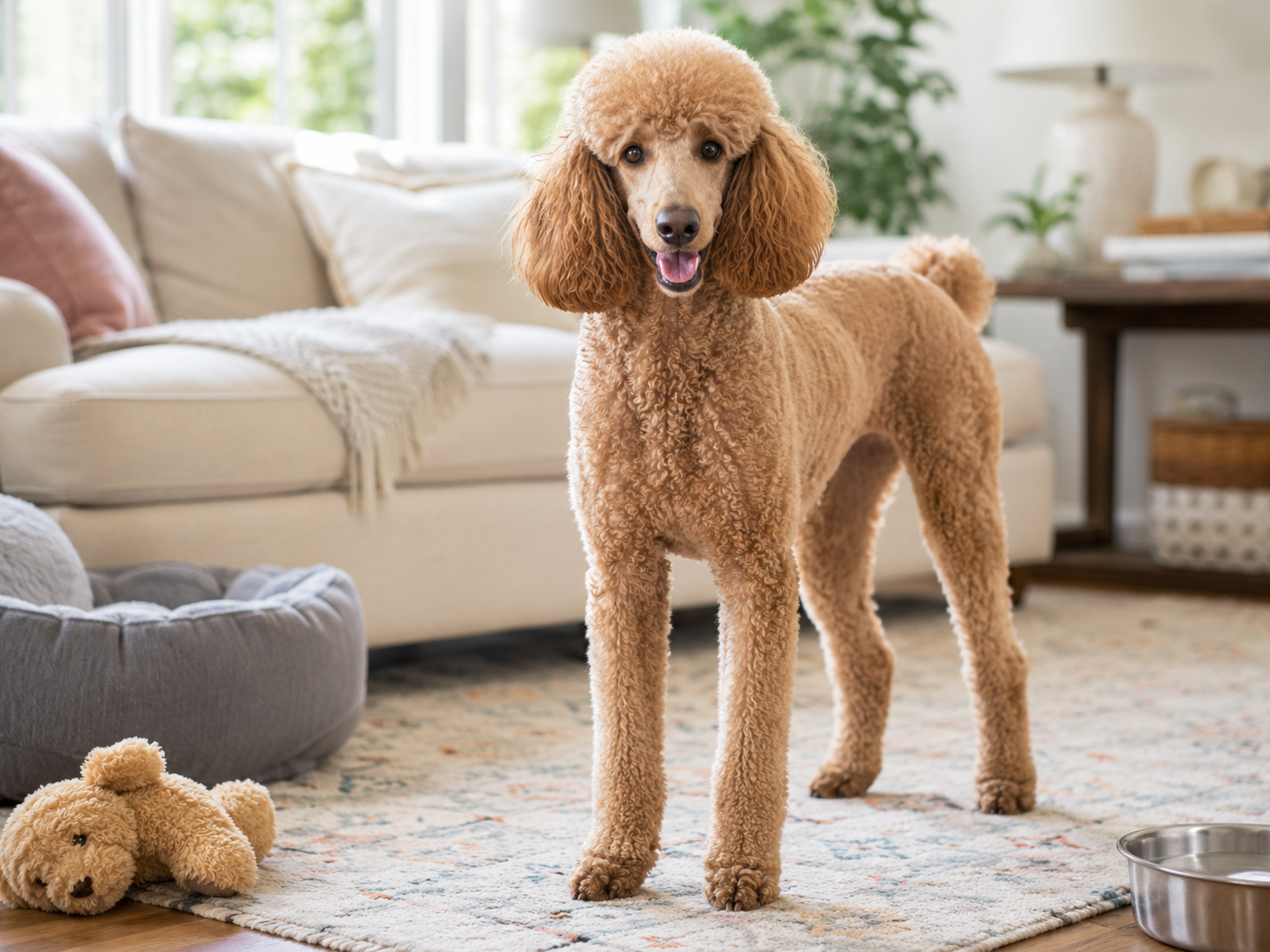
The Poodle is a highly intelligent dog breed known for its curly coat, elegant appearance, athletic ability, and strong trainability.
Poodles come in different size varieties, commonly including Toy, Miniature, and Standard. This means the breed can fit different homes and lifestyles, but the basic personality traits are often similar: smart, alert, people-focused, and eager to interact.
A Poodle is usually:
- intelligent
- trainable
- affectionate
- playful
- alert
- people-focused
- active
- elegant
- loyal
- grooming-heavy
Poodles can be excellent companions, but they need more than a cute haircut and a cozy bed.
They need structure, activity, grooming, enrichment, and attention.
If you are comparing beginner-friendly pets, read this too: Best Pets for First-Time Owners
Poodle Personality
The Poodle’s personality is one of the main reasons people love the breed.
Many Poodles are bright, affectionate, responsive, and very connected to their owners. They often enjoy learning, playing, watching what is happening, and being included in family routines.
A Poodle may be:
- smart
- loyal
- playful
- sensitive
- affectionate
- alert
- eager to learn
- people-oriented
- sometimes demanding
- active indoors and outdoors
Because Poodles are intelligent, they usually need mental stimulation. A bored Poodle may create its own entertainment, which can lead to barking, restlessness, chewing, or attention-seeking behavior.
This is a breed that often enjoys having a job, even if that job is learning tricks, playing games, or solving puzzle toys.
Is a Poodle Good for Families?
A Poodle can be a great family dog in the right home.
Many Poodles are affectionate, playful, and trainable. They often enjoy being part of daily family life and can bond strongly with their people.
A Poodle may be good for families who want:
- a smart dog
- a trainable companion
- an affectionate family pet
- a playful indoor dog
- a dog that enjoys learning
- a companion with moderate to high energy
- a dog that can join daily routines
As with any dog, children should be taught how to interact respectfully. A Poodle should not be teased, chased, pulled, or treated like a toy.
Toy and Miniature Poodles may need extra care around young children because of their smaller size. Standard Poodles may be sturdier but still need respectful handling and training.
Is a Poodle Good for Apartments?
A Poodle can live well in an apartment, especially Toy and Miniature Poodles, as long as daily needs are met.
Apartment-friendly does not mean low-effort. Poodles still need exercise, training, grooming, playtime, and mental stimulation.
A Poodle may fit apartment living if you can provide:
- daily walks
- indoor play
- puzzle toys
- training games
- regular grooming
- enough attention
- a calm routine
- enrichment
Standard Poodles can also live in smaller homes if they receive enough exercise and activity, but they need more space and movement than smaller varieties.
For more apartment-friendly pet ideas, read: Best Pets for Apartments
Poodle Energy Level
Poodles are often more active than people expect.
They are not usually lazy lap dogs. Even small Poodles can be energetic, playful, and mentally busy.
A Poodle may enjoy:
- daily walks
- training sessions
- fetch
- puzzle toys
- sniffing games
- gentle agility-style play
- indoor games
- learning tricks
- family activity
- interactive toys
Energy level can vary depending on size, age, personality, and routine, but many Poodles need both physical exercise and mental stimulation.
A tired Poodle is often a better-behaved Poodle.
Does a Poodle Need a Lot of Attention?
Yes, many Poodles need regular attention and companionship.
Poodles are often people-focused dogs that enjoy being included in daily life. They may not be happiest in homes where they are ignored or left alone for long periods every day.
A Poodle may not be ideal if:
- everyone is away all day
- you want a very independent dog
- you dislike training
- you do not want grooming work
- you want a couch potato
- you do not want to provide enrichment
- you want a dog with very low daily needs
Poodles often do best in homes where people enjoy interacting with their dog.
This breed usually wants more than food, water, and a place to sleep.
Poodle Grooming Needs
Grooming is one of the biggest things to understand before choosing a Poodle.
Poodles have curly coats that require regular maintenance. Their coat may be low-shedding compared with many breeds, but it is not low-maintenance.
Basic Poodle grooming may include:
- regular brushing
- combing
- coat trimming
- professional grooming
- checking ears
- trimming nails
- keeping paws neat
- bathing when appropriate
- keeping the face clean
- maintaining the coat style
Many Poodle owners use professional groomers on a regular schedule. This should be part of the budget before choosing the breed.
If you want a dog that needs almost no grooming, a Poodle may not be the best fit.
If you want help choosing grooming tools, read this guide: Best Dog Brushes for Shedding: What Beginners Should Know
Does a Poodle Shed?
Poodles are often described as low-shedding dogs.
This is one reason many people are interested in the breed. However, low-shedding does not mean no grooming. Loose hair can become trapped in the curly coat, which makes brushing and coat care very important.
To manage a Poodle coat, you may need:
- a slicker brush
- a grooming comb
- detangling spray
- regular trims
- professional grooming
- grooming wipes
- washable blankets
- patience with coat maintenance
A Poodle may leave less loose hair around the home than many breeds, but the trade-off is grooming effort.
Low-shedding does not mean low-care.
Poodle Training
Poodles are usually very trainable.
This breed is intelligent, responsive, and often eager to learn. Many Poodles enjoy training because it gives them attention, structure, and mental stimulation.
Good training goals include:
- name recognition
- recall basics
- leash walking
- polite greetings
- house training
- basic cues
- calm alone-time practice
- crate comfort if used properly
- trick training
- impulse control
- grooming tolerance
Because Poodles are smart, they may learn both good habits and bad habits quickly.
Consistency matters.
Short, positive training sessions usually work better than harsh or repetitive training.
Poodle Barking
Poodles can be vocal.
They are alert, intelligent dogs and may bark when they hear noises, see movement outside, feel bored, want attention, or become overstimulated.
A Poodle may bark when:
- someone comes to the door
- it hears outside sounds
- it wants attention
- it is bored
- it has too much energy
- it sees people or animals
- it feels under-stimulated
Routine, daily activity, enrichment, and training can help reduce unnecessary barking.
A bored smart dog often becomes a noisy smart dog.
Poodle With Other Pets
Many Poodles can live well with other pets when introduced carefully.
Because Poodles are intelligent and social, they may do well with other dogs or cats if the match is calm and introductions are gradual.
A Poodle may do well with:
- other friendly dogs
- respectful cats
- supervised multi-pet homes
- calm introductions
- pets with compatible energy
As always, personality matters. Some Poodles are very social, while others may be more selective.
Introductions should be slow and supervised.
What Kind of Home Is Best for a Poodle?
A Poodle is usually best for a home that wants an intelligent, interactive companion.
This breed may be a great match if you want:
- a smart dog
- a trainable companion
- a family-friendly pet
- a low-shedding breed
- a dog that enjoys learning
- an affectionate indoor companion
- a dog that likes routine
- an active but manageable pet
A Poodle may not be best if you want:
- a very low-effort dog
- a dog with minimal grooming needs
- a couch potato
- a very independent pet
- a dog that can be ignored most of the day
- a dog that needs no training
- a no-maintenance coat
Poodles are beautiful, but they need work.
The right home will enjoy that work.
Useful Products for a Poodle
- slicker brush
- grooming comb
- detangling spray
- dog shampoo
- grooming wipes
- dog bed
- puzzle toys
- training treats
- harness
- leash
- slow feeder bowl
- treat pouch
- interactive toys
- washable blanket
Common Mistakes New Poodle Owners Make
Poodles are wonderful dogs, but beginners can still misunderstand the breed.
Common mistakes include:
- choosing the breed only for its appearance
- assuming low-shedding means low-grooming
- skipping professional grooming
- not brushing enough
- not providing mental stimulation
- underestimating energy level
- skipping training
- leaving the dog alone too long
- allowing barking habits to grow
- treating the dog like decoration
A Poodle may look fancy, but it is an active, intelligent companion.
Fancy does not mean effortless.
Is a Poodle Right for First-Time Owners?
A Poodle can be a good choice for first-time owners if the owner is ready for grooming, training, and daily interaction.
This breed is smart and trainable, which can be helpful for beginners. But that intelligence also means a Poodle needs structure and enrichment.
A Poodle may be good for first-time owners who can provide:
- regular grooming
- daily walks
- training
- mental stimulation
- attention
- indoor family life
- routine
- patience
- professional grooming when needed
A Poodle may be harder for first-time owners who want a low-maintenance dog or dislike grooming and training.
The breed can be beginner-friendly for the right beginner.
Final Thoughts: Is a Poodle Right for You?
The Poodle is a smart, affectionate, elegant dog that can make a wonderful family companion.
This breed is often loyal, trainable, playful, and deeply connected to its people. It can fit many homes, including families, active homes, and some apartments, especially when its exercise and grooming needs are met.
But a Poodle is not the right dog for everyone.
It needs grooming, training, daily attention, mental stimulation, playtime, and an owner who enjoys an interactive dog.
If you want a clever companion and you are ready for coat care, routine, and enrichment, a Poodle may be a beautiful match.
A Poodle is more than a fancy haircut.
It is a smart, sensitive, devoted companion.
Read Next
- Best Pets for First-Time Owners
- Best Pets for Apartments
- Shih Tzu as a Pet: Is This Small Companion Dog Right for You?
- French Bulldog as a Pet: Is This Small Apartment Dog Right for You?
- Cavalier King Charles Spaniel as a Pet: Is This Sweet Small Dog Right for You?
- Best Dog Brushes for Shedding: What Beginners Should Know