Tortoise as a Pet: Is This Long-Term Companion Right for Your Home?
A tortoise looks like one of the easiest pets in the world.
It moves slowly. It does not bark. It does not need walks. It does not ask for attention every five minutes.
But that calm appearance can be misleading.
A tortoise is not a simple “put it in a box and feed it lettuce” pet. It needs the right enclosure, space to move, proper heat and light, fresh water, a suitable diet, regular cleaning, and long-term planning. Depending on the species, a tortoise can also become a very long commitment.
The real question is not whether a tortoise is cute or calm.
The better question is: can your home support the setup this animal actually needs for years?
This guide explains what beginners should understand before getting a tortoise, including home fit, daily routine, space, interaction level, common mistakes, and who should think twice before choosing one.
The Pet Room provides general pet lifestyle information, not veterinary diagnosis or treatment. Tortoise care varies by species. For diet, lighting, temperature, shell concerns, appetite changes, unusual behavior, or health questions, speak with a qualified reptile veterinarian.
Quick Answer: Is a Tortoise a Good Pet?
A tortoise can be a good pet for a patient owner who wants a quiet, observation-based companion and is willing to build a proper habitat.
A tortoise may suit you if you:
- want a quiet pet;
- enjoy calm observation more than cuddling;
- have space for a proper enclosure;
- can provide species-appropriate heat and UVB lighting;
- like predictable daily routines;
- are prepared for long-term care;
- can clean and maintain the habitat regularly;
- can access a reptile veterinarian.
A tortoise may not suit you if you:
- want a cuddly pet;
- expect low-maintenance care;
- have very little space;
- want quick daily interaction;
- move home often;
- cannot set up correct lighting and temperature;
- are buying on impulse;
- want a short-term pet.
A tortoise is usually quiet, but quiet does not mean easy.
The Biggest Beginner Surprise: Setup Matters More Than Personality
Many people focus on the tortoise’s personality first.
Will it be friendly? Will it recognize me? Will it enjoy attention?
Those questions matter, but the first priority is the setup.
A tortoise’s daily life depends heavily on its environment. A poor enclosure can affect movement, feeding, hydration, activity, and general comfort. A good setup gives the tortoise space, warmth, light, shelter, water, and a stable routine.
Before choosing a tortoise, you need to understand:
- the species you are considering;
- adult size;
- enclosure size;
- indoor versus outdoor needs;
- heat and lighting requirements;
- diet type;
- substrate needs;
- humidity and temperature needs;
- long-term housing plan.
Different tortoise species have different requirements. A setup that suits one species may not suit another.
That is why “tortoise” is not specific enough when planning care.
Best For / Think Twice If
A Tortoise May Be Best For:
- patient owners;
- quiet homes;
- people who like routine;
- adults or responsible families;
- owners with enough space;
- people who enjoy habitat setup;
- homes that can support reptile heating and lighting;
- long-term planners.
Think Twice If:
- you want a pet for frequent handling;
- you want a very social companion;
- you have no room for a proper enclosure;
- you expect cheap, simple care;
- you dislike habitat cleaning;
- your home cannot support heat and UVB equipment;
- you cannot plan for long-term ownership;
- you want a pet mainly for young children.
A tortoise can be fascinating, but it is not a hands-on pet like a dog or a social small pet.
Apartment, House, and Yard Fit
Apartment Fit
A tortoise can live in an apartment only if the species and setup fit the space.
The main challenge is enclosure size. A small tank or tiny plastic box is not a good long-term plan. Many tortoises need much more floor space than beginners expect.
An apartment setup may work if:
- you choose a smaller suitable species;
- you have room for a proper enclosure;
- you can control heat and light safely;
- the enclosure is easy to clean;
- the room is calm and stable;
- you can store food, substrate, and equipment.
It may not work if your apartment is very small or if you cannot safely manage lighting, heating, and floor space.
For more small-home pet ideas, read Best Pets for Apartments.
House Fit
A house may offer more options, especially if you can dedicate a room, indoor enclosure, or safe outdoor area depending on species and climate.
A house can make tortoise care easier if you have:
- stable indoor space;
- safe electrical setup for lighting;
- room for a larger enclosure;
- easy-clean flooring around the habitat;
- a secure outdoor area when appropriate;
- storage for supplies.
Still, a larger home does not automatically mean better care. The habitat still needs to match the species.
Yard Fit
Some tortoise species may benefit from outdoor access in suitable climates, but outdoor housing is not simple.
A safe outdoor area must consider:
- escape-proof fencing;
- predator protection;
- shade;
- shelter;
- safe plants;
- temperature;
- weather;
- water access;
- toxic plant removal.
A yard should not be treated as an easy shortcut. Outdoor time needs planning and supervision.
Daily Time and Interaction Level
A tortoise usually does not need constant attention, but it does need consistent care.
Daily care may include:
- checking heat and lighting;
- refreshing water;
- offering appropriate food;
- removing waste;
- checking the enclosure;
- observing activity and appetite;
- making sure the tortoise can access shelter and basking areas.
Interaction is usually gentle and limited. A tortoise may become familiar with its owner’s routine, but it is not a cuddly pet. Many tortoises do better when handled only when necessary and observed calmly.
If you want a pet that seeks affection, plays with toys, or enjoys daily cuddling, another animal may be a better fit.
The Daily Routine: What Care Really Looks Like
A realistic tortoise routine is simple but not effortless.
Morning
Check that the lights and heat source are working correctly. Refresh water, offer food appropriate for the species, and make sure the enclosure is clean enough for the day.
Midday
Observe normal behavior. A healthy routine often includes moving around, basking, eating, resting, and exploring the enclosure.
Evening
Remove leftover fresh food, check water again, and make sure the enclosure is secure. Depending on your setup, lighting may follow a timer.
Weekly
Do a deeper clean, check substrate, wash dishes, inspect hides, review the enclosure layout, and check equipment. Replace or adjust items that are damaged, unsafe, or no longer practical.
A tortoise routine rewards consistency.
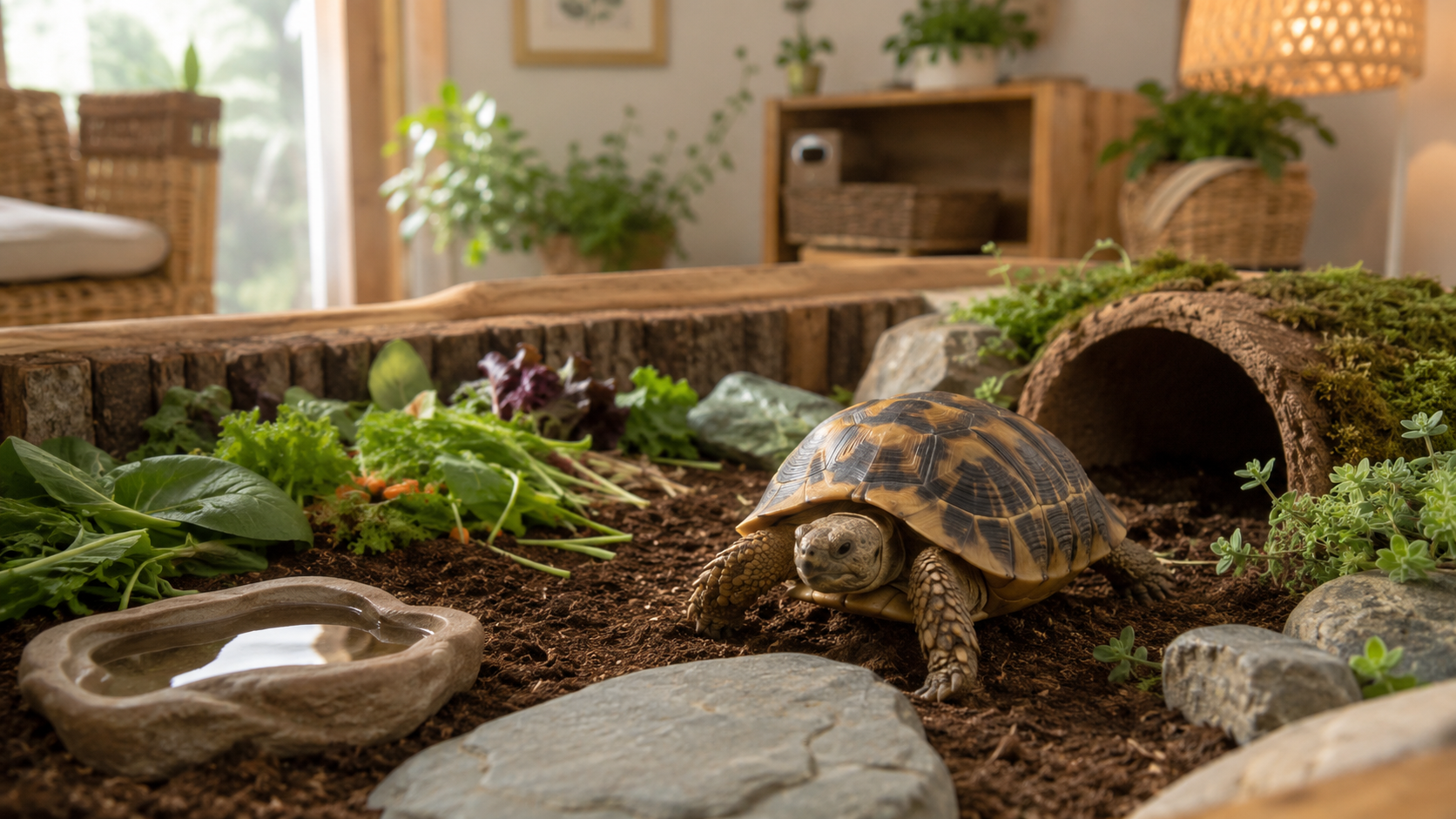
Setup Essentials: What a Tortoise Habitat Really Needs
The right setup depends on species, but a beginner should usually plan around these core needs:
- spacious enclosure;
- safe substrate;
- basking area;
- UVB lighting if kept indoors;
- temperature gradient;
- hide or shelter;
- shallow water dish;
- food area;
- easy-clean layout;
- secure boundaries;
- species-appropriate humidity and ventilation.
The habitat should allow the tortoise to choose between warmer and cooler areas, rest in a shelter, access water, and move naturally.
A small decorative enclosure may look tidy, but it usually does not solve the animal’s real needs.
Food Basics Without Making Medical Diet Claims
Tortoise diets vary by species.
Some species need high-fiber grasses and weeds. Others may have different plant-based needs. The safest approach is to research the exact species and ask a reptile veterinarian about diet.
General beginner principles:
- do not rely on iceberg lettuce as the main diet;
- do not feed random human food;
- use species-appropriate greens, grasses, weeds, or prepared foods;
- keep water available;
- avoid sudden diet changes;
- remove spoiled food;
- research safe and unsafe plants.
This article does not provide a medical diet plan. If a tortoise stops eating, loses weight, has abnormal droppings, or seems inactive in an unusual way, contact a reptile veterinarian.
Common Beginner Mistakes
Mistake 1: Buying on Impulse
A tortoise may live for many years, and some species become much larger than expected. Research should happen before purchase, not after.
Mistake 2: Using a Tiny Enclosure
Small tanks and decorative boxes rarely provide enough floor space or proper environmental zones.
Mistake 3: Skipping UVB and Heat Planning
Indoor tortoises need appropriate lighting and heat. Guessing is not enough.
Mistake 4: Choosing the Wrong Species for the Home
A tortoise that becomes large may not suit a small apartment. Species choice matters.
Mistake 5: Feeding a Poor Diet
A bowl of random lettuce is not a complete plan. Diet should match the species.
Mistake 6: Ignoring Long-Term Commitment
A tortoise is not a temporary pet. Future housing, moving, travel, and veterinary care need planning.
Mistake 7: Expecting Cuddles
Tortoises are usually better for observation than frequent handling.
Mistake 8: Making Outdoor Time Unsafe
Outdoor space must be secure, protected, and suitable. A garden alone is not automatically safe.
Simple Home Decision Checklist
Before choosing a tortoise, ask:
- Which tortoise species am I considering?
- How large will it become as an adult?
- Can I provide enough space long term?
- Can I set up proper heat and UVB lighting?
- Can I provide the right diet for that species?
- Can I clean and maintain the enclosure consistently?
- Can I find a qualified reptile veterinarian?
- Do I have a plan if I move home?
- Am I prepared for a long-term commitment?
- Do I want an observation pet rather than a cuddly pet?
If you cannot answer these clearly, wait before buying.
Real-Life Scenario: Who Should Choose a Tortoise?
A tortoise may be a good match for someone who enjoys routine, habitat care, and calm observation.
For example, it may suit a patient adult who has space for a dedicated enclosure, likes learning about reptile care, and understands that proper lighting and temperature are part of daily life.
It may not suit a busy person who wants a pet that needs little setup, a child who wants something to cuddle, or someone who may move often and cannot guarantee long-term housing.
The right owner will find tortoise care rewarding because the routine feels meaningful.
The wrong owner may become frustrated because the animal is less interactive than expected and the setup requires more planning than expected.
Two Products That Actually Help
The most useful purchases are not the most decorative ones.
A proper tortoise enclosure helps solve the biggest practical problem: space. A UVB and heat monitoring setup helps solve another major issue: creating a stable indoor environment.
Products should be chosen around the species, enclosure size, and veterinary guidance—not because they look attractive in a starter bundle.
Large Tortoise Enclosure
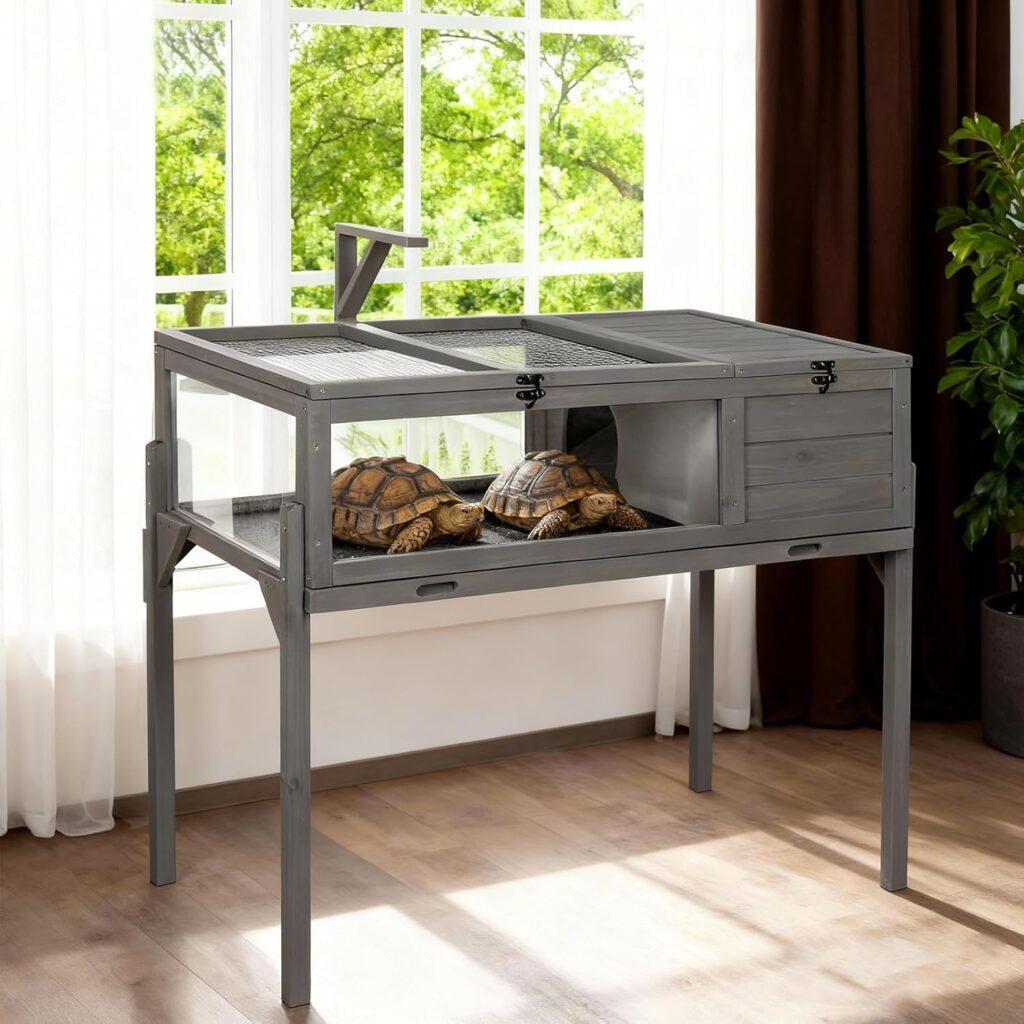
A spacious enclosure gives a tortoise room to walk, explore, bask, hide, and use different temperature zones.
Reptile UVB + Heat Monitoring Setup
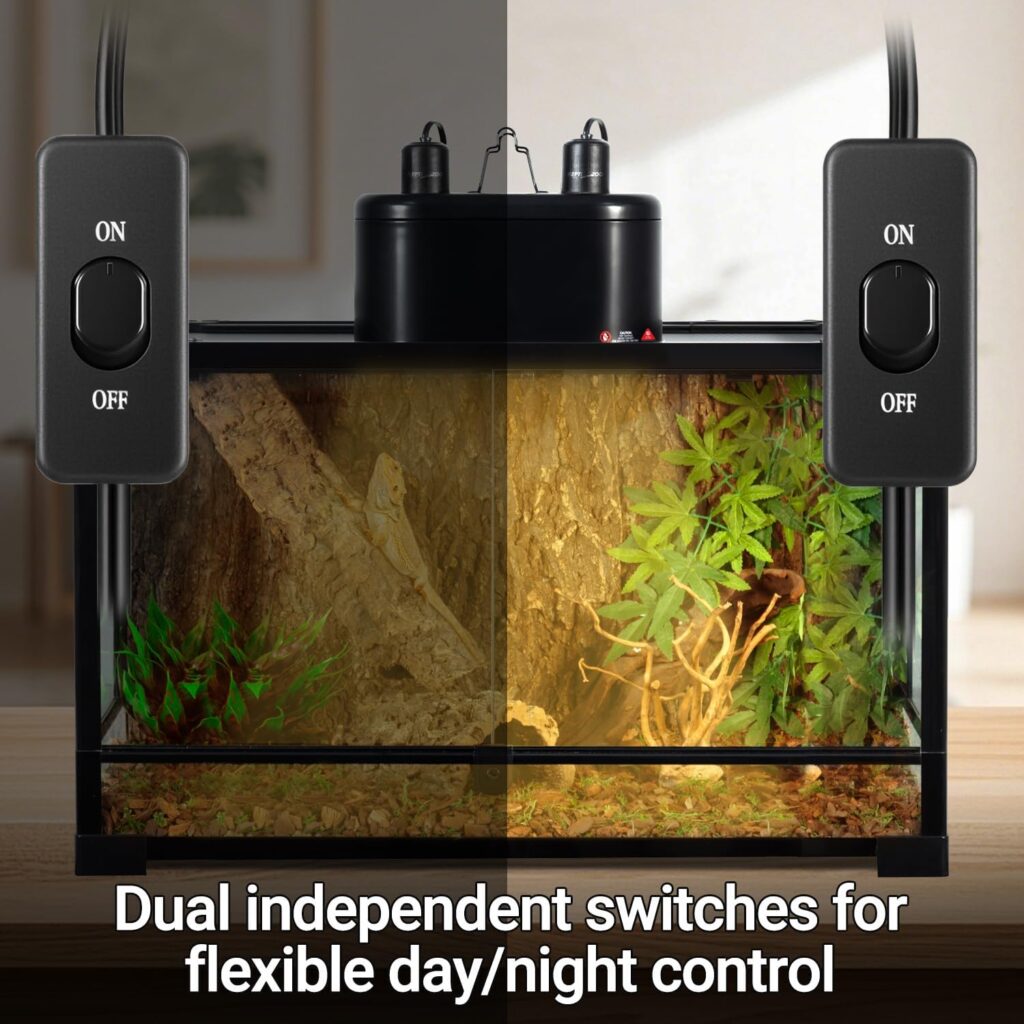
Helps you monitor the indoor habitat so the tortoise has a safer basking area and a more reliable temperature gradient.
Final Decision: Is a Tortoise Right for Your Home?
A tortoise can be a calm, fascinating, long-term companion for the right owner.
It is best for someone who has space, patience, a stable routine, and the willingness to learn species-specific care before bringing the animal home.
It is not ideal for someone who wants a cuddly pet, quick interaction, minimal cleaning, or a simple decorative enclosure.
The biggest beginner mistake is assuming a tortoise is low maintenance because it moves slowly.
A better way to think about it is this:
A tortoise is quiet, but its setup is serious.
If your home can support the right space, lighting, temperature, diet, and long-term care, a tortoise may be a rewarding choice. If not, it is better to wait than to bring home an animal whose needs you cannot meet consistently.
Read Next
- Chinchilla as a Pet: Is This Quiet but High-Care Small Pet Right for You?
- Ferret as a Pet: Is This Playful, Curious Animal Right for You?
- Is a Hedgehog a Good Pet? What Beginners Should Know Before Getting One
- Best Pets for Apartments
- Best Pets for First-Time Owners
- Guinea Pig Cage Setup for Beginners: What Your Pet Really Needs