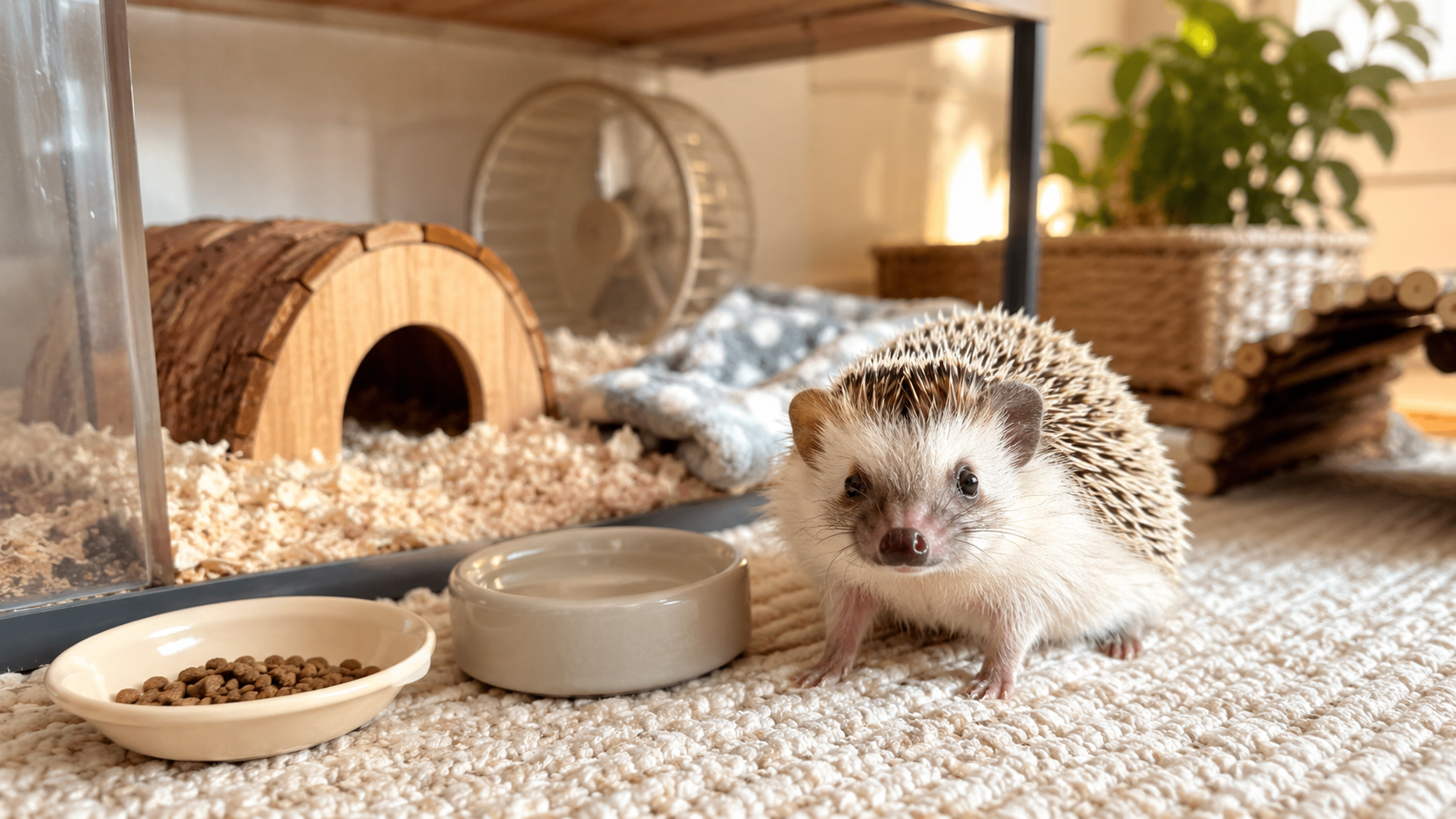
Is a Hedgehog a Good Pet? What Beginners Should Know Before Getting One
A hedgehog looks like a tiny, adorable, low-maintenance pet.
Small body. Cute face. Quiet personality. Cozy little habitat. It is easy to see why many people become interested in keeping one as an unusual companion animal.
But a hedgehog is not the right pet for every home.
Hedgehogs are nocturnal, independent, sensitive to stress, and usually need patient handling before they feel comfortable with people. They are not the same as a hamster, guinea pig, rabbit, cat, or dog. They have their own routine, space needs, temperature needs, cleaning requirements, and personality.
So before getting one, the real question is not only:
“Is a hedgehog cute?”
The better question is:
“Does a hedgehog fit my lifestyle?”
This beginner-friendly guide explains what hedgehogs are like as pets, who they may be good for, who should probably avoid them, what setup they need, and what beginners should think about before bringing one home.
The Pet Room shares general pet lifestyle information. We do not provide veterinary or medical advice. For health concerns, injury, appetite changes, unusual behavior, skin issues, weight changes, or any species-specific medical questions, always contact an experienced exotic pet veterinarian.
First: Are Hedgehogs Legal Where You Live?
Before buying or adopting a hedgehog, check your local laws.
Hedgehog ownership is allowed in some places but restricted or illegal in others. Rules can vary by country, state, city, or local area.
Do this before buying supplies:
- check local pet ownership laws
- check state or regional exotic pet rules
- ask a local exotic pet veterinarian
- contact local animal services if unsure
- buy only from ethical, legal sources
Do not assume hedgehogs are legal everywhere just because you see them online.
This is one of the most important steps before getting any unusual pet.
Quick Hedgehog Pet Checklist
A hedgehog may be a good fit if you can provide:
- a spacious enclosure
- warm, stable room temperature
- safe bedding
- solid-surface exercise wheel
- hideout
- food and water bowls
- quiet daytime sleep
- evening or nighttime interaction
- patient handling
- regular cleaning
- low-stress environment
- access to an exotic pet veterinarian
A hedgehog is not usually a good fit if you want:
- a cuddly pet all day
- a playful daytime companion
- an easy pet for young children
- a pet that loves being held immediately
- a pet with no special setup needs
- a pet that can live in a tiny cage
- a pet you can ignore for days
A hedgehog can be wonderful for the right person, but it requires preparation.
What Is a Pet Hedgehog Like?
Pet hedgehogs are usually quiet, independent, and most active at night.
They may spend much of the day sleeping in a hideout. In the evening or at night, they may explore, use their wheel, eat, drink, and become more active.
Many hedgehogs are shy at first. Some may curl into a ball, huff, click, or raise their quills when nervous. This does not automatically mean they are “mean.” It often means they feel unsure or stressed.
With time, gentle handling, and a consistent routine, some hedgehogs become more comfortable with their owners.
But they are not usually “pick up and cuddle anytime” pets.
If you want an animal that instantly wants attention, a hedgehog may feel disappointing.
If you enjoy observing, building trust slowly, and keeping a calm routine, a hedgehog may be more interesting.
Best For / Not Ideal If
A Hedgehog May Be Best For:
- patient owners
- quiet homes
- adults or responsible older kids with supervision
- people who enjoy evening routines
- owners who like observation pets
- people comfortable with regular cleaning
- people willing to research unusual pet care
- homes that can maintain a warm environment
A Hedgehog May Not Be Ideal If:
- you want a cuddly daytime pet
- you want a very social pet
- you have loud, chaotic rooms
- you want a pet for young children to handle often
- you cannot provide a warm room
- you do not want to clean regularly
- you cannot access an exotic pet veterinarian
- hedgehogs are not legal in your area
This is why hedgehogs should not be impulse pets.
They look simple, but their needs are specific.
Hedgehog Personality: Cute, Shy, and Independent
A hedgehog’s personality can be very different from what beginners expect.
Some hedgehogs become curious and comfortable. Others remain shy or prefer limited handling. Even friendly hedgehogs may still want routine, quiet, and personal space.
Common hedgehog personality traits include:
- shy at first
- curious at night
- independent
- sensitive to sudden changes
- easily startled by noise
- not naturally cuddly
- routine-oriented
- more active after dark
This makes hedgehogs better for owners who enjoy patience and observation.
A hedgehog may not run to greet you like a dog or climb onto your lap like a friendly cat. But watching one explore, sniff, use a wheel, and slowly build trust can be rewarding.
If you prefer a more social small pet, you may also want to compare with other beginner pets here: Best Pets for First-Time Owners
Hedgehog Daily Routine Example
A hedgehog’s schedule is one of the biggest lifestyle differences.
Because hedgehogs are nocturnal, your interaction time will usually happen later in the day.
Morning
Your hedgehog is likely sleeping. Keep the room calm and avoid unnecessary disturbance.
Afternoon
Still mostly rest time. Check that the room temperature is stable and the habitat looks normal.
Evening
Refresh water, offer food, spot-clean the habitat, and prepare enrichment.
Night
This is when your hedgehog may be most active. Wheel time, gentle handling, supervised exploration, and routine interaction usually fit better here.
Weekly
Do deeper cleaning, wash bowls, check bedding, inspect the wheel, and review supplies.
If your daily schedule is very busy at night or you only want daytime interaction, a hedgehog may not be the best match.
Hedgehog Habitat Basics
A hedgehog needs more than a tiny cage.
A good habitat should give enough space to move, hide, explore, and use a proper exercise wheel.
Basic habitat needs include:
- spacious enclosure
- secure lid or safe walls
- solid floor
- safe bedding
- hideout
- exercise wheel
- food bowl
- water bowl
- warm room
- low-stress location
- enrichment items
- easy-clean layout
Avoid cramped, decorative cages that do not provide real floor space.
A hedgehog needs a functional home, not just a cute display.
Enclosure Size and Layout
Hedgehogs need floor space more than height.
They are not climbing pets in the same way some animals are. A wide, safe enclosure is usually better than a tall, narrow one.
A good layout should include:
- open walking area
- wheel space
- hideout area
- food and water station
- soft bedding area
- easy cleaning access
- safe enrichment zone
The habitat should be escape-resistant and placed in a quiet part of the home.
Avoid placing the enclosure:
- in a drafty room
- near loud speakers
- near heavy foot traffic
- in direct harsh sunlight
- near air conditioning vents
- near strong smells
- in a cold area
A quiet, warm, stable room is usually better.
Temperature and Comfort
Hedgehogs need a warm, stable environment.
A room that is too cold can be dangerous for them, so temperature is something beginners must take seriously. Many owners use a thermometer to monitor the habitat area and make sure the room stays comfortable.
Do not guess based only on how the room feels to you.
A hedgehog habitat should be monitored carefully, especially during winter, air conditioning use, or sudden weather changes.
If you are unsure about the right temperature setup or heating options, ask an exotic pet veterinarian or experienced hedgehog care professional before bringing one home.
Exercise Wheel: A Must-Have
A safe exercise wheel is one of the most important hedgehog supplies.
Hedgehogs can be very active at night, and a wheel gives them a way to move inside the habitat.
Look for:
- solid surface wheel
- appropriate size
- stable base
- easy cleaning
- no wire mesh running surface
- quiet design if possible
Avoid wire wheels or unsafe designs where feet can get caught.
A hedgehog without enough movement opportunity may become bored or stressed.
Bedding and Hideouts
Hedgehogs need bedding that is safe, absorbent, and comfortable.
They also need a place to hide and sleep during the day. A hideout helps them feel secure and gives them a private resting area.
Useful habitat items include:
- paper-based bedding
- safe aspen bedding
- fleece liners if maintained properly
- wooden or plastic hideout
- tunnel
- cozy sleep area
- soft nesting material made for small pets
Avoid strong-scented bedding and dusty materials.
Also avoid cedar and pine shavings unless a veterinarian or experienced care professional specifically confirms a safe option, because strong aromatic woods are often avoided for small pets.
Food and Water Setup
A hedgehog should have fresh water available and a stable food area.
Many owners use heavy ceramic bowls because they are harder to tip over. Some use water bottles, but bowls are often easier for many animals to drink from naturally.
A simple setup may include:
- heavy water bowl
- food bowl
- easy-clean feeding area
- fresh water daily
- measured food portions
- regular bowl cleaning
Do not leave old food or dirty water sitting for long periods.
For diet details, speak with an exotic pet veterinarian or experienced hedgehog care professional. Hedgehog nutrition can be specific, and this article is not a medical diet plan.
Cleaning Needs
Hedgehogs are small, but they are not zero-maintenance.
They need regular cleaning.
A basic routine may include:
- daily spot cleaning
- fresh water daily
- food bowl cleaning
- wheel cleaning
- bedding checks
- weekly deeper habitat cleaning
- washing bowls and accessories
- odor control through routine, not perfumes
The exercise wheel often needs frequent cleaning because hedgehogs may use it heavily at night.
If you dislike regular cleaning, a hedgehog may not be the best pet for you.
Handling: Patience Matters
Handling a hedgehog takes patience.
Many hedgehogs are nervous at first. They may curl up, huff, or keep their quills raised. Beginners should not force interaction too quickly.
A better approach:
- move slowly
- keep your voice calm
- handle in a quiet room
- use short sessions at first
- let the hedgehog smell you
- be consistent
- avoid sudden grabbing
- respect stress signals
- build trust over time
Some hedgehogs become more relaxed with routine, but not every hedgehog becomes highly social.
That is important to understand before getting one.
Hedgehog vs Other Small Pets
A hedgehog is very different from more common small pets.
| Pet | Usually Best For | Daily Personality |
|---|---|---|
| Hedgehog | Patient owners, quiet homes, evening routines | Nocturnal, shy, independent |
| Hamster | Small pet owners, night activity, compact setup | Active at night, quick, independent |
| Guinea Pig | Social small pet owners, gentle interaction | Vocal, social, needs companionship |
| Rabbit | More space, longer commitment, daily interaction | Curious, active, needs room |
| Budgie | Bird lovers, social sound, cage setup | Social, vocal, active |
| Fish | Calm visual pet, routine care | Observation-based, low handling |
If you want a comparison-style article later, hamster vs rabbit or hedgehog vs hamster could be useful future topics.
For now, the key point is simple: a hedgehog is not a starter pet for everyone just because it is small.
Common Beginner Mistakes
Avoid these beginner hedgehog mistakes:
- getting one before checking legality
- buying a habitat that is too small
- skipping temperature monitoring
- using an unsafe wheel
- expecting instant cuddles
- disturbing sleep during the day
- placing the habitat in a noisy room
- using unsafe bedding
- not cleaning the wheel often
- not researching exotic vet access
- buying supplies after bringing the pet home
- assuming “small” means “easy”
A hedgehog needs preparation before it comes home.
Product Suggestions for Hedgehog Owners
Useful product ideas:
- spacious hedgehog enclosure
- solid-surface exercise wheel
- hideout
- paper-based bedding
- safe aspen bedding
- fleece liners
- heavy ceramic food bowl
- heavy water bowl
- thermometer
- small pet playpen
- tunnels
- enrichment toys
- cleaning spray
- soft blanket
- habitat cleaning tools
Real-Life Decision Help: Should You Get a Hedgehog?
Ask yourself these questions before getting one:
- Are hedgehogs legal where I live?
- Can I access an exotic pet veterinarian?
- Can I keep the habitat warm and stable?
- Do I have enough space for a proper enclosure?
- Am I okay with a nocturnal pet?
- Can I be patient with handling?
- Do I want an observation pet, not a cuddly daytime pet?
- Can I clean regularly?
- Can I buy supplies before bringing the pet home?
- Am I prepared for a pet with specific care needs?
If most answers are yes, a hedgehog may be worth researching further.
If several answers are no, another pet may fit your home better.
Final Thoughts: Is a Hedgehog a Good Pet?
A hedgehog can be a good pet for the right owner.
It can be quiet, unique, interesting, and rewarding to care for. But it is not a simple “cute little pet” that fits every lifestyle.
Hedgehogs need a proper habitat, warm environment, safe wheel, daily routine, regular cleaning, patient handling, and legal ownership.
They are best for people who enjoy calm routines, quiet observation, and building trust slowly.
They are not ideal for people who want an instantly cuddly pet, a daytime playmate, or a low-effort animal.
Before getting a hedgehog, research carefully, prepare the habitat first, check your local laws, and make sure you can access appropriate veterinary care.
A hedgehog may be small, but it is still a real commitment.
Read Next
- Best Pets for First-Time Owners
- Best Pets for Apartments
- Hamster vs Guinea Pig: Which Small Pet Is Right for You?
- Best Hamster Toys: Keep Your Hamster Busy and Happy
- Budgie Cage Setup for Beginners: What Your Pet Bird Really Needs
- First Fish Tank Mistakes: What Beginners Should Avoid Before Setting Up an Aquarium




One Comment