Axolotl as a Pet: Is This Unique Aquatic Animal Right for You?
An axolotl can look almost unreal at first glance.
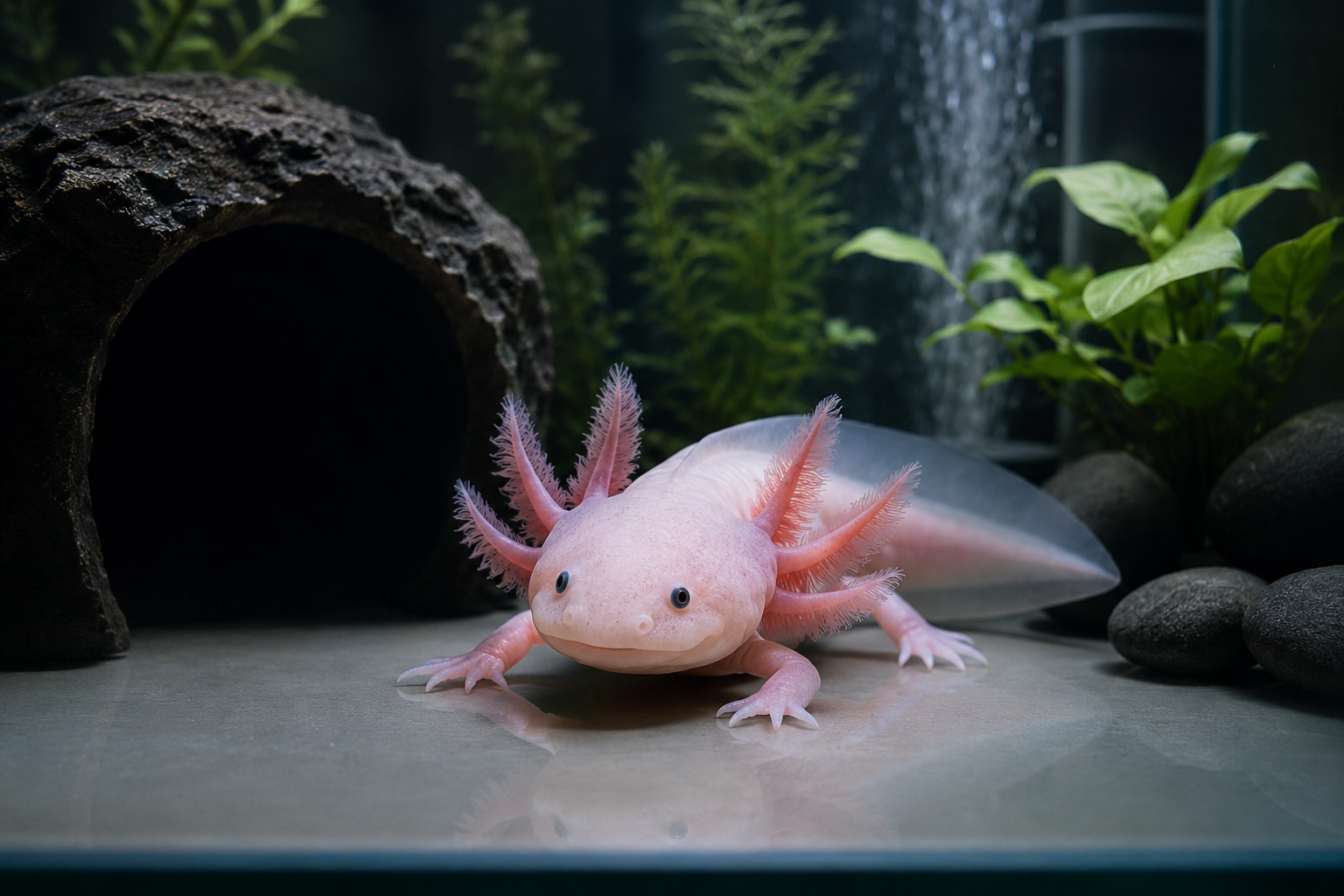
With its soft pink body, feathery gills, calm expression, and tiny underwater-dragon appearance, the axolotl is one of the most fascinating pets in the aquarium world.
But an axolotl is not a decoration. It is not a fish. It is not a cuddly pet. And it is not the easiest aquatic animal for a casual beginner.
An axolotl is an aquatic salamander that needs cold, clean, stable water every day. The right owner will enjoy observing it, maintaining its aquarium, testing water regularly, and keeping the setup calm and safe.
If you want a beautiful, unusual pet to watch in a quiet aquarium, an axolotl may be a rewarding choice.
If you want a hands-on pet, a warm-room aquarium, a community tank, or a low-maintenance setup, an axolotl is probably not the right fit.
The Pet Room shares general pet lifestyle information. We do not provide veterinary or medical advice. For health concerns, appetite changes, injuries, unusual behavior, water-quality concerns, or species-specific care questions, always speak with a qualified exotic veterinarian.
Quick Answer: Is an Axolotl a Good Pet?
An axolotl can be a good pet for the right person, but it is not beginner-easy.
This pet is best for someone who enjoys aquarium care and is willing to manage water temperature, filtration, tank cycling, water testing, and a calm species-only setup.
An axolotl is best for owners who want:
- a quiet display pet
- an unusual aquatic animal
- a pet to observe rather than handle
- a dedicated aquarium setup
- a calm routine
- regular water testing
- a cool indoor room
- a species-only tank
An axolotl is not ideal for owners who want:
- a cuddly pet
- a pet they can hold often
- a warm tropical aquarium
- a community fish tank
- a very low-maintenance pet
- a pet for frequent travel
- a tank with sharp gravel
- a bright, busy aquarium setup
The main question is not “Is an axolotl cute?”
The real question is: can you keep cold, clean, stable water every day?
What Is an Axolotl?
An axolotl is an aquatic salamander, not a fish.
Unlike many salamanders that change form and spend part of their life on land, axolotls remain fully aquatic. They live in water and need an aquarium designed around their specific needs.
Axolotls are often recognized by:
- feathery external gills
- a wide head
- a soft body
- small eyes
- a long tail
- calm underwater movement
- a curious but quiet appearance
They are sometimes called “walking fish,” but that nickname can be misleading. An axolotl is an amphibian, and its care is very different from a typical beginner fish tank.
This matters because axolotls are sensitive to water quality, temperature, current, rough decor, and poor tank setup.
A fish tank that works for tropical community fish may be completely wrong for an axolotl.
Is an Axolotl Good for Beginners?
An axolotl is not usually the easiest first pet.
It may be suitable for a beginner who is serious about learning aquarium care before bringing the animal home. But it is not a good choice for someone who wants to buy the pet first and figure out the tank later.
The tank should be ready before the axolotl arrives.
That means:
- the aquarium is fully set up
- the tank is cycled
- water parameters are being tested
- temperature is stable
- the filter flow is gentle
- the tank has hiding places
- the substrate is safe
- there are no unsafe tank mates
If you are completely new to aquariums, it may help to read this first: Aquarium Supplies for Beginners: What You Need Before Setting Up Your First Fish Tank.
An axolotl is not impossible for a careful beginner, but it does require preparation.
The Most Important Thing: Cold, Stable Water
Water temperature is one of the biggest reasons axolotls are not like regular tropical aquarium pets.
Many common aquarium fish need warm water. Axolotls need cool water.
A typical safe target range often used for axolotls is around 60–68°F, or about 15–20°C. The exact setup depends on your home, room temperature, tank size, equipment, and local climate.
This means a normal warm room may be a problem.
An axolotl owner may need to think about:
- keeping the aquarium away from windows
- avoiding direct sunlight
- avoiding heaters
- choosing a cool room
- monitoring temperature daily
- using a fan or aquarium cooling solution when needed
- avoiding sudden temperature changes
This is one of the biggest “before you buy” points.
If your home is usually warm and you cannot keep the tank cool, an axolotl may not be a realistic pet for you.
Why Tank Cycling Matters
Before adding an axolotl, the aquarium needs to be cycled.
Tank cycling helps establish beneficial bacteria that process waste in the aquarium. Without a stable cycle, waste can build up quickly and make the water unsafe.
This is especially important because axolotls are sensitive to poor water quality.
A responsible setup usually includes testing for:
- ammonia
- nitrite
- nitrate
- pH
- temperature
For beginners, this can feel less exciting than choosing the animal itself, but it is one of the most important parts of axolotl care.
The tank is not ready just because it has water in it.
It is ready when the water is stable, tested, and safe.
Tank Setup Basics for an Axolotl
An axolotl tank should be calm, simple, and safe.
This is not the kind of aquarium that needs bright lights, fast-moving fish, colorful sharp decorations, or a busy community setup.
A good beginner axolotl setup usually focuses on:
- clean water
- cool temperature
- gentle filtration
- safe substrate
- hiding places
- low light
- smooth decor
- easy maintenance
Axolotls often do better in a quiet aquarium where they can rest, explore slowly, and avoid stress.
Best Substrate: Bare Bottom or Fine Sand
Substrate matters a lot for axolotls.
Sharp gravel or small stones can be risky because axolotls may accidentally swallow them while eating. Rough or sharp substrate can also make the tank harder to keep clean.
Many beginner-friendly setups use:
- bare bottom
- fine sand
- very smooth, safe decor
- large items that cannot be swallowed
Bare-bottom tanks are often easier to clean and monitor. Fine sand can look more natural, but it still needs careful maintenance.
What you should avoid is small, sharp gravel.
A cute-looking aquarium floor is not worth the risk if it makes the tank unsafe.
Hiding Places and Low Light
Axolotls usually do not need bright lighting.
A calm tank with low light and hiding places is often more comfortable for them than a bright display aquarium.
Useful hiding places may include:
- smooth aquarium caves
- safe ceramic hides
- smooth PVC-style hides designed safely
- large, stable decor with no sharp edges
- shaded areas
The hide should be large enough for the axolotl to enter comfortably and smooth enough to avoid injury.
A good setup does not need to be crowded. It just needs to feel safe, stable, and easy to maintain.
Should an Axolotl Live With Fish?
In most beginner setups, an axolotl should be kept in a species-only tank.
Keeping axolotls with fish can create problems. Fish may nip at the axolotl’s gills, compete for food, introduce stress, or be eaten. Small fish may also become risky if swallowed.
A community tank may look fun, but it is usually not the best idea for an axolotl.
For most owners, the safer answer is simple:
Keep the axolotl alone in a properly prepared aquarium.
If you are choosing between different beginner-friendly pets and home setups, you may also like this guide: Best Pets for First-Time Owners: Beginner-Friendly Companion Animals.
Can You Handle an Axolotl?
An axolotl is a pet to observe, not a pet to hold.
Handling should not be part of normal daily interaction. Axolotls have delicate bodies and sensitive skin, and being taken out of the water can be stressful and unsafe.
This is one of the biggest differences between an axolotl and a more interactive companion animal.
An axolotl is better for someone who enjoys:
- watching calm movement
- maintaining a beautiful aquarium
- observing behavior
- feeding carefully
- managing water quality
- creating a stable environment
It is not a good match for someone who wants a pet to cuddle, carry, or play with.
If you want a more interactive pet, a different companion animal may fit your lifestyle better.
Daily Routine With an Axolotl
Daily axolotl care is not complicated in the same way as training a dog or socializing a bird, but it does require consistency.
A simple daily routine may include:
- checking water temperature
- observing the axolotl’s behavior
- checking appetite
- removing uneaten food
- making sure the filter is running properly
- checking that the tank looks clean and calm
- keeping lights dim and routine stable
The goal is not to constantly disturb the animal.
The goal is to notice problems early and keep the environment steady.
A quiet routine is usually better than sudden changes.
Weekly Routine and Water Testing
Weekly care is where many beginners underestimate axolotls.
A good weekly routine may include:
- testing water parameters
- doing partial water changes as needed
- checking the filter flow
- cleaning safely without destroying the tank cycle
- checking decor for sharp edges or trapped debris
- reviewing temperature stability
- making sure the tank remains calm and uncluttered
Water testing is not optional decoration. It is part of responsible care.
Because axolotls depend completely on their water, small changes in water quality can matter.
A liquid aquarium water test kit is one of the most useful supplies a future axolotl owner can have.
Is an Axolotl Good for an Apartment?
An axolotl can work in an apartment if the tank is allowed, the room stays cool, and the owner can maintain the aquarium properly.
This pet is usually quiet, does not need outdoor walks, and does not take up floor space like a large animal. But the aquarium still needs a stable location, safe equipment, and regular care.
An axolotl may fit apartment living if:
- your apartment allows aquariums
- you have a cool room
- the tank has a stable surface
- you can manage water changes
- you do not travel frequently
- you enjoy quiet pets
- you want a display animal rather than a hands-on pet
An axolotl may not fit apartment living if:
- your apartment gets hot
- you cannot safely support an aquarium
- you travel often
- you want a pet that interacts physically
- you cannot do regular water testing
- you want a warm tropical community tank
For more realistic apartment pet comparisons, read: Best Pets for Apartments: Friendly Options for Small Homes.
Common Axolotl Beginner Mistakes
Many axolotl problems start before the animal even comes home.
Common beginner mistakes include:
- buying the axolotl before cycling the tank
- using a warm room without temperature planning
- adding fish or tank mates
- using sharp gravel
- using strong filter flow
- keeping lights too bright
- handling the axolotl like a cuddly pet
- not testing water regularly
- assuming it is “just like a fish”
- choosing decor that looks nice but is not safe
The safest approach is to plan the aquarium around the axolotl, not the other way around.
A pretty tank is only a good tank if it is safe, stable, and suitable for the animal.
Best For / Avoid If
An Axolotl May Be Best For You If:
- you enjoy aquarium maintenance
- you like quiet pets
- you want an unusual animal to observe
- you can keep water cool
- you are willing to test water regularly
- you can prepare the tank before buying the pet
- you do not need a hands-on companion
- you like calm routines
An Axolotl May Not Be Right for You If:
- you want a pet to cuddle
- your home is very warm
- you travel often
- you want a community fish tank
- you dislike aquarium maintenance
- you do not want to test water
- you want a very active or playful pet
- you are not ready to cycle a tank first
Final Verdict: Is an Axolotl Right for You?
An axolotl is a fascinating pet, but it is not a simple decoration for a bedroom aquarium.
It is a cold-water aquatic salamander that needs a carefully prepared tank, stable water quality, gentle filtration, safe substrate, hiding places, low light, and a calm species-only setup.
For the right owner, an axolotl can be beautiful, peaceful, and rewarding to observe.
For the wrong owner, it can become stressful very quickly.
Choose an axolotl only if you are genuinely interested in aquarium care, not just the animal’s unusual appearance.
If you can keep the water cold, clean, stable, and safe, an axolotl may be one of the most unique pets you can keep.
If you want a pet that is cuddly, easy, warm-room friendly, or highly interactive, another companion animal will probably be a better fit.