Rabbit as a Pet: Is a Rabbit the Right Small Pet for You?
Rabbits are soft, quiet, adorable, and full of personality. They can be gentle companions, fun to watch, and a great fit for people who want a small pet with a cozy indoor setup.
But rabbits are not as easy as many beginners think.
A rabbit is not a low-effort cage pet. Rabbits need space, daily care, safe chewing options, litter box cleaning, fresh food and water, enrichment, patience, and a home that understands their behavior.
If you are thinking about getting a rabbit as a pet, this guide will help you understand what life with a rabbit is really like before you bring one home.
The Pet Room shares general pet lifestyle information. We do not provide veterinary or medical advice. For health concerns, always contact a qualified veterinarian.
Are Rabbits Good Pets for Beginners?
Rabbits can be good pets for beginners, but only for people who understand that they need more care and space than a small cage.
Many people imagine rabbits as simple pets that sit quietly and eat carrots. In reality, rabbits are active, curious, social animals that need room to move, safe places to hide, toys to chew, and a consistent daily routine.
A rabbit may be a good beginner pet if you want:
- a quiet indoor companion
- a small pet with personality
- a pet that does not need outdoor walks
- a pet you can observe and bond with over time
- a gentle home animal
- a pet that can use a litter box with training
- a calm but interesting pet
However, rabbits are not ideal for everyone. They can be delicate, easily frightened, and very sensitive to unsafe handling.
What Is Life With a Rabbit Really Like?
Life with a rabbit is usually calm, but it still requires daily attention.
A rabbit may spend time exploring, hopping, stretching out, grooming, chewing safe toys, using a litter box, and resting in a cozy hideout. Some rabbits become very social with their owners. Others are more shy and need time to trust people.
A normal day with a rabbit may include:
- checking food and water
- cleaning the litter area
- giving fresh hay
- offering safe enrichment
- letting the rabbit move in a safe space
- checking the rabbit’s setup
- spending calm time nearby
Rabbits often enjoy routine. Sudden loud noises, rough handling, or chaotic spaces can make them nervous.
They are not usually the kind of pet you pick up and carry around all day. Many rabbits prefer to keep their feet on the ground.
Rabbits Need More Space Than a Small Cage
One of the biggest beginner mistakes is putting a rabbit in a tiny cage and thinking that is enough.
Rabbits need space to move, stretch, hop, and explore. A small cage can quickly become boring and uncomfortable. Many rabbit owners use a larger indoor enclosure, exercise pen, or rabbit-safe room area instead of a tiny cage.
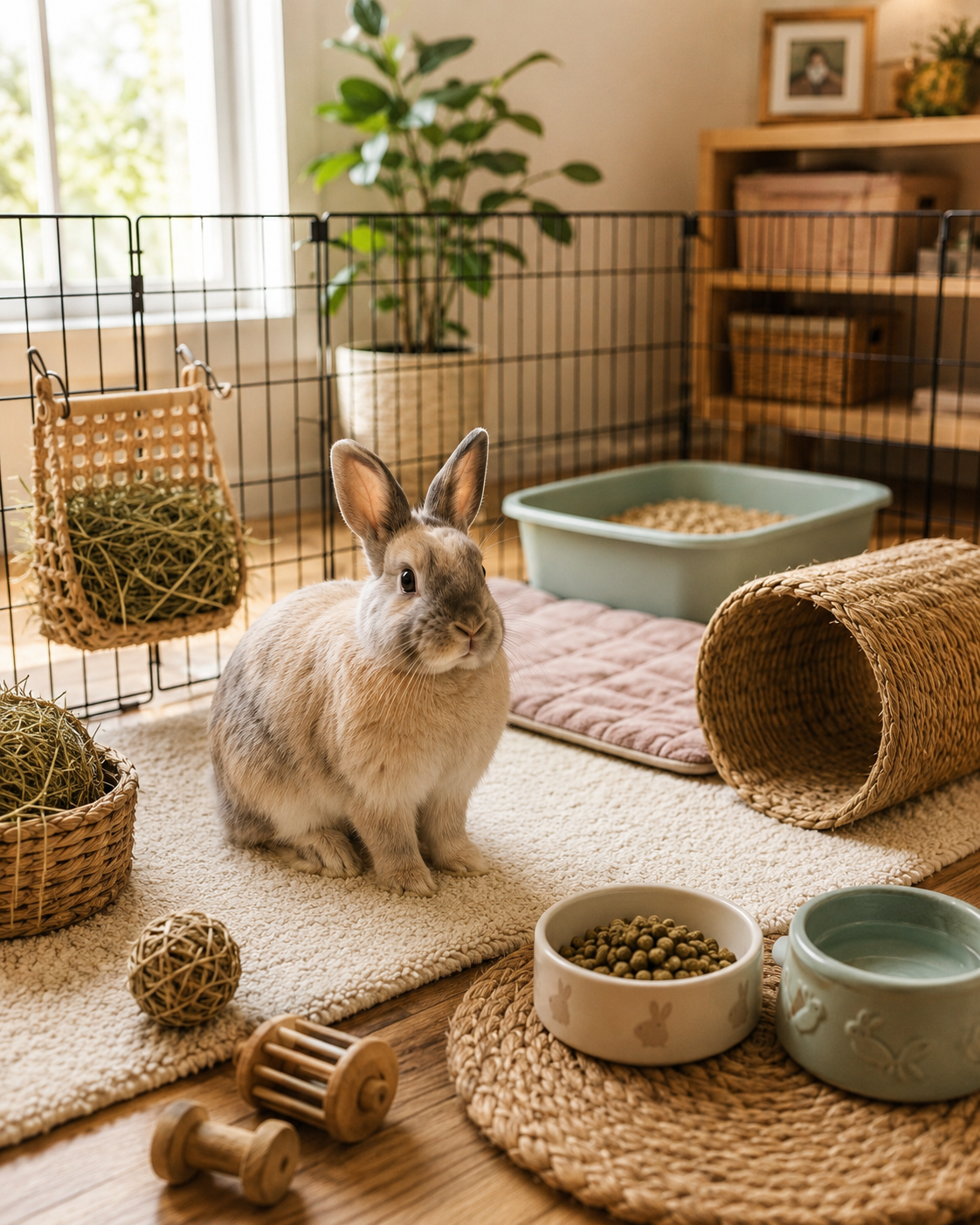
A good rabbit setup may include:
- a roomy enclosure or exercise pen
- litter box
- hay area
- food and water bowls
- hideout
- soft resting area
- chew toys
- safe tunnels
- rabbit-safe flooring
- supervised exercise space
The goal is to create a safe indoor area where the rabbit can move naturally.
Small pet does not mean small space.
Are Rabbits Cuddly?
Some rabbits are affectionate, but not all rabbits like being held.
Many rabbits enjoy sitting near their owners, being gently petted, or relaxing in the same room. Some may come over for attention once they trust you. Others are more independent or shy.
A beginner should understand that rabbits are prey animals. Being picked up can feel scary to them, especially if it is done suddenly or incorrectly.
A rabbit can show affection by:
- sitting near you
- nudging your hand
- relaxing close by
- following you around
- accepting gentle petting
- flopping comfortably nearby
- showing curiosity when you enter the room
A rabbit does not have to enjoy being carried to be a loving pet.
The best bond usually comes from patience, quiet interaction, and respecting the rabbit’s boundaries.
Are Rabbits Good Apartment Pets?
Rabbits can be good apartment pets when their setup is planned correctly.
They are usually quiet, do not need outdoor walks, and can live indoors. This makes them appealing for apartments and smaller homes. However, they still need enough space and safe enrichment.
A rabbit may do well in an apartment if:
- you have room for a proper enclosure
- you can rabbit-proof part of your home
- you can manage litter cleaning
- you can provide daily attention
- you do not mind chewing behavior
- your home is calm and safe
- you can give the rabbit time outside the enclosure safely
Rabbits can chew wires, furniture, rugs, and baseboards if the area is not prepared. Rabbit-proofing matters a lot.
If you are comparing pets for smaller spaces, read this guide too: Best Pets for Apartments
Do Rabbits Use a Litter Box?
Many rabbits can learn to use a litter box, especially when the setup is consistent.
A rabbit litter area usually includes a litter box with hay nearby or inside the box, because rabbits often like to eat hay while using the litter area.
Even with litter training, some cleanup is still normal. Rabbits may leave small droppings around their space, especially during adjustment or if the setup changes.
A beginner should be ready for:
- daily litter box cleaning
- hay mess
- bedding or litter replacement
- occasional accidents
- cleaning around the enclosure
- keeping the area fresh and comfortable
A rabbit may be cleaner than some small pets, but it is not mess-free.
What Do Rabbits Eat?
A rabbit’s daily routine usually includes hay, fresh water, and appropriate food. Many beginners are surprised that hay is such an important part of rabbit care.
Rabbits also need safe chewing options because their natural behavior includes chewing.
This article is not medical or dietary advice, but as a beginner lifestyle guide, it is important to know that rabbits should not be treated like cartoon pets that live mostly on carrots.
Before getting a rabbit, research proper rabbit feeding from trusted rabbit care sources and ask a qualified veterinarian for specific advice.
Do Rabbits Need Toys and Enrichment?
Yes, rabbits need enrichment.
A bored rabbit may chew unsafe items, dig at flooring, become restless, or seem frustrated. Toys and safe activities help rabbits express natural behaviors.
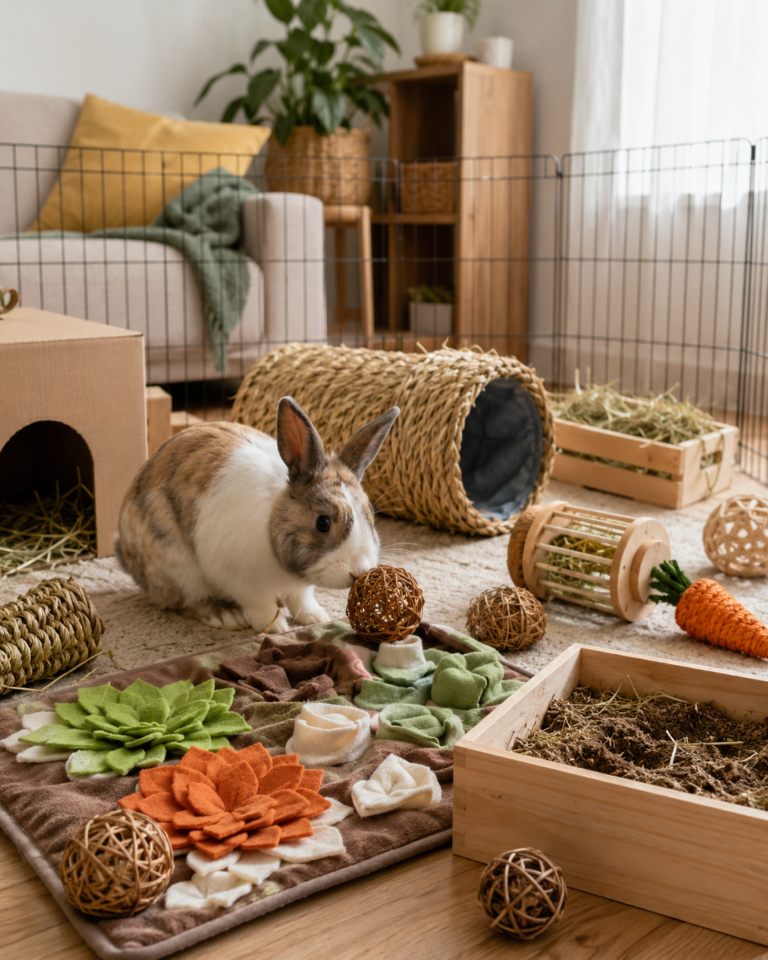
Rabbit enrichment can include:
- chew toys
- tunnels
- cardboard hideouts
- digging boxes
- treat puzzles
- safe wooden toys
- hay feeders
- soft mats
- supervised exploration
Enrichment does not have to be complicated, but it should be safe and consistent.
A rabbit needs more than food and a corner to sit in.
Are Rabbits Good Pets for Kids?
Rabbits can be good family pets, but they are not always the best choice for very young children.
Many children want a rabbit because it looks soft and cuddly. But rabbits are delicate animals and may become scared by loud voices, chasing, grabbing, or being picked up too often.
Children should understand:
- do not chase the rabbit
- do not pull ears or fur
- do not pick up the rabbit without adult help
- do not disturb the rabbit while resting
- use calm voices
- sit on the floor for interaction
- let the rabbit come closer when ready
Adults should always supervise children around rabbits.
A rabbit may be better for older kids or families that can respect gentle, quiet interaction.
What Supplies Do You Need for a Rabbit?
Before bringing a rabbit home, prepare the setup first.
Useful beginner rabbit supplies include:
- roomy enclosure or exercise pen
- litter box
- rabbit-safe litter
- hay feeder
- food bowl
- water bowl
- hideout
- chew toys
- tunnels
- soft resting mat
- grooming brush
- cleaning supplies
- carrier
- rabbit-safe floor protection
The right setup makes the first days easier and helps the rabbit feel safer.
Do not wait until the rabbit is already home to think about space, litter, and rabbit-proofing.
Useful Rabbit Supplies for New Owners
- indoor rabbit exercise pen
- rabbit litter box
- hay feeder
- ceramic food bowl
- water bowl
- rabbit hideout
- chew toys
- rabbit tunnel
- grooming brush
- washable floor mat
- small pet carrier
- cleaning supplies
Pros of Having a Rabbit
Rabbits can be wonderful pets for the right home.
Some of the biggest benefits include:
- they are quiet
- they can live indoors
- they are fun to watch
- they can bond with owners
- they do not need outdoor walks
- they can use a litter box with training
- they have gentle personalities
- they can fit apartment life with the right setup
- they are interesting and expressive
For someone who enjoys calm, cozy pets and has space for a proper setup, a rabbit can be very rewarding.
Cons of Having a Rabbit
Rabbits also come with challenges.
Some common downsides include:
- they need more space than many people expect
- they chew a lot
- they can be delicate
- they may not like being picked up
- they need daily cleaning
- hay can be messy
- rabbit-proofing is important
- supplies can cost more than expected
- they require patience to bond
The biggest mistake is choosing a rabbit because it looks easy.
Cute does not mean low-maintenance.
Who Should Get a Rabbit?
A rabbit may be a good fit if you want a quiet indoor pet and you are ready to provide space, routine, enrichment, and patient interaction.
Rabbits are often a good match for:
- calm homes
- apartment owners with enough space
- people who enjoy quiet pets
- owners who can clean daily
- people who like observing animal behavior
- older children with adult supervision
- people who can rabbit-proof the home
A rabbit may also be a good choice if you want a pet that can bond with you over time without needing outdoor walks.
Who Should Not Get a Rabbit?
A rabbit may not be the right pet if you want a pet that enjoys constant carrying, needs very little cleaning, or can live happily in a tiny cage.
You may want to think twice if:
- you want a low-effort pet
- you do not want to clean a litter box
- you do not have space for a proper enclosure
- you hate hay mess
- you do not want to rabbit-proof your home
- you want a pet for a very young child
- you expect constant cuddling
- you cannot handle chewing behavior
If you want a pet that stays in a smaller setup, you may also want to compare rabbits with other small pets.
You can read more here: Hamster vs Guinea Pig: Which Small Pet Is Better for You?
Rabbit vs Cat: Which Is Easier?
Rabbits and cats are very different pets.
A cat may be easier for some owners because cats are usually more independent around the home and do not need hay or rabbit-proofed exercise areas in the same way.
A rabbit may be better for someone who wants a quiet small pet and enjoys creating a cozy indoor setup.
Cats usually need:
- litter box cleaning
- scratching spaces
- toys
- food and water
- enrichment
- attention
Rabbits usually need:
- litter box cleaning
- hay
- chew toys
- exercise space
- rabbit-proofing
- daily setup checks
- gentle interaction
Neither pet is automatically easier. The best choice depends on your home, schedule, and expectations.
If you are comparing pet options, read this too: Cat as a Pet: Is a Cat the Right Companion for Your Home?
Common Beginner Mistakes
New rabbit owners often make the same mistakes.
Common beginner mistakes include:
- buying a tiny cage
- expecting the rabbit to love being held
- not rabbit-proofing wires and furniture
- ignoring chewing needs
- not planning the litter area
- choosing supplies too late
- not giving enough exercise space
- treating the rabbit like a toy for children
- forgetting that hay can be messy
- not preparing for long-term care
A better approach is to prepare the setup first, learn rabbit behavior, and give the rabbit time to adjust.
Final Thoughts: Is a Rabbit the Right Pet for You?
A rabbit can be a wonderful pet for the right person.
Rabbits are quiet, gentle, curious, and full of personality. They can live indoors, bond with their owners, and bring a calm, cozy feeling to a home.
But rabbits are not easy cage pets.
They need space, daily care, litter cleaning, safe chewing options, enrichment, patience, and a home that respects their boundaries.
If you want a quiet indoor pet and you are ready to create a proper setup, a rabbit may be a great match.
But if you want a pet that is very low effort, loves being carried all day, or can live happily in a tiny cage, a rabbit may not be the right choice.
Choose slowly, prepare first, and remember: small pets still have big needs.
Read Next
- Best Pets for Apartments
- Best Pets for First-Time Owners
- Dog as a Pet: Is a Dog the Right Companion for You?
- Cat as a Pet: Is a Cat the Right Companion for Your Home?
- Best Pet Fish for Beginners: Easy Fish to Start With
- Budgie as a Pet: Is This Beginner-Friendly Bird Right for You?
- Hamster vs Guinea Pig: Which Small Pet Is Better for You?



4 Comments