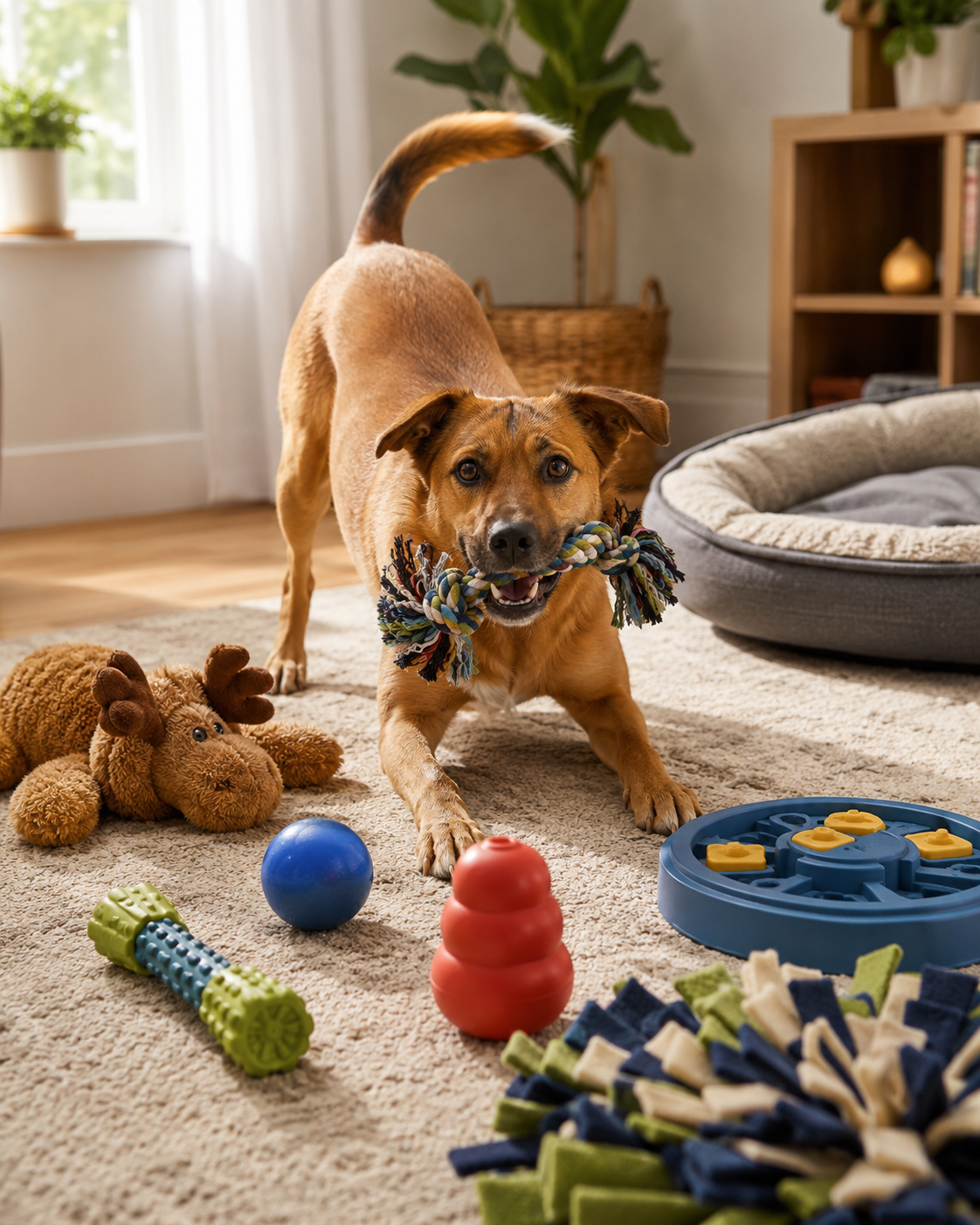
Best Dog Toys for Bored Dogs: Keep Your Dog Busy and Happy
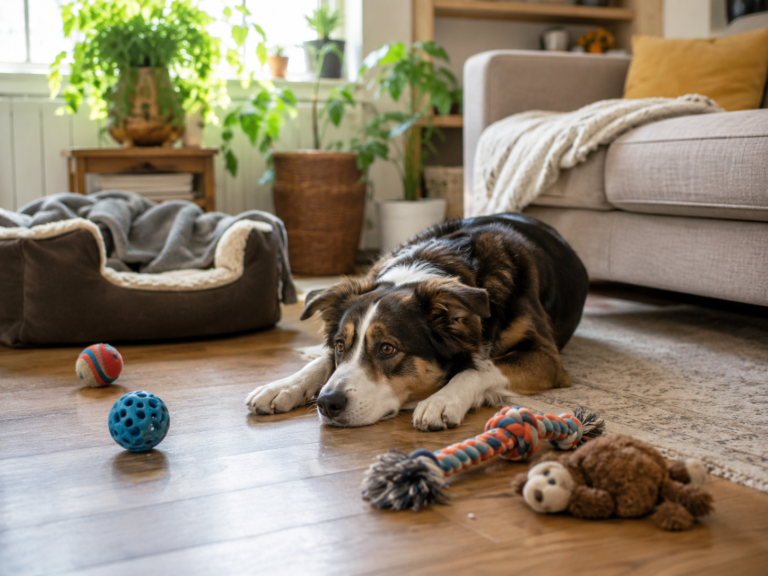
A bored dog can become a very creative dog.
Chewed shoes, destroyed pillows, barking, digging, jumping, pacing, stealing socks, or constantly asking for attention can sometimes happen when a dog does not have enough activity, structure, or enrichment during the day.
Dog toys are not just cute extras. The right toys can help your dog chew safely, think, move, sniff, chase, tug, and stay busy inside the home.
The best dog toys for bored dogs are toys that match your dog’s energy level, size, play style, and routine.
If your dog seems restless, destructive, or always looking for something to do, this guide will help you choose beginner-friendly toy ideas that can make daily life more fun and manageable.
The Pet Room shares general pet lifestyle information. We do not provide veterinary or medical advice. For health concerns, always contact a qualified veterinarian.
Why Bored Dogs Need Toys
Dogs need more than food, water, and a place to sleep.
Many dogs need daily movement, mental stimulation, chewing opportunities, playtime, sniffing, and interaction. When those needs are not met, they may try to create their own entertainment.
That entertainment may not be good for your furniture.
Good dog toys can help with:
- boredom
- chewing needs
- mental stimulation
- physical activity
- confidence
- training routines
- independent play
- owner-dog bonding
- indoor enrichment
- calmer daily behavior
Toys do not replace walks, training, or attention, but they can support a better daily routine.
If you are still deciding whether a dog fits your lifestyle, read this first: Dog as a Pet: Is a Dog the Right Companion for You?
1. Chew Toys
Chew toys are some of the most useful toys for bored dogs.
Many dogs naturally enjoy chewing. Chewing can help them stay busy, release energy, and focus on something safe instead of furniture, shoes, or household items.
Chew toys are good for:
- dogs that chew furniture
- puppies that need redirection
- dogs that get bored indoors
- independent play
- calm enrichment
- dogs that need something to focus on
Choose chew toys that match your dog’s size and chewing strength. A toy that works for a small gentle dog may not work for a powerful chewer.
Always check chew toys regularly and remove damaged pieces.
2. Puzzle Toys
Puzzle toys are great for dogs that need mental stimulation.
These toys usually hide treats, kibble, or small rewards inside compartments, sliders, holes, or moving parts. Your dog has to figure out how to get the reward.
Puzzle toys are good for:
- smart dogs
- food-motivated dogs
- dogs that eat too fast
- bored indoor dogs
- rainy days
- mental enrichment
- short focused activity
Start with an easy puzzle first. If the puzzle is too difficult, your dog may get frustrated. The goal is to make the toy fun and rewarding.
Puzzle toys are especially helpful when you want your dog to think, not just run.
3. Treat-Dispensing Toys
Treat-dispensing toys can keep dogs busy for longer periods.
These toys release treats or kibble as the dog rolls, nudges, chews, or moves the toy. They can make snack time more interesting and slow down fast eaters.
Treat-dispensing toys are good for:
- bored dogs
- dogs that eat quickly
- independent play
- indoor enrichment
- food-motivated dogs
- short busy-time sessions
These toys should be used with the right amount of food or treats. Too many treats can quickly add up.
If you use kibble inside the toy, you can make part of your dog’s regular meal more engaging.
4. Rope Toys
Rope toys are classic dog toys for tug, chewing, and interactive play.
Many dogs love tug games because they are active, social, and exciting. Rope toys can be a great way to bond with your dog while giving it a safe outlet for energy.
Rope toys are good for:
- tug games
- active dogs
- owner-dog bonding
- dogs that like carrying toys
- short play sessions
- redirecting energy
Rope toys should be checked often. If strings come loose or your dog tries to swallow pieces, remove the toy.
Tug should be fun and controlled, not chaotic. Teach your dog to release the toy calmly.
5. Fetch Toys
Fetch toys are great for dogs that love chasing.
Balls, soft throw toys, rubber fetch toys, and flying discs can help active dogs burn energy in a safe space.
Fetch toys are good for:
- active dogs
- dogs that love running
- outdoor play
- training recall
- high-energy routines
- bonding time
Not every dog loves fetch, and that is normal. Some dogs chase once and then walk away. Others would play forever if you let them.
Keep fetch sessions safe and avoid overdoing it.
6. Plush Toys
Plush toys can be comforting, fun, and exciting for many dogs.
Some dogs carry plush toys around like comfort objects. Others shake them, cuddle with them, or bring them to their owners.
Plush toys are good for:
- gentle dogs
- dogs that like carrying toys
- comfort
- light play
- puppies
- indoor play
Plush toys are not ideal for every dog. If your dog destroys plush toys quickly or tries to eat stuffing, choose tougher options and supervise play.
7. Squeaky Toys
Squeaky toys can be very exciting for dogs because they make noise and react to biting or squeezing.
Many dogs love the sound because it makes the toy feel more interactive.
Squeaky toys are good for:
- playful dogs
- dogs that like sound
- chase games
- short active play
- dogs that need encouragement to play
Some dogs may become too intense with squeaky toys, so watch how your dog reacts. If your dog tries to rip out the squeaker, remove the toy when damaged.
8. Snuffle Mats
Snuffle mats are excellent for dogs that love using their nose.
A snuffle mat has fabric folds where you can hide kibble or treats. Your dog has to sniff and search to find the food.
Snuffle mats are good for:
- mental stimulation
- slow feeding
- calm indoor activity
- rainy days
- dogs that love sniffing
- older dogs
- apartment dogs
Sniffing can be very satisfying for dogs. A snuffle mat can turn a small amount of food into a more interesting activity.
9. Lick Mats
Lick mats can help dogs stay busy and focused for a short period.
You can spread dog-safe food on the textured surface, and the dog licks it slowly. This can be useful during calm times, grooming practice, or when you want a quieter enrichment activity.
Lick mats are good for:
- calm enrichment
- food-motivated dogs
- slower snack time
- quiet indoor activity
- dogs that need something soothing to do
Use appropriate food and keep portions reasonable. Always wash the mat after use.
10. Durable Interactive Toys
Some dogs need toys that are stronger and more challenging.
Durable interactive toys can include tough rubber toys, wobble toys, rolling treat toys, and toys designed for more active play.
These toys are good for:
- high-energy dogs
- dogs that get bored fast
- strong chewers
- independent play
- longer enrichment sessions
- dogs that need variety
No toy is indestructible. Always choose toys based on your dog’s size and play style, and check them regularly.
How to Choose the Right Toy for Your Dog
The best toy depends on your dog.
Some dogs love chewing. Some love sniffing. Some love chasing. Some love tug. Some love food puzzles. Some love soft comfort toys.
Choose toys based on your dog’s behavior:
Choose chew toys if your dog chews furniture.
Choose puzzle toys if your dog gets bored easily.
Choose snuffle mats if your dog loves sniffing.
Choose rope toys if your dog enjoys tug.
Choose fetch toys if your dog loves running.
Choose plush toys if your dog likes carrying soft toys.
Choose lick mats if your dog needs calm enrichment.
Choose durable toys if your dog destroys weaker toys quickly.
A toy that works for one dog may not work for another.
Toy Rotation for Dogs
Dogs can get bored with the same toys if they are always available.
Toy rotation means keeping some toys away and switching them every few days. This can make old toys feel interesting again.
You can rotate:
- chew toys
- plush toys
- rope toys
- puzzle toys
- fetch toys
- squeaky toys
- treat-dispensing toys
You do not need to buy new toys all the time. Sometimes your dog simply needs variety.
How Often Should Dogs Play?
Most dogs need some kind of play, movement, or enrichment every day.
The amount depends on age, size, breed, energy level, and personality. Some dogs are satisfied with short play sessions. Others need more activity and mental work.
A simple daily routine may include:
- a walk
- short training session
- chew toy time
- puzzle toy or snuffle mat
- interactive play
- quiet rest
The goal is not to keep your dog busy every second. The goal is to give your dog enough healthy outlets so it can settle more calmly.
Safety Tips for Dog Toys
Dog toys should be checked regularly.
A broken toy can become unsafe if pieces come off or if your dog tries to swallow parts.
Basic safety tips include:
- choose the right size toy
- check toys for damage
- remove broken toys
- supervise new toys
- avoid toys with loose small parts
- replace worn-out toys
- match toys to chewing strength
- watch how your dog plays
If your dog destroys toys quickly, choose stronger options and supervise closely.
Useful Dog Toys for Bored Dogs
- durable chew toy
- treat-dispensing toy
- dog puzzle toy
- snuffle mat
- lick mat
- rope toy
- fetch ball
- plush dog toy
- squeaky toy
- durable rubber toy
Common Mistakes With Dog Toys
Many owners buy toys but do not use them in the best way.
Common mistakes include:
- buying only one type of toy
- leaving all toys out all the time
- not supervising new toys
- ignoring chewing strength
- using toys that are too small
- not replacing damaged toys
- expecting toys to replace walks
- never using puzzle toys
- not rotating toys
- choosing toys only because they look cute
Toys work best when they are part of a daily routine.
Final Thoughts: What Are the Best Dog Toys for Bored Dogs?
The best dog toys for bored dogs are the toys that match your dog’s needs and give it safe ways to chew, sniff, chase, tug, think, and play.
Chew toys, puzzle toys, treat-dispensing toys, rope toys, fetch toys, plush toys, squeaky toys, snuffle mats, lick mats, and durable interactive toys can all help make daily life more interesting.
You do not need every toy at once.
Start with a few different types, watch what your dog enjoys, and build a routine around movement, mental stimulation, chewing, sniffing, and bonding.
A bored dog does not always need more stuff.
Sometimes it needs better play, better routine, and better enrichment.

4 Comments