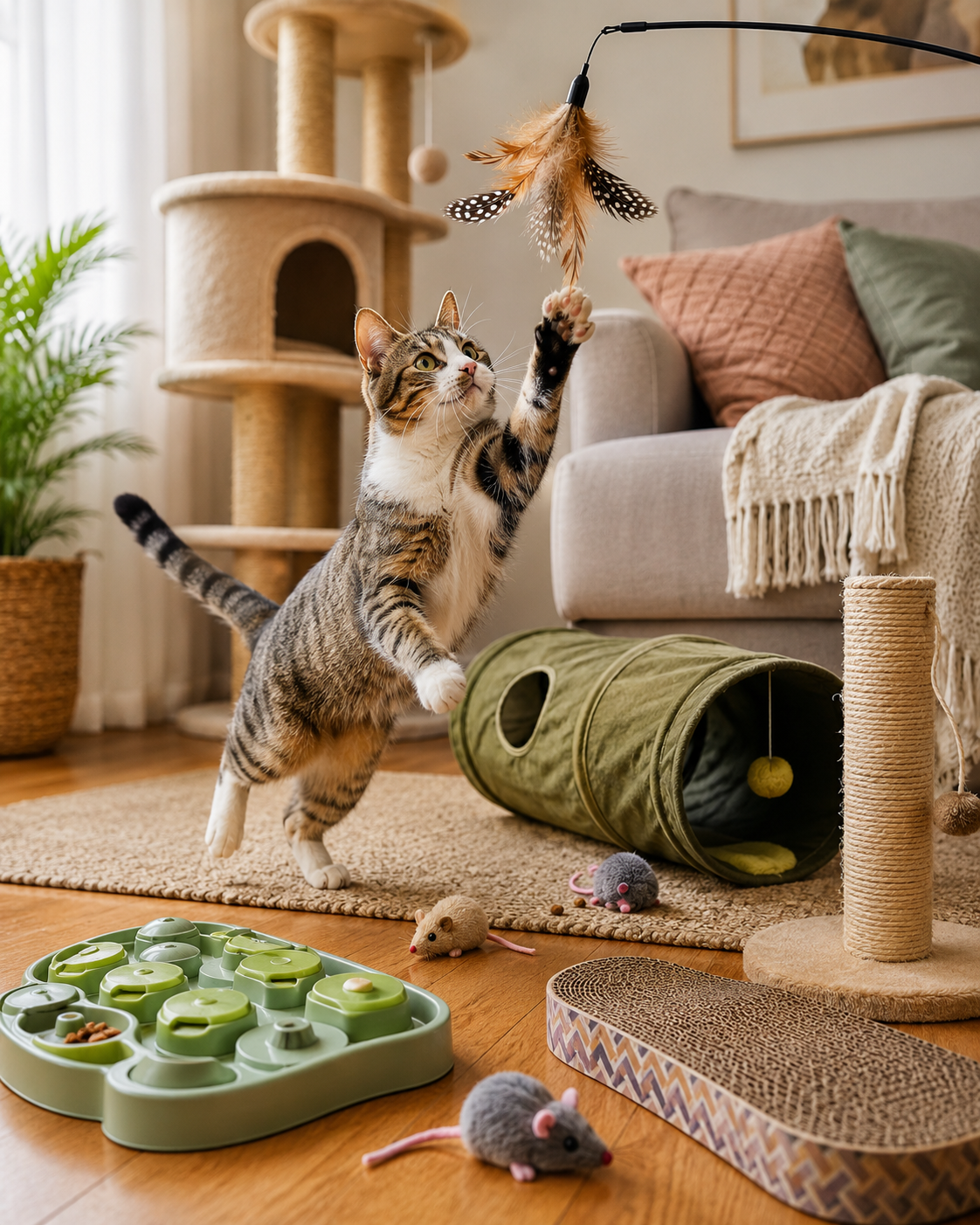
Best Cat Toys for Indoor Cats: Keep Your Cat Active and Happy
Indoor cats can live happy, cozy, comfortable lives, but they still need daily activity and mental stimulation.
A cat that stays indoors does not have the same natural hunting, climbing, chasing, and exploring opportunities that an outdoor cat might find. That means toys are not just cute extras. They can be an important part of your cat’s daily routine.
The best cat toys for indoor cats help them chase, pounce, scratch, climb, explore, think, and burn energy safely inside the home.
If your cat sleeps all day, gets bored easily, scratches furniture, attacks your feet, or suddenly runs around the house at night, better enrichment may help make daily life more fun and balanced.
The Pet Room shares general pet lifestyle information. We do not provide veterinary or medical advice. For health concerns, always contact a qualified veterinarian.
Why Indoor Cats Need Toys
Indoor cats may look calm and lazy, but they are still natural hunters.
Even a relaxed house cat may enjoy chasing movement, batting small objects, hiding, pouncing, climbing, scratching, and watching things move. Toys give your cat a safe way to use those instincts indoors.
Good cat toys can help with:
- boredom
- daily activity
- mental stimulation
- play routine
- bonding with the owner
- scratching needs
- hunting-style play
- confidence
- indoor enrichment
Toys do not need to be expensive or complicated, but they should be safe, interesting, and used regularly.
If you are still deciding whether a cat fits your home, read this first: Cat as a Pet: Is a Cat the Right Companion for Your Home?
1. Wand Toys
Wand toys are one of the best cat toys for indoor cats because they create movement.
A wand toy usually has a stick, string, feather, ribbon, or soft toy attached. You control the movement, which makes the toy act like prey. This can encourage your cat to chase, jump, stalk, and pounce.
Wand toys are great because they also help you bond with your cat. Instead of just leaving a toy on the floor, you become part of the play session.
Wand toys are good for:
- active cats
- shy cats that need confidence
- cats that love chasing
- owner-cat bonding
- short daily play sessions
- cats that need more movement indoors
For best results, move the toy like prey. Do not just shake it in your cat’s face. Drag it, pause it, hide it behind furniture, and let your cat catch it sometimes.
2. Toy Mice
Toy mice are simple, classic, and useful for many indoor cats.
Some cats love carrying toy mice around the house. Others bat them under furniture, chase them across the floor, or pounce on them during playtime.
Toy mice can be especially good if your cat likes independent play. You can leave a few around the home and rotate them so they feel new again.
Toy mice are good for:
- cats that like batting toys
- cats that carry toys
- independent play
- chase games
- kittens and adult cats
- low-cost enrichment
A simple toy mouse can be more exciting than an expensive toy if your cat likes the texture, size, and movement.
3. Interactive Puzzle Toys
Puzzle toys can help indoor cats use their brain.
These toys usually hide treats or kibble inside compartments, sliders, holes, or moving pieces. The cat has to figure out how to reach the reward.
Puzzle toys can be useful for cats that eat too fast, get bored, or need more mental stimulation.
Puzzle toys are good for:
- smart cats
- food-motivated cats
- bored indoor cats
- slow feeding
- mental enrichment
- rainy-day activity
Start with an easy puzzle first. If the toy is too difficult, your cat may give up quickly. The goal is to make it fun, not frustrating.
4. Cat Tunnels
Cat tunnels are great for cats that like hiding, running, ambushing, and exploring.
A tunnel can make a normal living room feel more exciting. Cats may run through it, hide inside, peek out, or use it as part of a chase game.
Tunnels are especially useful if you want more movement in a small home or apartment.
Cat tunnels are good for:
- playful cats
- shy cats
- kittens
- chase games
- hide-and-seek play
- small apartments
- cats that like cozy spaces
You can make a tunnel more exciting by moving a wand toy near the entrance or placing a toy mouse nearby.
5. Scratching Toys and Scratchers
Scratching is normal cat behavior.
Cats scratch to stretch, mark territory, maintain claws, and release energy. If you do not give your cat proper scratching options, your couch, rug, or furniture may become the target.
Scratching toys can include vertical scratching posts, cardboard scratchers, angled scratchers, scratching pads, or cat trees with built-in scratch surfaces.
Scratchers are good for:
- daily stretching
- claw maintenance
- furniture protection
- stress relief
- indoor enrichment
- natural cat behavior
Different cats prefer different scratching surfaces. Some like cardboard. Some like sisal. Some prefer vertical posts, while others prefer flat scratchers.
If your cat ignores one scratcher, try a different shape or material.
6. Ball Toys
Ball toys are simple but effective for many cats.
Some balls roll across the floor. Others have bells, textures, feathers, or tracks. Cats may bat them, chase them, or stalk them around furniture.
Ball toys are good for:
- active cats
- kittens
- cats that like chasing
- independent play
- short bursts of movement
- multi-toy rotation
For safety, avoid balls that are too small, broken, or made with pieces that can come loose.
7. Catnip Toys
Catnip toys can make playtime more exciting for many cats.
Some cats roll, rub, kick, or become playful around catnip. Others do not react much at all. Both reactions are normal.
Catnip toys can include stuffed toys, kickers, mice, balls, or refillable fabric toys.
Catnip toys are good for:
- cats that respond to catnip
- lazy cats that need encouragement
- short bursts of play
- toy rotation
- solo play
- playful kicking behavior
Not every cat loves catnip, so do not worry if your cat ignores it. You can still try other toys.
8. Kicker Toys
Kicker toys are longer soft toys that cats can grab with their front paws and kick with their back legs.
Many cats enjoy this because it mimics a natural play behavior. Kicker toys are especially useful for cats that wrestle with toys or attack soft objects.
Kicker toys are good for:
- cats that like wrestling
- energetic cats
- cats that bunny-kick toys
- solo play
- catnip play
- redirecting rough play
If your cat attacks your hands or feet during play, a kicker toy may help redirect that energy toward something safer.
9. Cat Trees With Toys
A cat tree is not just furniture. It can be a full enrichment area.
Many cat trees include scratching posts, platforms, hiding areas, hanging toys, and climbing spots. This gives your indoor cat vertical space, which can be especially valuable in apartments.
Cat trees are good for:
- climbing
- scratching
- resting
- window watching
- multi-cat homes
- small apartments
- active cats
- shy cats that like high places
If you have space, a cat tree near a window can become one of your cat’s favorite places in the home.
If you are choosing a pet for apartment life, you may also like this guide: Best Pets for Apartments
10. Automatic Cat Toys
Automatic cat toys can be useful when you need your cat to play independently for a short time.
These may include moving balls, rotating feathers, motion toys, or toys that turn on and off automatically.
Automatic toys are good for:
- busy owners
- cats that need extra movement
- solo play
- short enrichment sessions
- curious cats
- cats that enjoy unpredictable movement
However, automatic toys should not replace your interaction. Cats still benefit from human-led play, especially with wand toys and routine bonding time.
How to Choose the Right Toy for Your Cat
The best cat toy depends on your cat’s personality.
Some cats love chasing. Some love hiding. Some love climbing. Some prefer food puzzles. Some are lazy until you find the right toy.
Think about your cat’s natural play style.
Choose wand toys if your cat loves chasing.
Choose tunnels if your cat loves hiding and ambushing.
Choose puzzle toys if your cat is food-motivated.
Choose scratchers if your cat targets furniture.
Choose kicker toys if your cat likes wrestling.
Choose cat trees if your cat enjoys climbing and watching the room from above.
A toy that works for one cat may not work for another, and that is normal.
How Often Should You Play With an Indoor Cat?
Many indoor cats benefit from short daily play sessions.
You do not always need long playtime. A few focused minutes with a wand toy can be more useful than leaving toys scattered around all day.
A simple routine may include:
- one short play session in the morning
- one short play session in the evening
- toy rotation during the week
- puzzle toy time a few times per week
- scratching and climbing access every day
Consistency matters more than perfection.
If your cat is very energetic, evening play may help reduce late-night zoomies.
Toy Rotation: Why It Matters
Cats can get bored if the same toys stay out all the time.
Toy rotation means keeping some toys away and switching them every few days. This makes old toys feel new again and keeps your cat more interested.
You can rotate:
- toy mice
- balls
- catnip toys
- kicker toys
- tunnels
- puzzle toys
- wand attachments
Keep a small basket of toys and change what is available. You do not need to buy new toys constantly.
Sometimes the best toy is one your cat forgot about for a week.
Safety Tips for Cat Toys
Cat toys should always be checked for damage.
Some toys can break, lose strings, shed small parts, or become unsafe over time. Wand toys with strings should usually be put away after supervised play.
Basic safety tips include:
- check toys for loose pieces
- avoid sharp parts
- remove broken toys
- supervise string toys
- choose the right size toy
- do not leave unsafe items out
- watch how your cat plays
- replace damaged toys
If your cat tries to eat pieces of a toy, remove it and choose something safer.
Useful Cat Toys and Supplies for Indoor Cats
- feather wand toy
- toy mouse variety pack
- cat tunnel
- cardboard scratcher
- sisal scratching post
- cat puzzle feeder
- catnip kicker toy
- rolling ball toy
- cat tree
- automatic cat toy
Common Mistakes With Indoor Cat Toys
Many new cat owners buy toys but do not use them in the best way.
Common mistakes include:
- leaving all toys out all the time
- only buying one type of toy
- never playing directly with the cat
- using hands as toys
- not replacing broken toys
- choosing toys that are too boring
- ignoring scratching needs
- not offering vertical space
- expecting toys to fix everything alone
Toys work best when they are part of a daily routine.
Final Thoughts: What Are the Best Cat Toys for Indoor Cats?
The best cat toys for indoor cats are the ones that match your cat’s personality and encourage natural behavior.
Wand toys, toy mice, puzzle toys, tunnels, scratchers, ball toys, catnip toys, kicker toys, cat trees, and automatic toys can all help make indoor life more active and interesting.
You do not need every toy at once.
Start with a few different types, watch what your cat enjoys, and build a simple routine around movement, scratching, climbing, chasing, and thinking.
Indoor cats do not need a boring life.
With the right toys and daily attention, your home can become a safe, fun, enriching space for your cat.

8 Comments