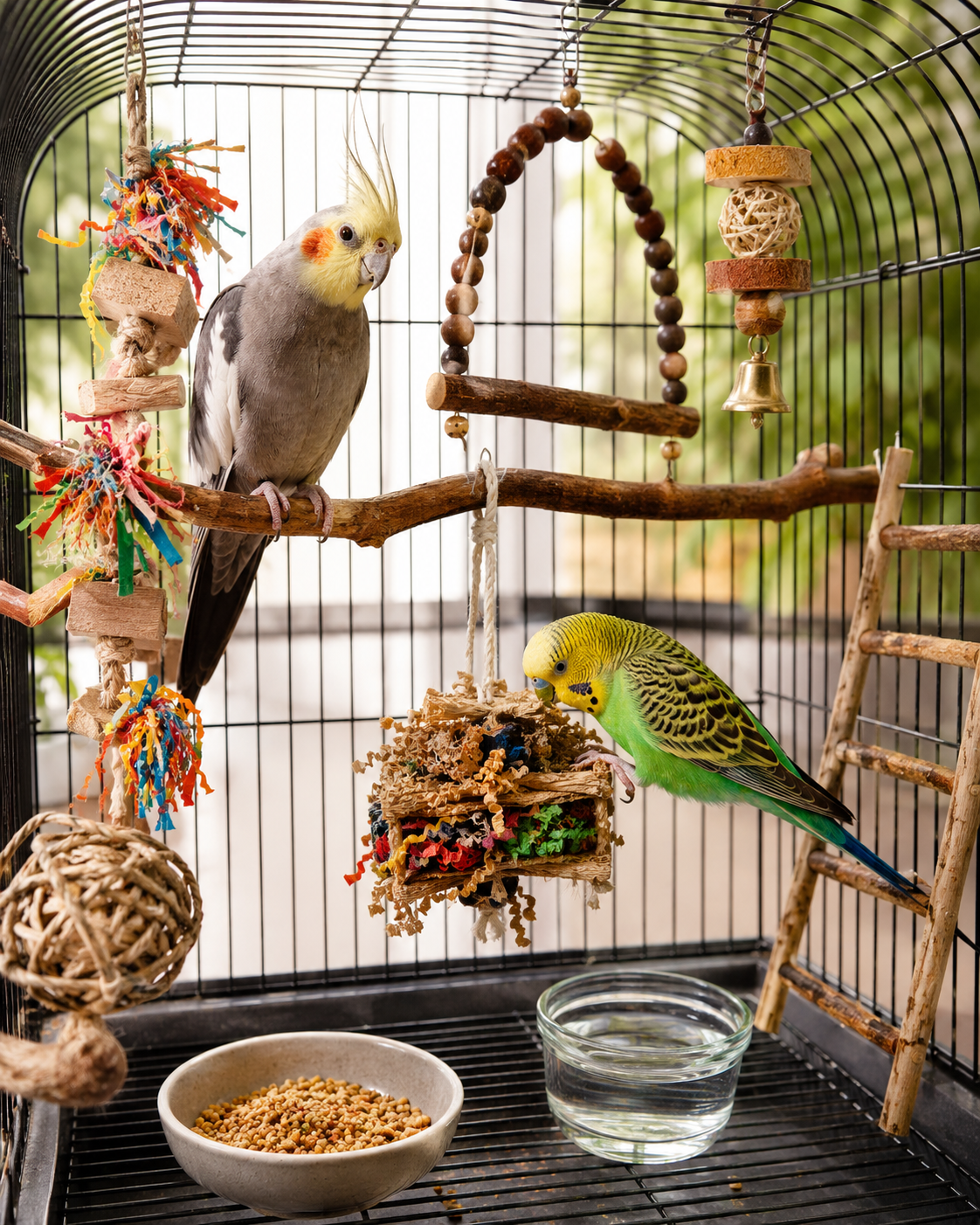
Best Bird Toys for Pet Birds: Keep Your Bird Busy and Happy
Pet birds are smart, curious, active animals that need more than food, water, and a cage.
Whether you have a budgie, cockatiel, lovebird, parakeet, or another small companion bird, toys can play a big role in daily enrichment. The right bird toys can help your bird chew, climb, shred, explore, swing, forage, and stay mentally active inside the cage.
A bored bird may become restless, loud, nervous, or destructive. Some birds may chew cage bars, scream for attention, over-focus on one area of the cage, or lose interest in their surroundings.
Bird toys are not just decorations. They are part of a healthier, more interesting daily routine.
The Pet Room shares general pet lifestyle information. We do not provide veterinary or medical advice. For health concerns, always contact a qualified avian veterinarian.
Why Pet Birds Need Toys
Birds are intelligent animals with natural behaviors.
In the wild, birds spend time moving, searching for food, chewing, climbing, exploring, communicating, and solving small daily challenges. A pet bird living indoors still needs safe ways to express some of those instincts.
Good bird toys can help with:
- boredom
- chewing needs
- mental stimulation
- exercise
- climbing
- foraging
- confidence
- cage enrichment
- daily routine
- social interaction
A bird cage should not feel empty. It should feel safe, interesting, and active without being overcrowded.
If you are still choosing a beginner bird, read this first: Budgie as a Pet: Is This Beginner-Friendly Bird Right for You?
1. Shredding Toys
Shredding toys are some of the best bird toys for pet birds because many birds naturally love to tear things apart.
These toys may be made from bird-safe paper, cardboard, palm leaf, woven materials, or soft natural fibers. Birds can pull, rip, shred, and explore the texture.
Shredding toys are good for:
- budgies
- cockatiels
- lovebirds
- curious birds
- birds that enjoy chewing
- birds that need mental stimulation
- birds that get bored easily
A shredding toy gives your bird something safe to destroy, which is often exactly the point.
Without safe chewing options, some birds may chew perches, cage bars, or household items when out of the cage.
2. Foraging Toys
Foraging toys make birds work a little for food or treats.
These toys can hide small rewards inside compartments, paper, cups, boxes, or puzzle-like areas. The bird has to investigate, pull, move, or open parts of the toy to find the reward.
Foraging toys are great because they encourage thinking.
Foraging toys are good for:
- smart birds
- food-motivated birds
- birds that need more stimulation
- birds that get bored in the cage
- birds that enjoy puzzles
- daily enrichment routines
Start simple. If the toy is too difficult, your bird may ignore it. Beginner birds often need easy wins before they enjoy harder puzzles.
3. Climbing Toys
Many pet birds enjoy climbing.
Climbing toys can include ladders, ropes, bridges, hanging steps, and safe climbing nets. These toys encourage movement and help the bird use more of the cage space.
Climbing toys are good for:
- active birds
- cockatiels
- budgies
- young birds
- birds that like movement
- birds that need more exercise
- cage enrichment
A good climbing setup can make the cage feel more like an active environment instead of a simple box.
Make sure climbing toys are safe, properly attached, and suitable for your bird’s size.
4. Swings
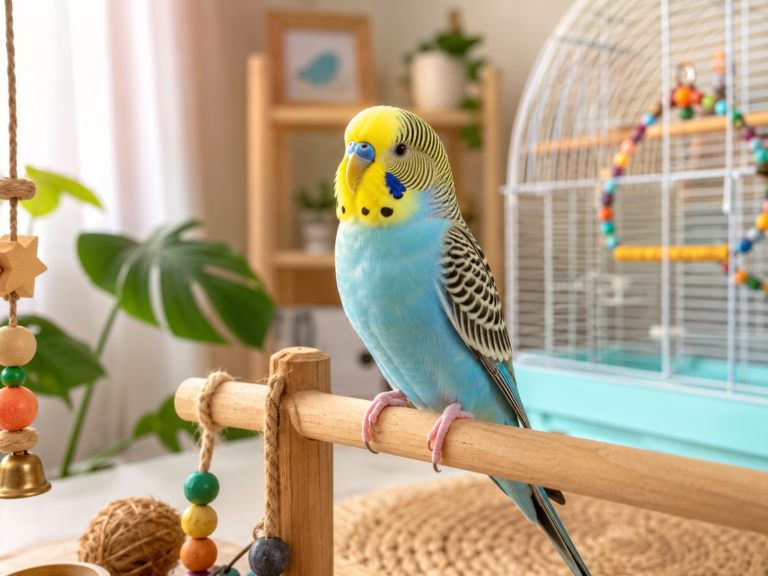
Swings are classic bird toys.
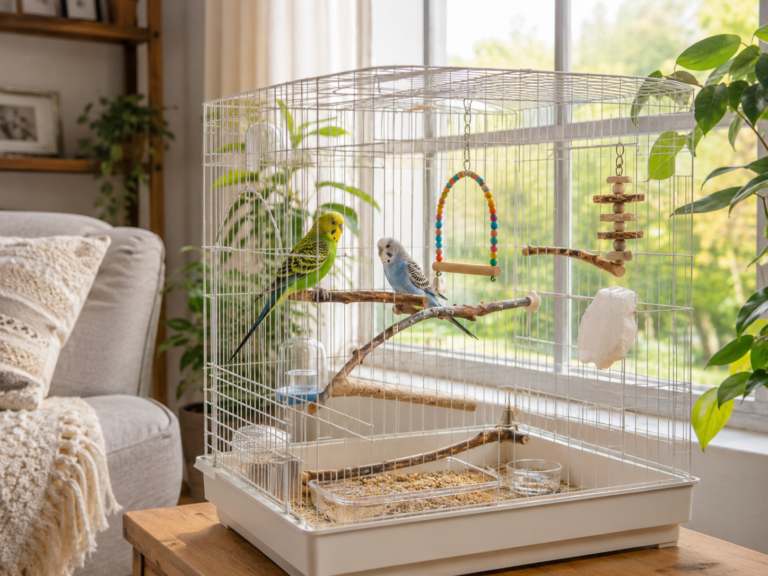
Many birds enjoy sitting, balancing, and gently moving on a swing. A swing can also add variety to the cage and give your bird another resting or play area.
Swings are good for:
- budgies
- cockatiels
- small parrots
- birds that like balancing
- birds that enjoy gentle movement
- cage variety
Not every bird uses a swing right away. Some birds need time to trust new objects in the cage.
Place the swing where your bird can reach it comfortably, but do not block important movement paths.
5. Bell Toys
Bell toys can be exciting for birds that enjoy sound.
Some birds like tapping bells, nudging them, or making small noises during play. Bell toys can add interaction and curiosity to the cage.
Bell toys are good for:
- playful birds
- curious birds
- birds that enjoy sound
- birds that like tapping objects
- birds that need simple enrichment
Choose bird-safe bells and check them often. Avoid toys with small parts that could break off or become unsafe.
If a bell toy becomes damaged, remove it.
6. Chew Toys
Chewing is normal for many pet birds.
Chew toys may be made from bird-safe wood, natural fibers, paper, cardboard, or other safe materials. They give your bird something appropriate to bite and explore.
Chew toys are good for:
- birds that chew often
- bored birds
- birds that need safe destruction
- birds that like texture
- cockatiels
- budgies
- lovebirds
Chew toys should be replaced when they become too worn or damaged.
The goal is not to keep the toy perfect forever. The goal is to let the bird use it safely.
7. Foot Toys
Foot toys are smaller toys that birds can pick up, hold, push, or manipulate.
These are especially useful for birds that like exploring objects with their beak and feet. Some birds enjoy tossing small toys, rolling them, or carrying them around.
Foot toys are good for:
- curious birds
- birds that enjoy small objects
- supervised play areas
- birds that like variety
- birds that need extra stimulation
For smaller birds, choose foot toys that are lightweight and appropriately sized.
Always supervise new toys until you know how your bird interacts with them.
8. Puzzle Toys
Puzzle toys make birds think.
These toys may require your bird to move parts, open small areas, pull objects, or solve a simple task. Puzzle toys can be especially useful for intelligent birds that get bored quickly.
Puzzle toys are good for:
- smart birds
- birds that learn fast
- birds that need mental work
- food-motivated birds
- birds that enjoy problem solving
Start with easy puzzle toys first. A bird that feels frustrated may stop interacting with the toy.
The best puzzle toy is challenging but still possible.
9. Natural Perch Toys
Some toys combine perching with play.
Natural perch toys may include hanging perches, rope perches, branch-style perches, or toys attached to natural wood. These can add texture, movement, and variety to the cage.
Natural perch toys are good for:
- cage enrichment
- foot comfort variety
- birds that like climbing
- birds that need more cage levels
- birds that enjoy natural textures
Perches should be safe, clean, and properly sized for your bird’s feet.
Avoid overcrowding the cage with too many perches or toys. Your bird still needs space to move.
10. Toy Sets for Small Birds
Bird toy sets can be useful for beginners because they often include multiple toy types.
A set may include bells, ladders, swings, shredding toys, chew toys, and hanging toys. This lets you test what your bird likes without buying one toy at a time.
Toy sets are good for:
- new bird owners
- budgie cages
- cockatiel cages
- toy rotation
- testing preferences
- beginner enrichment
However, not every toy in a set will be perfect. Check each item for safety, size, and quality before using it.
How to Choose the Right Bird Toy
The best bird toy depends on your bird’s species, size, personality, and play style.
Some birds love shredding. Some love bells. Some love climbing. Some love foraging. Some are shy and need simple toys first.
Think about your bird’s behavior:
Choose shredding toys if your bird loves tearing paper.
Choose climbing toys if your bird moves around the cage often.
Choose foraging toys if your bird needs more mental stimulation.
Choose swings if your bird enjoys balancing.
Choose chew toys if your bird bites perches or cage items.
Choose puzzle toys if your bird learns quickly.
Choose toy sets if you are still discovering what your bird likes.
A toy that one bird loves may be ignored by another bird, and that is normal.
Toy Rotation for Pet Birds
Toy rotation is important.
If the same toys stay in the cage all the time, some birds may get bored. Rotating toys helps keep the cage interesting without constantly buying new items.
You can rotate:
- shredding toys
- bells
- swings
- ladders
- foraging toys
- chew toys
- foot toys
- puzzle toys
Keep a few toys available, then switch some out every few days or every week.
Do not change everything at once if your bird is nervous around new objects. Some birds need gradual changes.
Do Bird Toys Replace Attention?
No, toys do not replace attention.
Bird toys help with enrichment, but many pet birds still need daily interaction, routine, and social time. Budgies, cockatiels, and other companion birds often enjoy being part of the household rhythm.
Toys support a better cage setup, but they are not a substitute for care.
A healthy routine may include:
- fresh food and water
- cage cleaning
- safe toys
- calm interaction
- supervised out-of-cage time if appropriate
- regular toy checks
- a predictable daily routine
If you are considering a more social bird, read this guide too: Cockatiel as a Pet: Is This Friendly Bird Right for You?
Safety Tips for Bird Toys
Bird toy safety matters a lot.
Birds explore with their beaks, so toys should be checked regularly. A broken toy, loose string, sharp piece, or small part can become unsafe.
Basic safety tips include:
- choose toys made for birds
- match toy size to your bird
- avoid sharp pieces
- remove broken toys
- check for loose threads
- avoid unsafe metals
- supervise new toys
- do not overcrowd the cage
- clean toys when needed
- replace damaged toys
If your bird seems scared of a new toy, place it near the cage first before putting it inside. Some birds need time to adjust.
Useful Bird Toys for Pet Birds
- shredding bird toys
- bird foraging toys
- bird ladder
- bird swing
- bird bell toy
- natural wood chew toys
- small bird toy set
- bird rope perch
- cockatiel toys
- budgie toys
Common Mistakes With Bird Toys
Many new bird owners buy toys but do not use them in the best way.
Common mistakes include:
- buying toys that are too large
- buying toys that are too small
- never rotating toys
- overcrowding the cage
- not checking toys for damage
- choosing only pretty toys
- ignoring foraging toys
- not offering chewing options
- forcing a nervous bird to accept toys too fast
- assuming toys replace daily attention
A better approach is to choose safe toys, introduce them slowly, and watch what your bird actually enjoys.
Final Thoughts: What Are the Best Bird Toys for Pet Birds?
The best bird toys for pet birds are toys that encourage natural behavior in a safe way.
Shredding toys, foraging toys, climbing toys, swings, bells, chew toys, foot toys, puzzle toys, natural perch toys, and beginner toy sets can all help make your bird’s daily life more active and interesting.
You do not need every toy at once.
Start with a few safe options, watch your bird’s reaction, and build a toy rotation that keeps the cage fresh without overwhelming your pet.
A happy bird needs more than a cage.
It needs enrichment, routine, safe toys, and daily care.

2 Comments