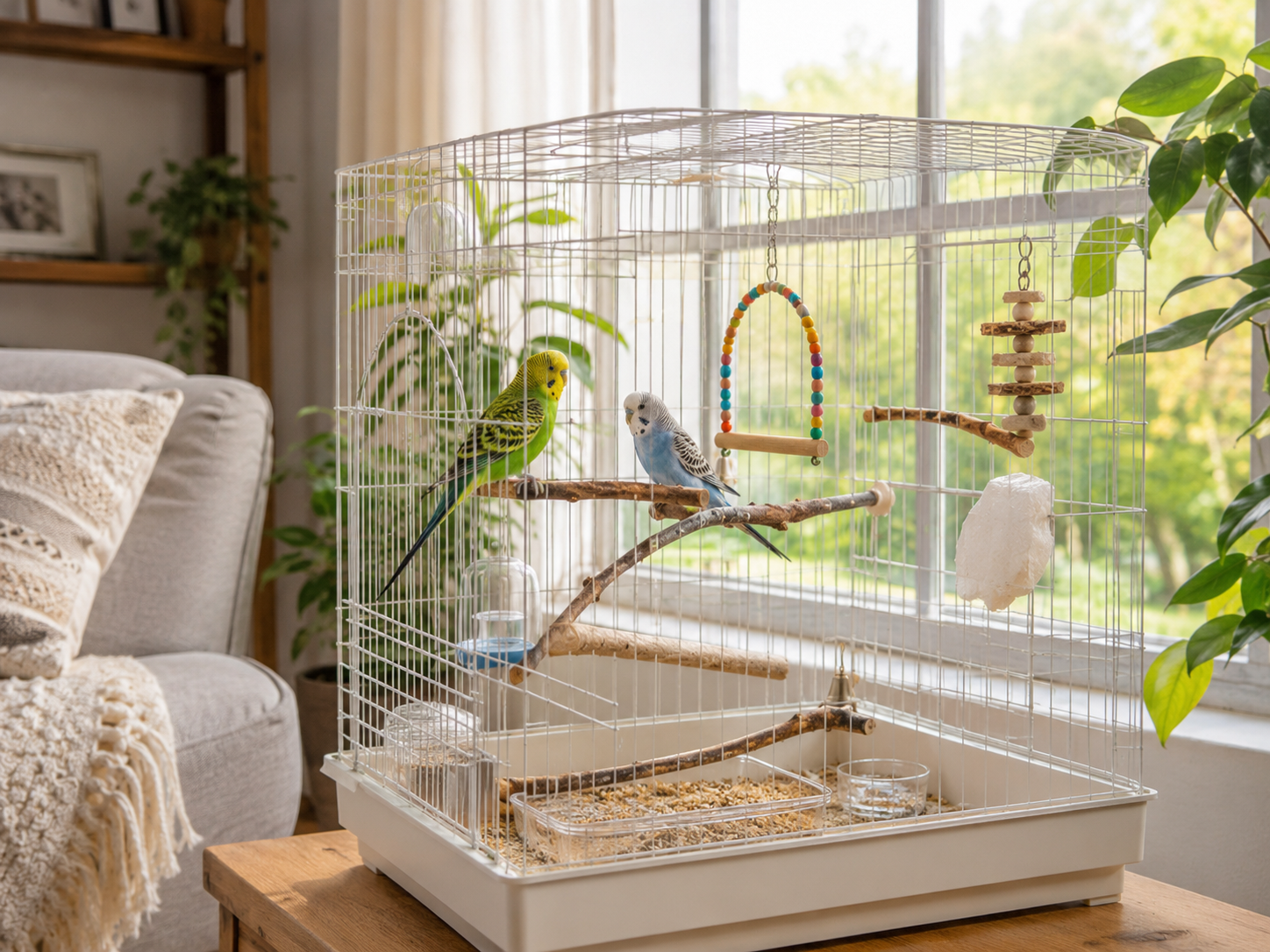
Budgie Cage Setup for Beginners: What Your Pet Bird Really Needs
A budgie cage is not just a place to keep your bird.
For a pet budgie, the cage is the main home base. It is where your bird eats, drinks, rests, plays, climbs, perches, preens, and feels safe. A good setup can make daily care easier for you and more comfortable for your bird.
But beginner bird owners often make the cage too small, too crowded, too empty, or poorly arranged.
A budgie does not need a cage packed with random toys. It needs a roomy, safe, clean, well-arranged space with the right perches, food and water access, safe enrichment, and enough open room to move.
This beginner guide explains what a budgie cage really needs, how to arrange the inside, what to avoid, and how to create a simple daily routine.
The Pet Room shares general pet lifestyle information. We do not provide veterinary or medical advice. For health concerns, injury, feather loss, appetite changes, breathing issues, or sudden behavior changes, always contact a qualified avian veterinarian.
Quick Budgie Cage Setup Checklist
Before we go deeper, here is a simple beginner checklist.
A good budgie cage setup should include:
- a roomy cage with horizontal space
- safe bar spacing
- natural perches in different sizes
- food and water dishes
- easy-clean cage liner
- a few safe toys
- cuttlebone or mineral support
- room to hop and flap wings
- good cage placement
- daily fresh water
- regular cleaning
- out-of-cage time when safe and supervised
The goal is not to make the cage look busy.
The goal is to make it useful.
If you also want enrichment ideas outside the basic setup, read this guide too: Best Bird Toys for Pet Birds: Keep Your Bird Busy and Happy
Why Cage Setup Matters So Much
Budgies are active, curious, social birds.
Even though they are small, they need movement, stimulation, and a comfortable environment. A cage that is too cramped, cluttered, or poorly placed can make daily life harder.
A better cage setup can help with:
- easier movement
- safer perching
- cleaner feeding areas
- better toy use
- less boredom
- more confidence
- easier cleaning
- better daily routine
- a calmer home environment
For beginners, cage setup is one of the most important parts of bird care.
A good setup does not have to be expensive or complicated. It just needs to be thoughtful.
Choose the Right Cage Size
The first mistake many beginners make is buying a cage that is too small.
Budgies may be tiny birds, but they need space to move side to side. A tall narrow cage may look impressive, but horizontal space is often more useful because budgies move, hop, stretch, and flutter across the cage.
Look for a cage that is:
- wide enough for movement
- tall enough for multiple perches
- easy to clean
- safe and sturdy
- not overcrowded
- suitable for the number of birds
For one budgie, bigger is usually better as long as the cage is safe and practical. For two budgies, space becomes even more important.
Avoid cages that feel decorative but give the bird very little usable room.
Bar Spacing and Cage Safety
Bar spacing matters.
If the bars are too wide, a small bird can get stuck or escape. If the cage is poorly built, sharp edges, weak doors, or unsafe coatings can become problems.
When choosing a budgie cage, check:
- narrow bar spacing suitable for small birds
- secure doors
- no sharp edges
- sturdy construction
- safe materials
- easy access for cleaning
- food doors that close properly
A cage should feel secure, not flimsy.
Do not choose a cage only because it looks pretty in a room. Safety and function come first.
The Best Cage Placement in Your Home
Where you place the cage can affect your budgie’s comfort.
Budgies usually do best in a bright, calm room where they can be near family activity without being overwhelmed.
Good cage placement:
- bright room with natural light
- away from drafts
- away from kitchen fumes
- away from direct harsh sun
- away from loud speakers or constant noise
- one side near a wall for security
- near family activity but not in chaos
- not on the floor
Placing one side of the cage near a wall can help a budgie feel safer because it does not feel exposed from every direction.
Avoid placing the cage in a kitchen. Birds are sensitive to fumes, smoke, and air quality concerns, so a safer room is usually better.
What to Put Inside a Budgie Cage
A beginner budgie cage setup should be simple but complete.
Inside the cage, you usually need:
- perches
- food dish
- water dish
- cage liner
- safe toys
- cuttlebone or mineral block
- space to move
- safe landing areas
Do not fill every corner.
Budgies need room to hop, turn, stretch, and flap their wings. A clean, open, well-arranged cage is usually better than a crowded one full of accessories.
Natural Perches: Why They Matter
Perches are one of the most important parts of a budgie cage.
Many beginner cages come with smooth plastic or wooden dowel perches. These may be convenient, but using only identical smooth perches is not ideal for daily comfort.
A better setup includes natural perches with slightly different sizes and textures.
Good perch features:
- different diameters
- natural wood texture
- secure attachment
- placed at different levels
- not directly over food or water bowls
- easy for the bird to grip
Different perch sizes help your budgie use its feet naturally. Perches also create movement routes inside the cage.
Avoid overcrowding the cage with too many perches.
How to Arrange Perches
Perch placement matters almost as much as perch type.
A good layout lets your budgie move comfortably without sitting directly over dishes or constantly bumping into toys.
Simple perch layout:
- one higher resting perch
- one mid-level activity perch
- one perch near food and water
- open space in the center
- no perch directly above bowls
- enough room to hop between levels
Think of the cage like a small room.
Your budgie needs places to rest, eat, move, and play without everything being piled into one corner.
Food and Water Dish Placement
Food and water should be easy to reach but placed carefully.
Avoid placing bowls directly under perches, because droppings can fall into them. Bowls should be easy for the bird to access and easy for you to clean.
Good bowl placement:
- easy to reach
- away from droppings
- not blocked by toys
- stable and secure
- cleaned daily
- placed where your bird feels safe eating
Fresh water should be available every day.
Dirty bowls are one of the most common beginner mistakes, so make cleaning part of the routine from the beginning.
Safe Toys Without Overcrowding
Budgies need enrichment, but they do not need a cage stuffed with toys.
Too many toys can reduce movement space and make the cage stressful or cluttered. A few well-chosen toys are usually better than too many random ones.
Good toy types include:
- shredding toys
- small bells made for birds
- swings
- ladders
- hanging chew toys
- foraging toys
- safe natural materials
Rotate toys instead of leaving the same ones forever. This keeps the cage interesting without overcrowding it.
For more toy ideas, read: Best Bird Toys for Pet Birds: Keep Your Bird Busy and Happy
Leave Room to Move
A budgie cage should not feel packed.
Your bird needs open space to move, hop, stretch, and flap its wings. Beginners often add too many toys, mirrors, ladders, and perches until the cage becomes hard to use.
A good layout leaves:
- open middle space
- clear paths between perches
- room to flap wings
- safe landing spots
- uncluttered feeding areas
- enough movement space for each bird
A simple, roomy cage is usually better than a crowded “decorated” cage.
Cuttlebone and Mineral Support
Many budgie owners include a cuttlebone or mineral block in the cage.
This gives the bird something to chew and may help support normal beak maintenance. It should be placed somewhere easy to reach but not where it becomes dirty quickly.
Beginner tip:
- attach it securely
- keep it clean
- replace when dirty or worn
- do not place it under messy areas
This is a simple addition, but it should still be part of an organized setup.
Cage Liner and Cleaning Setup
A cage liner makes cleaning easier.
Many owners use plain paper or bird-safe cage liners at the bottom of the cage. Avoid materials that create dust, strong scents, or confusion around what the bird may chew.
A good cage bottom setup should be:
- easy to remove
- easy to inspect
- not heavily scented
- simple to replace
- safe for the bird
- not hiding mess too much
Checking the liner daily helps you keep the cage cleaner and notice changes in mess, food waste, or routine.
For any unusual droppings, appetite changes, or behavior changes, contact an avian veterinarian.
Budgie Cage Setup Comparison Table
| Cage Item | Best Choice | Avoid |
|---|---|---|
| Cage shape | Wide, roomy cage | Tiny decorative cage |
| Perches | Natural perches in different sizes | Only smooth plastic perches |
| Toys | A few safe rotating toys | Too many toys at once |
| Bowls | Easy to reach and clean | Under perches or hard to access |
| Cage location | Bright, calm room | Drafts, kitchen, harsh sun |
| Liner | Simple, easy-clean liner | Scented or messy materials |
| Layout | Open movement space | Overcrowded cage |
Best Cage Setup For / Avoid If
A Good Budgie Cage Setup Is Best For:
- beginner bird owners
- indoor pet birds
- budgies that need more enrichment
- homes that want easier cleaning
- owners who want a simple routine
- people setting up a first cage
- families learning basic bird care
Avoid a Setup That Is:
- too small
- too crowded
- hard to clean
- placed in a drafty area
- placed in the kitchen
- full of unsafe toys
- missing natural perches
- missing open movement space
A budgie cage should feel safe, practical, and easy to maintain.
Common Beginner Cage Setup Mistakes
Here are the mistakes beginners often make.
Mistake 1: Buying a Cage That Is Too Small
Budgies need usable space. A tiny cage may be easier to fit in a room, but it can limit movement and comfort.
Mistake 2: Adding Too Many Toys
Toys are helpful, but too many toys can create clutter. Keep the setup simple and rotate toys.
Mistake 3: Using Only One Type of Perch
Different perch sizes and textures are better than a cage full of identical smooth dowels.
Mistake 4: Putting Bowls Under Perches
Food and water can get dirty quickly if placed directly under favorite sitting spots.
Mistake 5: Placing the Cage in the Wrong Room
Avoid kitchens, drafts, loud areas, and direct harsh sunlight.
Mistake 6: Forgetting Daily Cleaning
A good setup still needs daily care. Fresh water, clean bowls, and liner checks matter.
Simple Daily Budgie Cage Care Routine
A simple routine makes bird care much easier.
Morning
- replace water
- check food dishes
- quick visual check of the cage
- open curtains for natural daylight
- remove obvious mess
Midday
- talk gently to your budgie
- check toys and perches
- spot-clean if needed
- offer safe enrichment
Evening
- refresh bowls if needed
- tidy the cage area
- give quiet family time
- allow supervised out-of-cage time if safe
Weekly
- deeper cage clean
- rotate toys
- wipe bars and trays
- inspect perches
- replace worn items
A calm routine helps your budgie know what to expect.
Small daily habits prevent bigger cleaning problems later.
Product Suggestions for a Better Budgie Cage Setup
Useful product ideas:
- roomy budgie cage
- natural wood perches
- food and water bowls
- cage liners
- safe bird toys
- shredding toys
- budgie ladder
- swing
- cuttlebone holder
- millet holder
- bird bath
- cage cleaning brush
- play stand
Real-Life Decision Help: What Should You Buy First?
If you are setting up your first budgie cage, start with the basics before buying extras.
Priority order:
- roomy cage
- safe food and water bowls
- natural perches
- cage liner
- cuttlebone
- two or three safe toys
- cleaning supplies
- optional extras like swing, ladder, bird bath, or play stand
Do not buy everything at once just because it looks cute.
Build a setup that is safe, roomy, clean, and easy to use.
Then improve it slowly based on your budgie’s personality.
Final Thoughts: What Does a Budgie Cage Really Need?
A good budgie cage setup is simple, safe, roomy, and easy to maintain.
Your bird needs space to move, natural perches, clean food and water, safe toys, a good cage location, and a routine that keeps the cage fresh.
The best cage is not the most crowded one.
It is the one that helps your budgie feel safe, active, clean, and comfortable every day.
Start with the essentials, avoid clutter, and build a setup that works for both your bird and your home.
A little care every day can make budgie life much better.
Read Next
- Best Bird Toys for Pet Birds: Keep Your Bird Busy and Happy
- Best Pets for First-Time Owners
- Best Pets for Apartments
- Best Cat Trees for Indoor Cats: How to Choose the Right One for Your Home
- Best Cat Toys for Indoor Cats: Keep Your Cat Active and Happy
- Best Hamster Toys: Keep Your Hamster Busy and Happy

2 Comments