Best Hamster Toys: Keep Your Hamster Busy and Happy
Hamsters may be small, but they are active, curious animals that need more than a cage, food, water, and bedding.
A hamster needs safe ways to run, dig, hide, chew, forage, explore, and stay busy inside its habitat. Without enough enrichment, a hamster may become bored, restless, stressed, or inactive.
The best hamster toys are not always the cutest products in the pet store. The best toys are the ones that match natural hamster behavior.
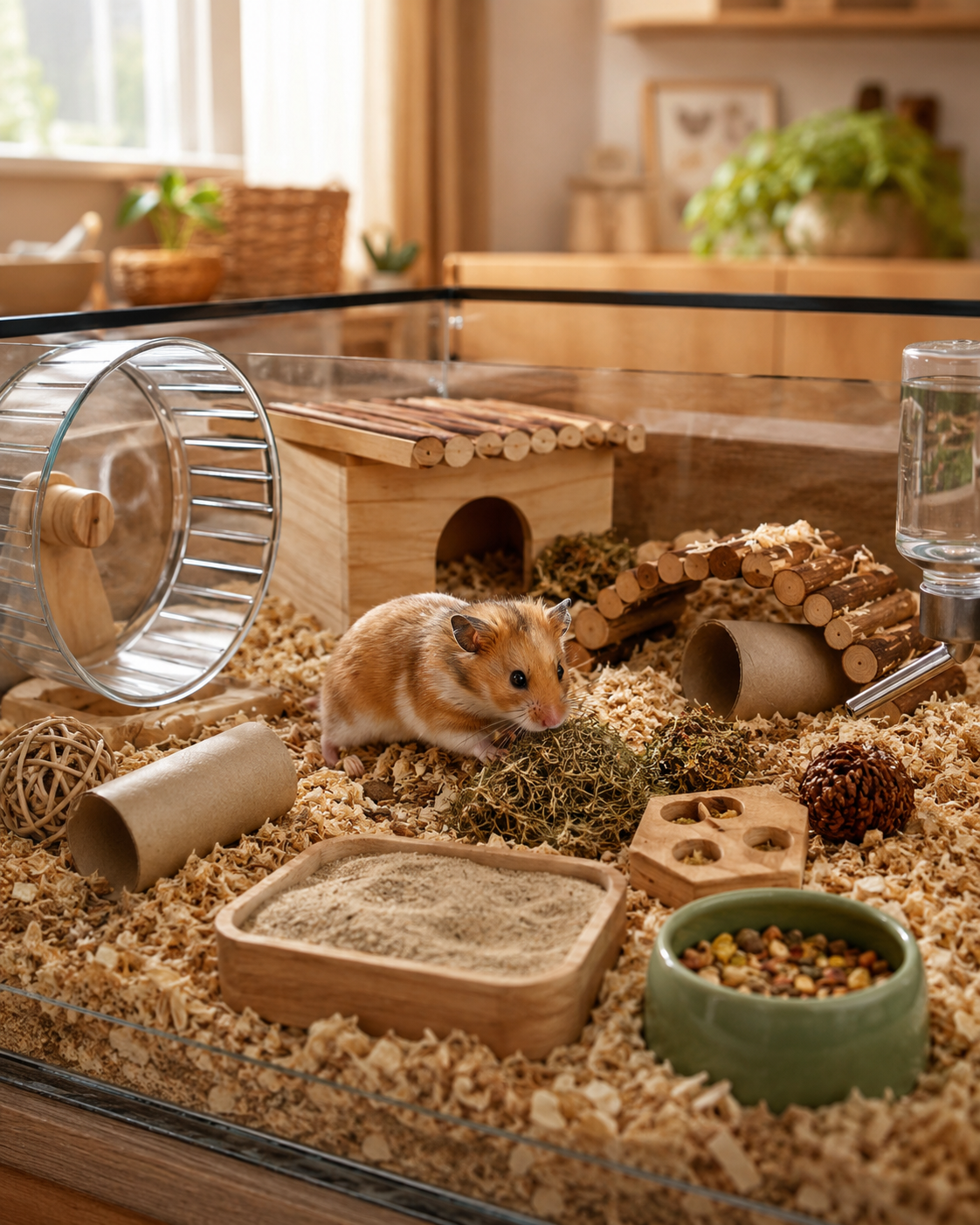
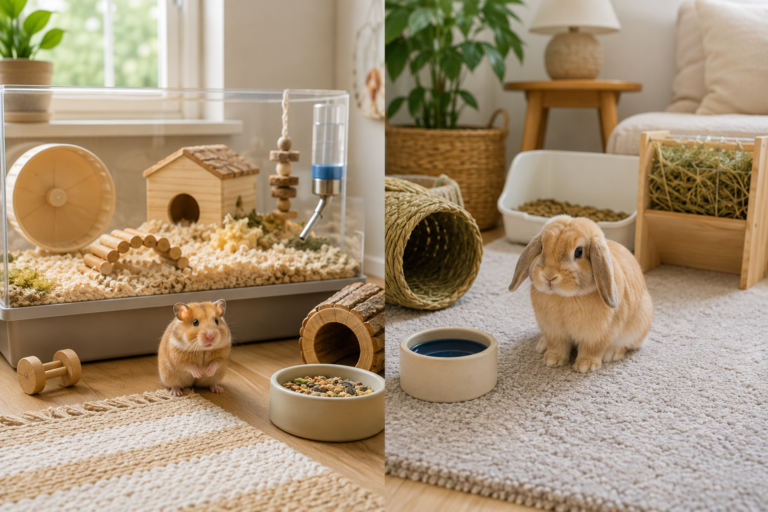
Hamsters love tunnels, wheels, hideouts, chew toys, digging areas, sand baths, foraging toys, and safe climbing or exploring accessories.
If you are setting up a hamster habitat, this guide will help you choose beginner-friendly hamster toy ideas that can make your pet’s daily life more active and interesting.
The Pet Room shares general pet lifestyle information. We do not provide veterinary or medical advice. For health concerns, always contact a qualified veterinarian.
Why Hamsters Need Toys and Enrichment
Hamsters are naturally busy animals.
In a good setup, a hamster may run, dig, burrow, chew, hide, collect food, explore tunnels, and investigate new textures. Toys and enrichment help support those behaviors in a safe indoor habitat.
Good hamster toys can help with:
- boredom
- daily movement
- natural chewing
- digging behavior
- hiding
- foraging
- confidence
- mental stimulation
- habitat variety
- a better daily routine
Toys do not replace proper cage size, deep bedding, fresh food, clean water, and regular care. But they can make the habitat much more interesting.
If you are comparing hamsters with other small pets, read this too: Hamster vs Guinea Pig: Which Small Pet Is Better for You?
1. Hamster Wheel
A hamster wheel is one of the most important hamster toys.
Hamsters are active animals, especially during the evening and night. A safe wheel gives your hamster a way to run inside the habitat.
A hamster wheel is good for:
- daily exercise
- active hamsters
- nighttime movement
- boredom reduction
- indoor enrichment
Choose a wheel that is large enough for your hamster to run with a straight back. A wheel that is too small can be uncomfortable.
Avoid wire wheels or unsafe designs that can trap feet. A solid running surface is usually a better choice.
2. Hamster Tunnels
Tunnels are excellent hamster toys because they match natural burrowing and exploring behavior.
Hamsters often enjoy running through tunnels, hiding inside them, turning around, and using them as pathways between different areas of the habitat.
Hamster tunnels are good for:
- exploring
- hiding
- burrowing behavior
- cage enrichment
- shy hamsters
- active hamsters
Tunnels can be made from cardboard, wood, cork, ceramic, or other hamster-safe materials.
Make sure tunnels are the right size for your hamster and easy to clean or replace.
3. Hideouts
Hideouts are essential for hamsters.
A hamster needs safe, dark, cozy places to rest and feel protected. Without enough hiding places, some hamsters may feel exposed or nervous.
Good hamster hideouts include:
- wooden houses
- ceramic hideouts
- cardboard houses
- multi-chamber hides
- cork logs
- coconut hides
- small pet hideaways
Hideouts are good for:
- sleeping
- confidence
- stress reduction
- privacy
- natural nesting behavior
A good hamster setup should include more than one hiding option.
Your hamster should have places to feel safe, not just open floor space.
4. Chew Toys
Hamsters need safe things to chew.
Chew toys help give your hamster something appropriate to bite and explore. Many hamsters enjoy wood chews, chew sticks, hay-based toys, and small pet chew blocks.
Chew toys are good for:
- natural chewing
- boredom
- toy rotation
- habitat variety
- curious hamsters
- safe enrichment
Always choose hamster-safe chew toys. Avoid unsafe paint, glue, sharp pieces, or tiny parts that could break off.
Check chew toys often and remove anything damaged or unsafe.
5. Sand Bath
A sand bath is an important enrichment item for many hamsters.
Hamsters often use sand to groom themselves, roll, dig, and keep their coat in better condition. A sand bath also gives them something natural and interesting to do.
A sand bath is good for:
- grooming behavior
- digging
- enrichment
- natural movement
- habitat variety
Use hamster-safe sand, not dusty powder. Dusty products can be unsafe for small animals.
Place the sand bath in a stable container that is large enough for your hamster to move around comfortably.
6. Digging Area
Hamsters love digging.
Deep bedding is already important, but you can also create extra digging areas using safe materials. A digging area gives your hamster another way to explore and stay active.
Digging areas are good for:
- burrowing
- mental stimulation
- natural behavior
- active hamsters
- boredom reduction
A hamster habitat should not be flat and empty.
Deep bedding, tunnels, and digging zones can make the setup feel much more natural.
7. Foraging Toys
Foraging toys encourage hamsters to search for food instead of simply eating from a bowl.
You can use safe foraging toys, scatter feeding, small puzzle-style feeders, or simple paper-based enrichment where the hamster has to sniff and explore.
Foraging toys are good for:
- mental stimulation
- natural food searching
- active exploration
- bored hamsters
- daily enrichment
Start with easy foraging activities. If the task is too difficult, your hamster may ignore it.
The goal is to make feeding more interesting, not stressful.
8. Wooden Bridges
Wooden bridges are useful because they can work as tunnels, ramps, dividers, or small hideout covers.
They can help create different zones inside the habitat and make the setup feel less empty.
Wooden bridges are good for:
- gentle climbing
- hiding
- layout variety
- habitat decoration
- natural texture
- enrichment
Keep bridges low and stable. Hamsters are small animals, and high climbing areas can create fall risks.
A hamster toy should make the habitat safer and more interesting, not dangerous.
9. Climbing Toys
Some hamsters enjoy gentle climbing, but climbing toys must be chosen carefully.
Hamsters are not climbing pets in the same way as rats or birds. They can fall, so climbing accessories should be low, stable, and safe.
Safe climbing toys may include:
- low platforms
- cork pieces
- low wooden bridges
- textured surfaces
- small stable ramps
Climbing toys are good for:
- habitat variety
- curious hamsters
- gentle movement
- enrichment
Avoid tall ladders, high platforms, or open climbing structures that could lead to falls.
10. Cardboard Toys
Cardboard toys are simple, affordable, and useful.
Many hamsters enjoy chewing cardboard, hiding in cardboard tubes, or exploring small cardboard boxes.
Cardboard toys are good for:
- chewing
- hiding
- tunnels
- budget-friendly enrichment
- toy rotation
- easy replacement
Use plain cardboard without staples, tape, glossy coating, strong smell, or unsafe ink.
A simple cardboard tube can sometimes be more exciting than an expensive toy.
11. Puzzle Toys
Puzzle toys can give your hamster a small challenge.
Some hamster-safe puzzle toys hide food or treats and encourage the hamster to sniff, push, lift, or explore to find the reward.
Puzzle toys are good for:
- curious hamsters
- food-motivated hamsters
- mental stimulation
- supervised enrichment
- boredom reduction
Choose beginner-friendly puzzles first. A puzzle that is too complicated may not be useful.
Simple is often better.
12. Hamster Playpen Toys
A safe playpen can give your hamster supervised exploration time outside the main cage.
Playpen toys may include:
- tunnels
- hideouts
- chew toys
- cardboard boxes
- sand bath
- foraging toys
- low bridges
- safe floor toys
Playpen toys are good for:
- supervised activity
- exploration
- bonding
- extra movement
- enrichment
Make sure the playpen is escape-proof and safe. Remove wires, unsafe objects, small gaps, and anything your hamster could chew.
Never leave a hamster unattended in an unsafe area.
How to Choose the Right Hamster Toy
The best hamster toy depends on your hamster’s species, size, personality, and behavior.
Some hamsters love running. Some love digging. Some love chewing. Some are shy and prefer hideouts. Some are curious and enjoy foraging toys.
Choose toys based on behavior:
Choose a wheel if your hamster needs daily running.
Choose tunnels if your hamster likes hiding and exploring.
Choose hideouts if your hamster seems shy.
Choose chew toys if your hamster likes gnawing.
Choose a sand bath for grooming and digging behavior.
Choose foraging toys if your hamster is food-motivated.
Choose cardboard toys if you want budget-friendly enrichment.
A toy that one hamster loves may be ignored by another hamster, and that is normal.
Toy Rotation for Hamsters
Toy rotation helps keep the habitat interesting.
If the same items stay in the same places all the time, your hamster may stop exploring them. Rotating a few toys or rearranging safe accessories can make the habitat feel new again.
You can rotate:
- chew toys
- cardboard toys
- tunnels
- foraging toys
- puzzle toys
- hideouts
- wooden bridges
Do not change everything at once if your hamster is nervous. Some hamsters prefer gradual changes.
The goal is enrichment, not stress.
Do Hamster Toys Replace Cage Size?
No, hamster toys do not replace proper cage size.
A hamster still needs enough floor space, deep bedding, a safe wheel, hideouts, food, water, and a clean habitat. Toys make the setup better, but they do not fix a cage that is too small or too empty.
A good hamster setup should include:
- enough floor space
- deep bedding
- safe wheel
- hideouts
- tunnels
- chew toys
- sand bath
- food and water
- safe enrichment
- regular cleaning
Small pet does not mean tiny setup.
Safety Tips for Hamster Toys
Hamster toy safety matters because hamsters chew, climb, dig, and explore with their mouths.
Basic safety tips include:
- choose hamster-safe materials
- avoid sharp edges
- avoid small loose parts
- avoid unsafe paint or glue
- avoid dusty products
- keep climbing toys low
- remove broken toys
- check toys often
- avoid unsafe strings
- clean toys when needed
If a toy becomes damaged, dirty, or unsafe, remove it.
A toy should help your hamster, not create risk.
Useful Hamster Toys and Supplies
- hamster wheel
- hamster tunnel
- hamster hideout
- hamster chew toys
- hamster sand bath
- hamster-safe sand
- wooden bridge
- cork tunnel
- foraging toy
- hamster playpen
- cardboard tunnel
- hamster toy set
Common Mistakes With Hamster Toys
Many new hamster owners buy toys but miss the basics.
Common mistakes include:
- buying a wheel that is too small
- using unsafe wire wheels
- not providing enough hideouts
- choosing tall climbing toys
- not offering chew toys
- using dusty sand products
- giving toys with unsafe glue or paint
- never rotating toys
- using toys instead of giving enough space
- choosing toys only because they look cute
A better approach is to choose toys that support natural hamster behavior: running, digging, chewing, hiding, and foraging.
Final Thoughts: What Are the Best Hamster Toys?
The best hamster toys are toys that help hamsters run, hide, dig, chew, forage, explore, and stay busy in a safe way.
A safe wheel, tunnels, hideouts, chew toys, sand bath, digging area, foraging toys, wooden bridges, cardboard toys, puzzle toys, and playpen toys can all help make your hamster’s habitat more interesting.
You do not need every toy at once.
Start with the essentials, watch what your hamster enjoys, and build a simple enrichment routine around natural hamster behavior.
A happy hamster needs more than a cage.
It needs space, deep bedding, a safe wheel, hideouts, enrichment, and daily care.
Read Next
- Hamster vs Guinea Pig: Which Small Pet Is Better for You?
- Best Guinea Pig Toys: Keep Your Guinea Pig Busy and Happy
- Best Rabbit Toys for Indoor Rabbits: Keep Your Bunny Busy and Happy
- Guinea Pig as a Pet: Is This Friendly Small Pet Right for You?
- Rabbit as a Pet: Is a Rabbit the Right Small Pet for You?
- Best Pets for First-Time Owners
4 Comments