Best Rabbit Toys for Indoor Rabbits: Keep Your Bunny Busy and Happy
Indoor rabbits are curious, active, intelligent pets that need more than food, water, and a quiet corner.
A rabbit may look calm and gentle, but it still needs space to move, safe things to chew, places to hide, toys to explore, and daily enrichment. Without enough activity, a rabbit may become bored, restless, destructive, or less engaged with its environment.
The best rabbit toys for indoor rabbits help them chew, dig, toss, hide, explore, forage, and stay mentally stimulated in a safe way.
If your rabbit chews furniture, digs at rugs, seems bored, or spends too much time sitting still, better enrichment may help make daily life more interesting.
The Pet Room shares general pet lifestyle information. We do not provide veterinary or medical advice. For health concerns, always contact a qualified veterinarian.
Why Indoor Rabbits Need Toys
Rabbits are not simple cage pets.
They are naturally curious animals that enjoy exploring their environment. They may chew, dig, nudge, hop, toss objects, hide, and investigate new textures.
Good rabbit toys can help with:
- boredom
- chewing needs
- mental stimulation
- safe activity
- indoor enrichment
- confidence
- natural behavior
- exercise
- routine
- furniture protection
Toys do not replace space, daily care, hay, litter cleaning, or attention, but they can make an indoor rabbit setup much better.
If you are still deciding whether a rabbit fits your home, read this first: Rabbit as a Pet: Is a Rabbit the Right Small Pet for You?
1. Chew Toys
Chew toys are some of the most important toys for indoor rabbits.
Rabbits naturally need safe things to chew. If they do not have appropriate chew toys, they may target furniture, baseboards, rugs, baskets, or other household items.
Rabbit chew toys may include safe wooden toys, willow balls, apple sticks, hay-based toys, or other rabbit-safe materials.
Chew toys are good for:
- rabbits that chew furniture
- bored rabbits
- indoor rabbit enrichment
- natural chewing behavior
- rabbits that need safe activity
- toy rotation
The goal is to give your rabbit something safe and interesting to destroy.
Always choose rabbit-safe toys and check them often for damage.
2. Willow Balls
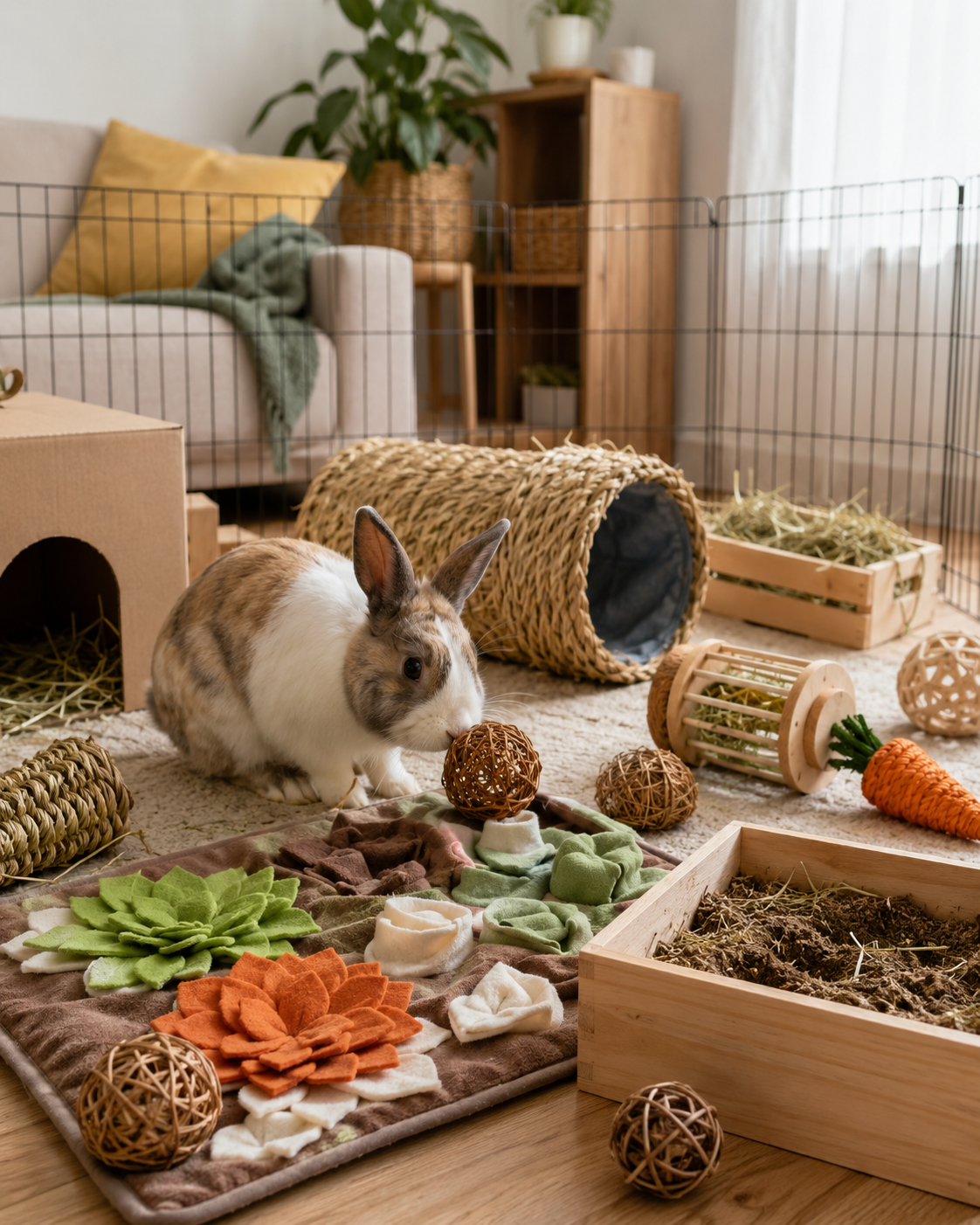
Willow balls are popular rabbit toys because many rabbits enjoy chewing, rolling, nudging, and tossing them.
They are simple, lightweight, and easy to place inside an enclosure or play area.
Willow balls are good for:
- chewing
- tossing
- nudging
- light play
- bored rabbits
- natural texture enrichment
Some rabbits destroy willow balls quickly, and that is normal. The toy is meant to be used.
If your rabbit loves chewing, willow toys can be a useful part of a rotating toy basket.
3. Tunnels
Tunnels are excellent for indoor rabbits.
Rabbits often enjoy running through tunnels, hiding inside them, turning around, and popping out from the other side. A tunnel can make a simple room or enclosure feel more exciting.
Rabbit tunnels are good for:
- active rabbits
- shy rabbits
- exercise
- hide-and-seek behavior
- play areas
- indoor enrichment
Tunnels can be made from fabric, cardboard, grass, or other rabbit-safe materials. Make sure the tunnel is large enough for your rabbit to move through comfortably.
A tunnel can also make videos and photos more engaging because rabbits often move through them naturally.
4. Cardboard Boxes
A plain cardboard box can be one of the best rabbit toys.
Many rabbits love boxes because they can hide inside, chew edges, hop in and out, and explore. You can cut doorways into the box to make a simple hideout or tunnel.
Cardboard boxes are good for:
- hiding
- chewing
- exploring
- budget-friendly enrichment
- digging setups
- play areas
- shy rabbits
Use plain cardboard without unsafe tape, staples, glossy coatings, or strong smells.
Sometimes the simplest toy is the one your rabbit enjoys most.
5. Digging Boxes
Digging is a natural rabbit behavior.
Indoor rabbits may dig at rugs, blankets, corners, or soft flooring if they do not have a better outlet. A digging box can give them a safer place to use that instinct.
A digging box may include safe materials such as shredded paper, hay, or other rabbit-safe filling depending on your setup.
Digging boxes are good for:
- rabbits that dig rugs
- active rabbits
- bored rabbits
- mental stimulation
- natural behavior
- indoor playtime
Place the digging box in an easy-to-clean area. Some rabbits can make a mess while digging, but that is part of the enrichment.
6. Foraging Toys
Foraging toys make rabbits work a little for food or treats.
These toys encourage your rabbit to search, sniff, pull, nudge, or move objects to find a reward. This can help make snack time more mentally interesting.
Foraging toys are good for:
- curious rabbits
- food-motivated rabbits
- mental enrichment
- bored rabbits
- slow feeding
- daily routine
Start with easy foraging toys first. If the toy is too difficult, your rabbit may ignore it.
The goal is to make your rabbit curious, not frustrated.
7. Toss Toys
Some rabbits enjoy picking up toys with their teeth and tossing them.
Toss toys may include small rabbit-safe balls, lightweight wooden toys, hanging toys, or simple objects made for small pets.
Toss toys are good for:
- playful rabbits
- curious rabbits
- rabbits that like moving objects
- short bursts of activity
- indoor enrichment
Not every rabbit tosses toys, but some find it very fun.
Try different shapes and textures to see what your rabbit likes.
8. Hay Toys
Hay-based toys are useful because they combine chewing, texture, and foraging.
These may include hay balls, hay mats, hay cubes, or toys that encourage your rabbit to pull and nibble.
Hay toys are good for:
- chewing
- foraging
- natural behavior
- indoor enrichment
- rabbits that need more activity
- toy rotation
Hay should already be part of a rabbit’s daily routine, but hay toys can make it more engaging.
This article is not dietary advice, so always follow trusted rabbit care guidance and ask a qualified veterinarian for specific feeding concerns.
9. Puzzle Toys
Puzzle toys can be helpful for rabbits that need more mental stimulation.
Some rabbit-safe puzzle toys encourage nudging, lifting, sliding, or searching for small rewards. These toys can make your rabbit think and explore.
Puzzle toys are good for:
- smart rabbits
- bored rabbits
- food-motivated rabbits
- indoor enrichment
- supervised play
- daily mental activity
Choose simple puzzles at first. Rabbits may need time to understand how the toy works.
10. Hanging Toys
Hanging toys can add variety to a rabbit enclosure.
Some rabbits enjoy pulling, nudging, chewing, or investigating hanging toys. These toys can be made from safe wood, hay, natural fibers, or other rabbit-safe materials.
Hanging toys are good for:
- enclosure enrichment
- chewing
- curiosity
- rabbits that like pulling toys
- space-saving setups
Make sure the toy is securely attached and does not have unsafe strings, loose parts, or anything your rabbit could get tangled in.
11. Activity Mats
Activity mats can make an indoor rabbit play area more interesting.
Some mats include textures, hiding pockets, forage areas, or soft surfaces for exploration. Others are simple washable mats used under toys and tunnels.
Activity mats are good for:
- indoor play areas
- rabbits on slippery floors
- enrichment setups
- toy rotation
- safer exploration
A mat can also protect your floor and help define your rabbit’s play zone.
12. Rabbit-Safe Playpens
A playpen is not exactly a toy, but it can make toys more useful.
Indoor rabbits need safe space to move. A playpen can create a controlled area where you can place tunnels, chew toys, boxes, mats, and foraging activities.
A playpen is useful for:
- supervised playtime
- apartment setups
- indoor enrichment
- safe exercise
- toy stations
- protecting furniture
If you want your rabbit to move more, the play area matters as much as the toys.
How to Choose the Right Rabbit Toy
The best rabbit toy depends on your rabbit’s personality.
Some rabbits love chewing. Some love digging. Some love tunnels. Some love tossing objects. Some are shy and prefer hiding places first.
Choose toys based on behavior:
Choose chew toys if your rabbit chews furniture.
Choose tunnels if your rabbit likes running and hiding.
Choose cardboard boxes if your rabbit loves exploring.
Choose digging boxes if your rabbit digs rugs.
Choose foraging toys if your rabbit is food-motivated.
Choose toss toys if your rabbit likes moving objects.
Choose hay toys if your rabbit enjoys pulling and nibbling.
A toy that one rabbit loves may be ignored by another rabbit, and that is normal.
Toy Rotation for Indoor Rabbits
Toy rotation helps keep things interesting.
If the same toys stay in the same place every day, your rabbit may stop caring about them. Rotating toys every few days can make the setup feel new again.
You can rotate:
- chew toys
- willow balls
- tunnels
- cardboard boxes
- digging boxes
- foraging toys
- hay toys
- puzzle toys
Do not change everything at once if your rabbit is nervous. Some rabbits need gradual changes.
Do Rabbit Toys Replace Space?
No, toys do not replace space.
A rabbit still needs enough room to hop, stretch, turn, explore, and rest comfortably. Toys make the space better, but they do not fix a tiny enclosure.
A good indoor rabbit routine includes:
- enough space
- fresh hay
- food and water
- litter box care
- safe chew toys
- hiding spots
- enrichment
- calm interaction
- supervised exercise time if appropriate
Small pet does not mean small needs.
Safety Tips for Rabbit Toys
Rabbit toy safety matters.
Rabbits chew and explore with their teeth, so toys should be checked regularly. Remove anything that becomes sharp, broken, tangled, dirty, or unsafe.
Basic safety tips include:
- choose rabbit-safe materials
- avoid sharp edges
- avoid unsafe paint or glue
- remove broken toys
- avoid loose strings
- check toys often
- supervise new toys
- avoid toys that are too small
- keep play areas away from wires
- make sure tunnels are large enough
If your rabbit tries to eat something unsafe, remove it and choose a better option.
Useful Rabbit Toys for Indoor Rabbits
- rabbit chew toys
- willow balls
- rabbit tunnel
- rabbit digging box
- hay toys
- rabbit foraging toy
- small pet puzzle toy
- cardboard hideout
- rabbit activity mat
- indoor rabbit playpen
Common Mistakes With Rabbit Toys
Many new rabbit owners buy toys but do not use them in the best way.
Common mistakes include:
- buying unsafe toys
- giving toys that are too small
- not offering enough chew options
- never rotating toys
- expecting every rabbit to like the same toy
- using toys instead of giving enough space
- ignoring digging behavior
- leaving loose strings or unsafe parts
- not checking toys for damage
- buying toys only because they look cute
A better approach is to watch your rabbit’s behavior and choose toys that support what it naturally wants to do.
Final Thoughts: What Are the Best Rabbit Toys for Indoor Rabbits?
The best rabbit toys for indoor rabbits are toys that help them chew, dig, toss, hide, explore, forage, and stay mentally active.
Chew toys, willow balls, tunnels, cardboard boxes, digging boxes, foraging toys, toss toys, hay toys, puzzle toys, hanging toys, activity mats, and safe playpens can all help make indoor life more interesting.
You do not need every toy at once.
Start with a few safe options, watch what your rabbit enjoys, and build a simple toy rotation around natural rabbit behavior.
A happy indoor rabbit needs more than a cage.
It needs space, enrichment, safe toys, and daily care.