Best Scratching Posts for Cats: What Actually Works
The best scratching posts for cats are tall, stable, and made from a material your cat actually wants to scratch — and choosing the wrong one is one of the most common reasons cats keep scratching furniture instead.
A post that wobbles, feels flimsy, or uses the wrong material often gets ignored completely, no matter how many treats or how much catnip you use to encourage it. The right post, on the other hand, can redirect scratching almost effortlessly.
This guide breaks down exactly what to look for, along with a few solid product picks to make shopping easier. If you are still working on the training side of things, our guide on How to Stop a Cat From Scratching Furniture covers the full redirection process.
The Pet Room shares general pet lifestyle information. We do not provide veterinary or medical advice. For behavior changes linked to stress, pain, or anxiety, speak with a qualified veterinarian.
Quick Answer: What Makes a Good Scratching Post?
The best scratching posts for cats generally share a few key features:
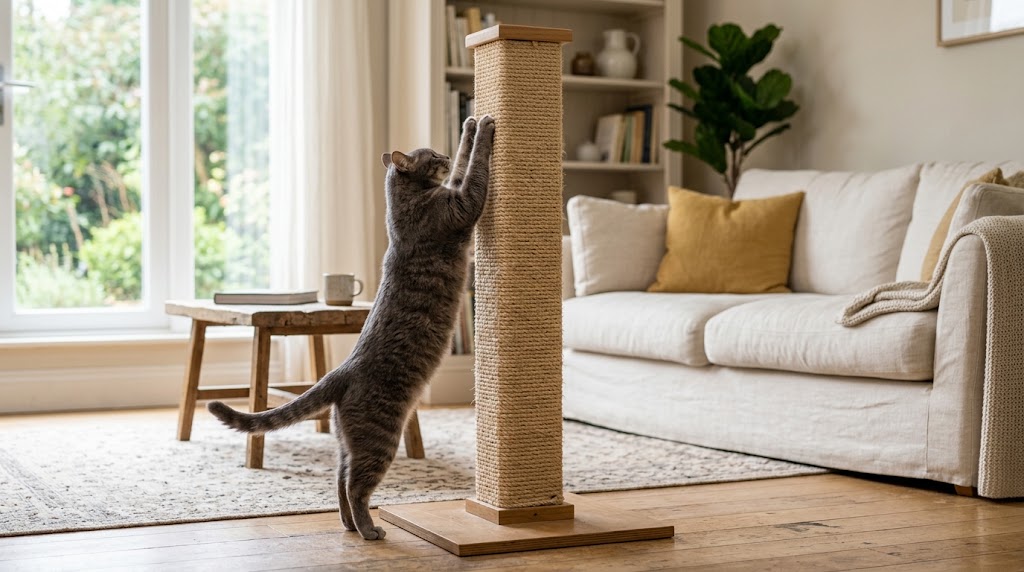
- tall enough for a full-body stretch (at least 28-32 inches for most adult cats)
- a wide, stable base that will not tip or wobble
- sisal rope or sisal fabric material, which most cats prefer
- secure anchoring, whether wall-mounted, weighted, or bolted
If a post fails on stability, none of the other features matter much. A cat that gets startled by a wobble once may avoid the post entirely afterward.
Why Post Quality Actually Matters
Cats scratch to stretch, mark territory, and maintain their claws. In the wild, this instinct is usually directed at sturdy vertical surfaces like tree trunks, which is why stability and height matter so much in a scratching post.
A cheap, short, or wobbly post does not replicate that experience well. Many cats will simply go back to the couch, which offers a taller, sturdier surface even if it is not meant for scratching.
Sisal Rope vs Carpet vs Cardboard: Which Material Is Best?
Material preference varies by cat, but there are some general patterns worth knowing.
- Sisal rope: the most commonly recommended material; textured enough to satisfy scratching instinct and durable over time
- Sisal fabric: flatter and smoother than rope, still popular and slightly gentler on paws
- Carpet: soft and familiar, but can sometimes confuse cats about which carpet in the house is “allowed”
- Cardboard: inexpensive and often loved for horizontal scratching, though it wears out faster and needs replacing
If you are not sure what your cat prefers, offering one rope-style vertical post and one cardboard horizontal scratcher at the same time is a simple way to learn their preference quickly.
Vertical vs Horizontal: Does Orientation Matter?
Some cats strongly prefer stretching upward, while others prefer scratching flat surfaces.
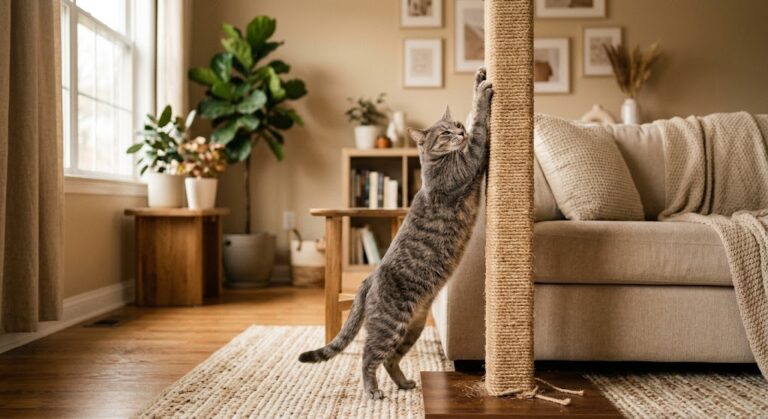
- Vertical posts suit cats that like a full-body stretch and mimic scratching a tree trunk
- Horizontal scratchers suit cats that prefer lower, flatter surfaces, often similar to how they might scratch a rug
If your cat already has a preferred scratching spot on furniture, take note of the angle. A cat scratching the vertical arm of a couch likely wants a vertical post. A cat scratching the carpet likely wants a horizontal scratcher.
Our Picks: Best Scratching Posts for Cats
1. Best Overall: Tall Sisal Rope Cat Tree
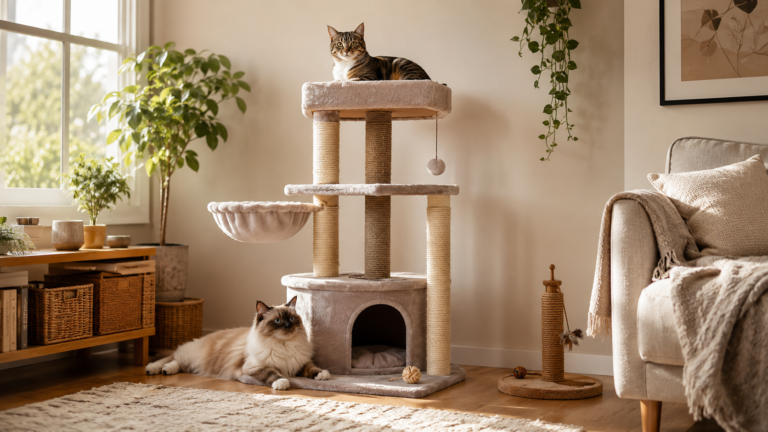
A tall, multi-level cat tree wrapped in sisal rope gives your cat a stable, satisfying place to scratch while also offering climbing and perching space. Look for a wide base (at least 20 inches across) and a post height of 30 inches or more for adult cats.
Amazon Basics Multi-Level Cat Tree
2. Best Budget Pick: Classic Sisal Rope Scratching Post
A simple single-post design wrapped in sisal rope, usually 28-32 inches tall with a weighted base. A solid entry-level option if you are testing whether your cat prefers vertical scratching before investing in a larger cat tree.
Amazon Basics Sturdy Cat Scratching Post
3. Best for Small Spaces: Wall-Mounted Sisal Scratcher
A wall-mounted option that saves floor space while still offering a tall, stable scratching surface. Especially useful in apartments where floor space is limited.
4. Best Horizontal Option: Corrugated Cardboard Scratcher
An affordable, replaceable cardboard scratcher for cats that prefer flat, horizontal surfaces. Often includes a curved design that lets cats scratch from multiple angles.
Curved Corrugated Cardboard Scratcher
5. Best for Multi-Cat Homes: Multi-Post Cat Tree
Homes with more than one cat often do best with multiple scratching surfaces in different rooms, since cats may prefer marking their own separate territory. A multi-post cat tree or several single posts placed strategically works well here.
Amazon Basics Multi-Level Cat Tree
How to Make Any Scratching Post More Appealing
- place it directly next to the furniture your cat currently scratches
- rub a small amount of catnip or silvervine into the material
- reward your cat with praise or treats when they use it
- avoid moving the post around too often once your cat starts using it
For the full step-by-step redirection process, see: How to Stop a Cat From Scratching Furniture.
Signs You Chose the Wrong Post
- your cat ignores it completely after the first few days
- the post wobbles or tips when your cat uses it
- your cat still goes straight for the furniture nearby
- the post is noticeably shorter than your cat’s full stretch
If any of these apply, it is often worth trying a different height, material, or orientation rather than assuming your cat simply “doesn’t like posts.”
How Many Scratching Posts Do You Need?
A general guideline is at least one post per cat, plus one extra, placed in different areas of the home. Multi-cat households especially benefit from posts near sleeping areas and near the furniture that tends to get scratched most.
Final Checklist Before You Buy
- ☐ At least 28-32 inches tall for adult cats
- ☐ Wide, stable, weighted base
- ☐ Sisal rope or sisal fabric material
- ☐ Matches your cat’s preferred orientation (vertical or horizontal)
- ☐ Placed near the furniture your cat currently scratches
- ☐ One post per cat, plus one extra
Final Verdict
The right scratching post is less about price and more about stability, height, and material. A tall, sturdy, sisal-wrapped post placed in the right spot solves far more furniture-scratching problems than any deterrent spray or punishment ever will.
Read Next
- How to Stop a Cat From Scratching Furniture
- Best Pets for Apartments: Friendly Options for Small Homes
- Best Pets for First-Time Owners: Beginner-Friendly Companion Animals
This post may contain affiliate links. As an Amazon Associate, we earn from qualifying purchases at no extra cost to you.