Indoor Cat Feeding Station Setup: Bowls, Water, Placement, and Daily Routine
A cat feeding station looks simple.
A bowl of food. A bowl of water. Maybe a mat underneath. Done, right?
Not always.
Where you place your cat’s food and water, what type of bowls you use, how often you clean them, and how calm the feeding area feels can make a big difference in your cat’s daily routine.
A good feeding station should be clean, quiet, easy to reach, and comfortable for your cat to use every day.
This guide explains how to set up an indoor cat feeding station, including bowl choice, water setup, placement, cleaning routine, common mistakes, and useful products that can make daily feeding easier.
The Pet Room shares general pet lifestyle information. We do not provide veterinary or medical advice. For diet changes, weight concerns, appetite changes, vomiting, urinary concerns, allergies, or medical feeding questions, always speak with a qualified veterinarian.
Quick Checklist: What Every Cat Feeding Station Needs
A good indoor cat feeding station should include:
- one food bowl
- one water bowl or fountain
- easy-clean feeding mat
- quiet location
- stable bowls
- fresh water daily
- clean bowls
- enough space around the bowls
- food storage nearby but sealed
- simple daily routine
The goal is not to create a fancy setup.
The goal is to make feeding cleaner, calmer, and easier for both you and your cat.
If your cat also needs more indoor enrichment, read this guide: Best Cat Trees for Indoor Cats: How to Choose the Right One for Your Home
Why Feeding Station Setup Matters
Cats can be sensitive about where they eat and drink.
A feeding area that is noisy, cramped, dirty, or placed too close to the litter box may make mealtime less comfortable.
A better setup can help with:
- cleaner floors
- easier daily feeding
- fresher water
- less bowl mess
- calmer meals
- better routine
- easier cleanup
- fewer crumbs around the house
- a more organized pet corner
Small changes can make the feeding station feel much more intentional.
This is especially useful for indoor cats because their home environment shapes most of their daily habits.
Choose the Right Food Bowl
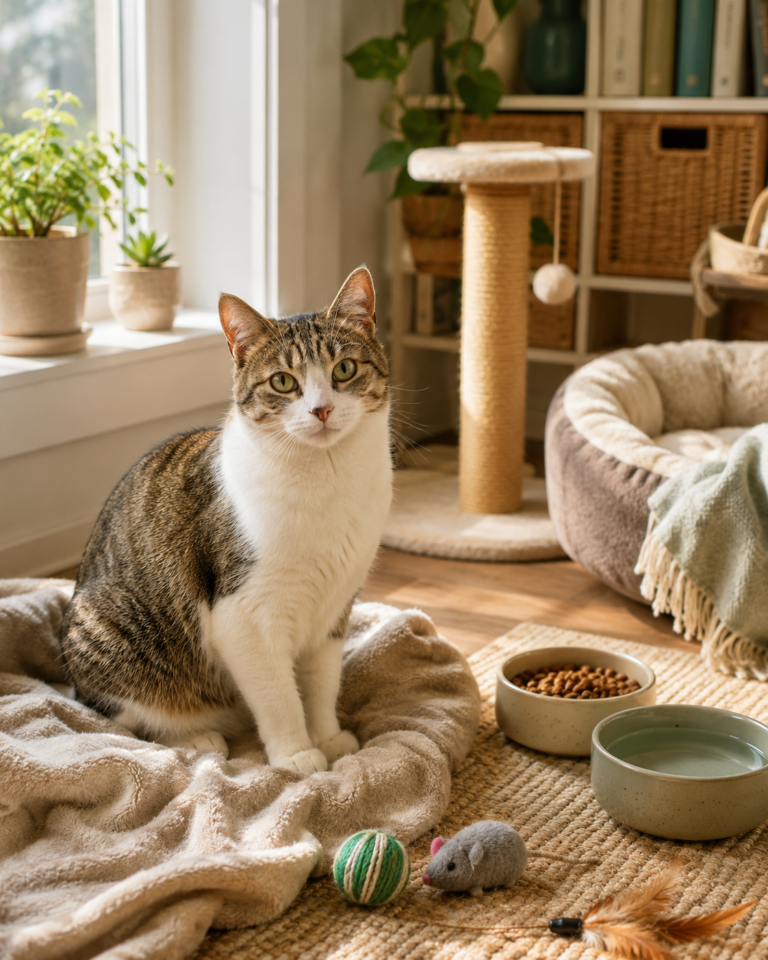
The food bowl should be stable, easy to clean, and comfortable for your cat.
Many cats do well with shallow, wide bowls because they allow the cat to eat without pressing the whiskers too much against the sides.
Good food bowl features:
- shallow shape
- wide opening
- stable base
- easy-clean material
- ceramic or stainless steel
- not too deep
- not easy to slide around
- dishwasher-safe if possible
Avoid bowls that are very deep, narrow, cracked, chipped, or hard to clean.
Plastic bowls may be lightweight and cheap, but they can scratch and hold odors more easily. Ceramic or stainless steel bowls are often easier to keep clean.
Food Bowl vs Water Bowl: Keep Them Slightly Separate
Many cats prefer food and water in separate spots.
You do not always need to place them across the room, but keeping them a little apart can make the setup feel cleaner and more natural.
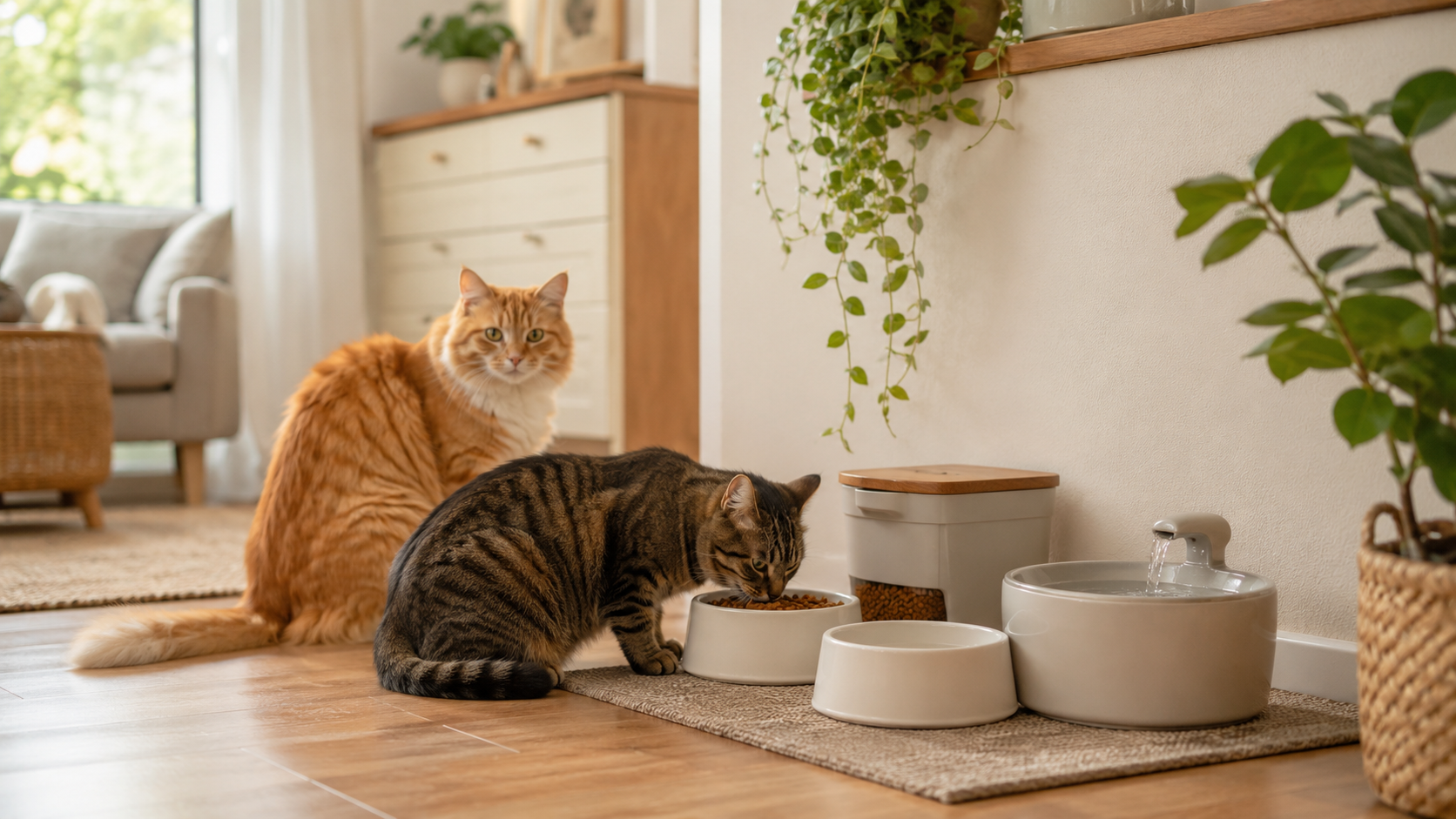
Try placing water:
- a few inches away from food
- on the same mat but separated
- on a separate mat nearby
- away from litter box areas
- away from messy food crumbs
- in a quiet spot your cat likes
Some cats drink more willingly when water is not placed right next to food.
Every cat is different, so observe your cat and adjust.
Should You Use a Cat Water Fountain?
A cat water fountain can be useful for some indoor cats.
Some cats are attracted to moving water and may show more interest in drinking from a fountain than from a still bowl. Other cats prefer a simple bowl.
A fountain may be helpful if:
- your cat likes running water
- your cat often drinks from sinks
- you want water to stay moving
- you can clean the fountain regularly
- you are okay replacing filters
- your cat seems curious about it
A fountain is not useful if you do not clean it.
Water fountains need regular washing, filter changes, and water refreshes. A dirty fountain is not better than a clean bowl.
If your cat has hydration concerns, urinary issues, appetite changes, or drinking changes, ask a veterinarian.
This article is about feeding station setup, not medical nutrition.
Where to Put Your Cat’s Feeding Station
Placement matters.
A cat should be able to eat in a calm, low-stress area without feeling trapped, crowded, or constantly interrupted.
Good feeding station locations include:
- quiet kitchen corner
- low-traffic hallway edge
- calm dining room corner
- clean laundry room area if quiet
- pet-friendly wall corner
- apartment feeding nook
- area away from litter box
Avoid placing food bowls:
- next to the litter box
- beside loud appliances
- in busy doorways
- where people constantly step over the cat
- near strong smells
- in cramped corners with no escape route
- beside messy trash areas
A calm spot makes mealtime easier.
Keep the Feeding Area Away From the Litter Box
Food and litter should not be close together.
Cats are usually cleaner and more comfortable when eating and toileting areas are separate.
Try to keep the feeding station in a different area from the litter box. If you live in a small apartment, create as much separation as possible.
Better options:
- food in kitchen corner, litter in bathroom
- food in dining nook, litter in laundry area
- food on one side of a room, litter on the other
- use furniture placement to create separation
This simple change can make the feeding station feel cleaner and more comfortable.
Use a Feeding Mat
A feeding mat is one of the easiest upgrades.
It helps catch crumbs, water splashes, and scattered food. It also keeps bowls from sliding across the floor.
Look for a mat that is:
- waterproof
- non-slip
- easy to wipe
- large enough for bowls
- low edge if your cat dislikes raised edges
- machine washable or easy to rinse
A mat is especially helpful if your cat pushes food out of the bowl or splashes water.
It also makes the feeding area look more organized.
Simple Daily Cat Feeding Routine
A routine helps keep the feeding station clean and predictable.
Morning
- refresh water
- serve fresh food
- wipe bowl area if needed
- check for crumbs
- remove old food if needed
Midday
- check water level
- top up water if needed
- make sure the feeding mat is dry
- tidy scattered food
Evening
- serve evening meal if part of your routine
- wash bowls with warm, soapy water
- wipe the mat
- check food storage
Weekly
- deep clean bowls
- wash the feeding mat thoroughly
- clean water fountain if used
- check bowls for chips or cracks
- wipe nearby floor and wall area
- refresh food storage container if needed
A small daily routine prevents bigger mess later.
Common Cat Feeding Station Mistakes
Avoid these common mistakes:
- placing food beside the litter box
- using dirty water bowls
- leaving wet food out too long
- using cracked or scratched bowls
- placing bowls in noisy spots
- putting food and water too close for a picky cat
- forgetting to clean the feeding mat
- using bowls that slide around
- keeping food in open bags
- crowding the feeding corner
- changing the setup too often
Cats often prefer calm and consistency.
A feeding station does not need to be complicated. It just needs to be clean, stable, and placed thoughtfully.
Best Bowls for Indoor Cats
A good cat bowl should be practical before it is decorative.
Ceramic Bowls
Ceramic bowls can be heavy, stable, and attractive. Choose glazed, food-safe bowls that are easy to clean and not chipped.
Stainless Steel Bowls
Stainless steel bowls are lightweight, durable, and easy to wash. They are a practical choice for many homes.
Raised Bowls
Some owners like raised bowls for comfort and cleaner setup, but not every cat needs them. Watch your cat’s posture and preference.
Slow Feeders
A slow feeder may help cats that eat too quickly, but it should still be easy to clean and comfortable to use.
For cats with vomiting, swallowing issues, appetite changes, or other health concerns, ask a veterinarian before making feeding changes.
Food Storage: Keep It Clean and Sealed
Food storage is part of the feeding station too.
Leaving cat food bags open can make the area messy and may reduce freshness.
Better storage options include:
- airtight food container
- original bag placed inside sealed container
- dry storage area
- scoop kept clean
- food away from moisture
- food away from heat
- clear label if needed
Do not store food directly beside strong-smelling cleaning products.
Keep the feeding area simple and safe.
Feeding Station Setup for One Cat vs Multiple Cats
One cat may do well with one food bowl and one water station.
Multiple cats may need more planning.
In multi-cat homes, some cats prefer separate feeding spaces. One cat may guard food, eat faster, or make another cat feel rushed.
For One Cat
Use:
- one food bowl
- one water bowl or fountain
- one mat
- quiet location
- simple routine
For Two or More Cats
Consider:
- separate bowls
- more than one water station
- wider spacing
- multiple mats
- calm feeding locations
- watching for food guarding
- avoiding crowding
A peaceful feeding routine matters more than a perfectly styled corner.
If you are thinking about indoor cat enrichment for multiple cats, you may also like: Best Cat Toys for Indoor Cats: Keep Your Cat Active and Happy
Apartment-Friendly Feeding Station Ideas
Small homes can still have a clean cat feeding station.
Good apartment ideas:
- use a corner feeding mat
- choose compact ceramic bowls
- use an airtight food container
- keep water slightly separate
- place bowls away from litter box
- avoid doorways
- use a low shelf or cabinet nearby for supplies
- wipe the area daily
Even a small feeding station can feel organized if everything has a place.
For more small-space pet ideas, read: Best Pets for Apartments
Feeding Station Comparison Table
| Setup Choice | Best For | Watch Out For |
|---|---|---|
| Ceramic bowls | Stable, stylish feeding areas | Replace if chipped |
| Stainless steel bowls | Easy cleaning and durability | May slide without a mat |
| Water fountain | Cats that like moving water | Must be cleaned regularly |
| Feeding mat | Messy eaters and water splashes | Needs daily wiping |
| Airtight food container | Cleaner storage | Keep scoop clean |
| Separate water station | Cats that dislike water near food | Needs extra space |
| Raised bowl | Some cats may prefer the height | Not necessary for every cat |
| Slow feeder | Fast eaters | Must be comfortable and washable |
Best For / Avoid If
A Planned Feeding Station Is Best For:
- indoor cats
- apartment cats
- multi-cat homes
- messy eaters
- cats that splash water
- homes that need cleaner pet corners
- owners who want a simple routine
- cats that prefer calm feeding areas
Avoid a Cramped Feeding Station If:
- your cat seems uncomfortable while eating
- bowls slide around
- food is beside the litter box
- water gets dirty quickly
- the area is noisy
- the cat has no room to stand comfortably
- bowls are hard to clean
A good feeding station should make daily care easier, not more stressful.
Product Suggestions for a Better Cat Feeding Station
Useful product ideas:
- ceramic cat bowls
- stainless steel cat bowls
- shallow cat bowls
- raised cat bowl stand
- cat water fountain
- non-slip feeding mat
- slow feeder cat bowl
- airtight cat food container
- food scoop
- pet-safe cleaning brush
- washable floor mat
- extra water bowl
- automatic feeder
Real-Life Decision Help: What Should You Set Up First?
If you want to improve your cat’s feeding station, start simple.
First, fix the basics:
- move food away from the litter box
- use stable bowls
- keep water fresh
- add an easy-clean mat
- choose a quiet location
- clean bowls daily
- store food properly
- observe your cat’s preferences
After that, you can decide whether your cat needs a fountain, raised bowls, slow feeder, or second water station.
Do not buy every product at once.
A clean, calm, well-placed setup is the most important part.
Final Thoughts: A Better Feeding Station Starts With Small Changes
An indoor cat feeding station does not need to be fancy.
It needs to be clean, calm, stable, and easy to use.
Choose bowls that are easy to wash. Keep food and water slightly separate. Place the station away from the litter box and noisy areas. Use a mat to catch mess. Refresh water daily. Clean the bowls regularly.
These small habits can make feeding time smoother and your home cleaner.
A better feeding station is not just about looks.
It is about building a simple routine your cat can trust every day.
Read Next
- Best Cat Trees for Indoor Cats: How to Choose the Right One for Your Home
- Best Cat Toys for Indoor Cats: Keep Your Cat Active and Happy
- Ragdoll Cat as a Pet: Is This Gentle Indoor Cat Right for You?
- Best Pets for Apartments
- Best Pets for First-Time Owners
- Is a Hedgehog a Good Pet? What Beginners Should Know Before Getting One