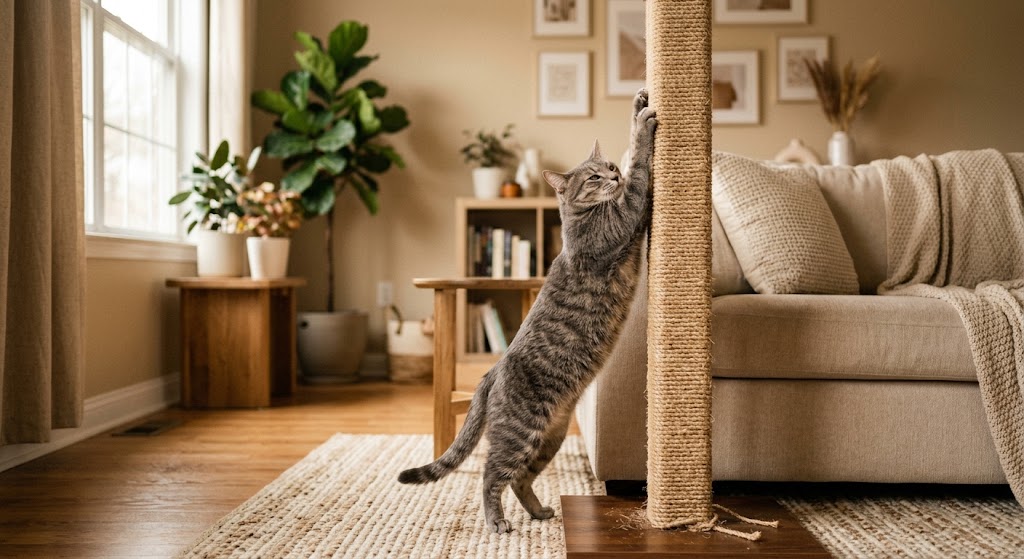
How to Stop a Cat From Scratching Furniture
A shredded couch corner is one of the most common frustrations new cat owners face.
Scratching is not bad behavior. It is a completely normal, healthy cat instinct. The good news is that with the right setup and a little patience, you can redirect that instinct away from your furniture and onto something made for it.
The Pet Room shares general pet lifestyle information. We do not provide veterinary or medical advice. If scratching behavior changes suddenly, becomes aggressive, or seems linked to stress, pain, or anxiety, speak with a qualified veterinarian.
Quick Answer: How Do You Stop a Cat From Scratching Furniture?
You cannot stop a cat from scratching entirely, and you should not try. The realistic goal is to redirect scratching toward acceptable surfaces.
The fastest results usually come from combining these steps:
- Provide the right type of scratching post (tall, sturdy, and the right texture)
- Place posts near the furniture your cat already scratches
- Make the post more appealing than the couch
- Make the furniture less appealing temporarily
- Reward your cat for using the post
- Trim nails regularly
- Stay consistent and patient
None of these steps work as well alone as they do together. A cat that has a great post right next to an unprotected couch corner will often still choose the couch out of habit.
Why Do Cats Scratch in the First Place?
Scratching serves several real purposes for a cat, which is why it can never be fully eliminated, only redirected.
Cats scratch to:
- remove the outer layer of their claws
- stretch their back, shoulders, and legs
- mark territory visually and with scent glands in their paws
- relieve stress or excess energy
- simply because it feels satisfying
Understanding this helps explain why yelling or punishment rarely works. Scratching is not misbehavior. It is communication and maintenance, and a cat that is punished for it often just learns to scratch when you are not watching.
Choosing the Right Scratching Post
Most furniture-scratching problems come down to one thing: the scratching post available is not appealing enough.
A post that actually competes with your couch usually has:
- Height or length: tall enough for a full body stretch, or long enough for horizontal scratchers
- Stability: it should not wobble or tip when your cat pulls on it
- The right texture: sisal rope or sisal fabric works well for most cats; some prefer cardboard or wood
- The right orientation: some cats strongly prefer vertical posts, others prefer flat horizontal scratchers
If you are not sure what your cat prefers, offering one vertical and one horizontal option at first can help you learn their preference quickly.
Placement Matters More Than Most Owners Expect
A great scratching post in the wrong location often gets ignored.
For best results:
- Place a post directly next to the furniture your cat currently scratches
- Add a second post near where your cat sleeps, since many cats stretch and scratch right after waking up
- Keep at least one post in a visible, central area, since cats often want to mark territory where the household spends time
Tucking a scratching post away in a corner or another room is one of the most common reasons a good post gets ignored.
Making the Post More Appealing
Once the right post is in the right place, you can actively encourage your cat to use it.
Helpful techniques include:
- rubbing a small amount of catnip or silvervine into the post
- placing treats or toys on or near the post
- gently guiding your cat’s paws over the post in a scratching motion, without forcing
- praising or rewarding your cat calmly whenever they use it on their own
Timing matters. A reward given the moment your cat scratches the post helps build the association much faster than a reward given later.
Making Furniture Less Appealing (Temporarily)
While your cat is learning new habits, it helps to make the furniture itself less rewarding to scratch.
Common humane methods include:
- double-sided tape made for furniture protection, since most cats dislike the sticky texture
- a throw blanket or furniture cover over the scratched area
- aluminum foil temporarily placed over the corner
- keeping a scratching post directly in front of the protected area
These deterrents work best as a temporary bridge, not a permanent solution. The real fix is always redirecting to a post your cat prefers, not just blocking the couch forever.
Should You Trim Your Cat’s Nails?
Regular nail trims will not stop scratching, since scratching is about more than nail length, but they do reduce the damage when scratching happens.
A simple routine may include:
- trimming every two to three weeks
- using a proper cat nail trimmer, not human clippers
- trimming only the sharp tip, avoiding the pink quick
- going slowly and rewarding calm behavior, especially with kittens or nervous cats
If your cat is very resistant to nail trims, short, calm sessions trimming just one or two nails at a time are usually more successful than trying to do all of them at once.
What About Nail Caps?
Soft nail caps are an option some owners use to reduce furniture damage while training is still in progress.
A few honest points to know:
- they need to be reapplied every few weeks as nails grow
- they do not teach the cat anything on their own, so they work best alongside redirection training
- some cats tolerate them well, others do not
Nail caps can be a useful short-term tool, but they are not a substitute for giving your cat an appealing place to scratch.
What Doesn’t Work (and Can Backfire)
A few common reactions tend to make furniture scratching worse, not better:
- yelling or physically punishing your cat
- spraying your cat directly with water as punishment
- declawing, which is a serious surgical procedure that removes part of the toe bone and is discouraged by most veterinary organizations
- removing all scratching posts because “the cat doesn’t use them,” instead of trying a different type or location
Punishment-based approaches often just teach a cat to avoid scratching in front of you, without solving the underlying need.
How Long Does It Take to Redirect Scratching?
Most cats begin showing a preference for a well-placed, appealing post within one to three weeks of consistent effort.
Factors that speed up progress:
- correct post placement near the original scratching spot
- consistent, positive rewards
- removing easy access to the old scratching spot temporarily
- patience, since older cats with long-established habits may take longer than kittens
If you are just settling a new cat into your home, building good scratching habits early is much easier than correcting an established one later. If you are still setting up your space, read: Best Pets for First-Time Owners: Beginner-Friendly Companion Animals.
Scratching in Apartments and Small Spaces
Furniture protection is often a bigger concern in apartments, where furniture may be rented or harder to replace.
In smaller spaces, it helps to:
- choose a compact but stable vertical post
- use wall-mounted scratchers to save floor space
- place a post near shared or high-traffic areas, since apartment cats often scratch where the household spends time
If you are weighing whether a cat fits your living situation, read: Best Pets for Apartments: Friendly Options for Small Homes.
Common Mistakes Owners Make
Many scratching problems come down to a handful of repeated mistakes:
- buying only one post for a multi-cat household
- choosing a wobbly, low-quality post
- placing the post somewhere out of the way
- giving up on a post after a few days without trying a different texture or orientation
- punishing the cat instead of redirecting
- expecting scratching to stop completely, rather than just move to an appropriate surface
Final Checklist: Redirecting Furniture Scratching
- ☐ Choose a tall, sturdy post with the right texture for your cat
- ☐ Place it directly next to the furniture currently being scratched
- ☐ Add a second post near your cat’s sleeping area
- ☐ Use catnip, treats, or praise to build a positive association
- ☐ Temporarily protect furniture with tape, foil, or a cover
- ☐ Trim nails every two to three weeks
- ☐ Avoid yelling, spraying, or punishment
- ☐ Stay consistent for at least two to three weeks before judging results
Final Verdict
Scratching is not a problem to eliminate. It is a natural behavior to redirect.
With the right post, the right placement, and a little consistency, most cats will happily shift their scratching away from your furniture and onto something built for the job.






One Comment