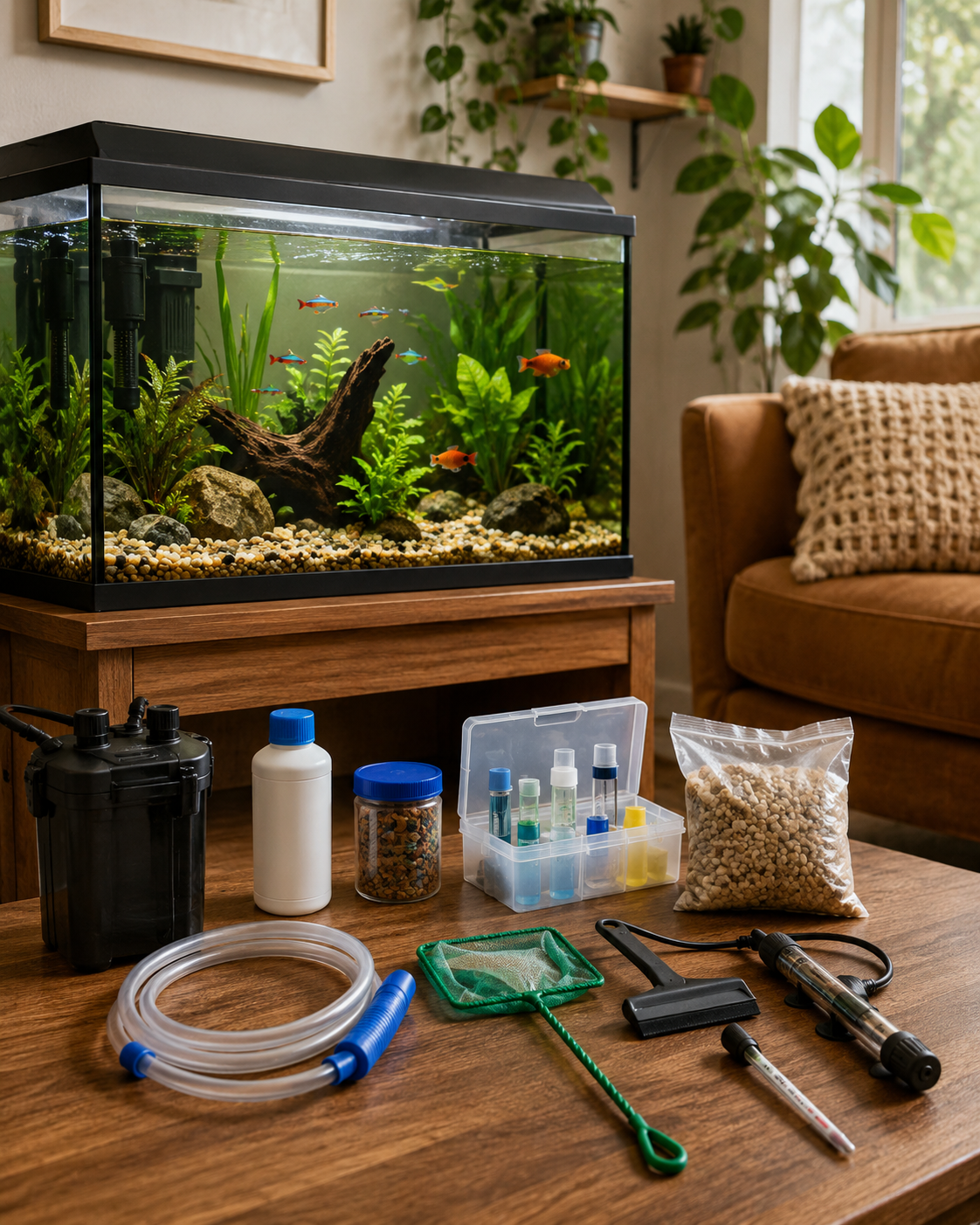
Aquarium Supplies for Beginners: What You Need for Your First Fish Tank
Starting your first aquarium can feel exciting, but also a little confusing.
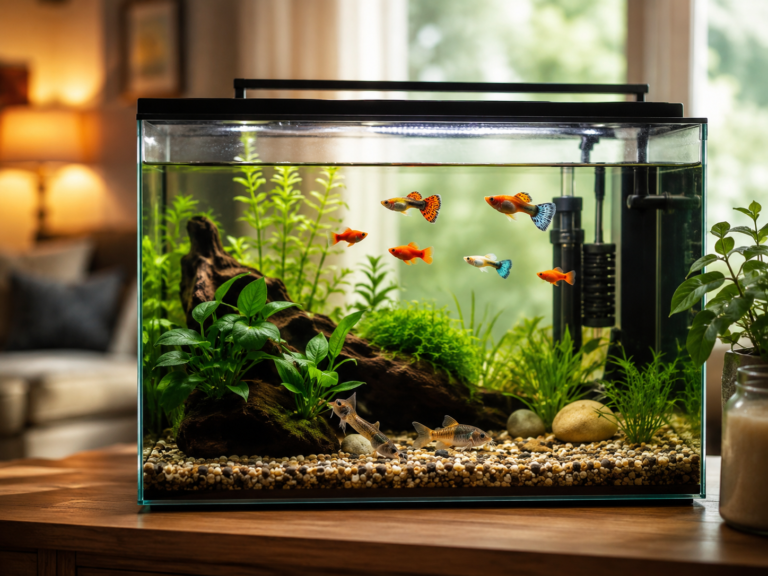
There are tanks, filters, heaters, lights, water conditioners, test kits, gravel, plants, decorations, food, nets, cleaning tools, and many different fish options. For a beginner, it is easy to focus on the fish first and forget that the setup matters just as much.
A healthy aquarium starts before the fish comes home.
The right aquarium supplies help create a safer, cleaner, more stable environment for your fish. A fish tank is not just a glass box with water. It is a living setup that needs equipment, routine, and planning.
If you are setting up your first fish tank, this guide will help you understand the basic aquarium supplies beginners usually need.
The Pet Room shares general pet lifestyle information. We do not provide veterinary or medical advice. For health concerns, always contact a qualified aquatic veterinarian or fish care professional.
Why Aquarium Supplies Matter
Fish depend completely on their environment.
Unlike dogs or cats, fish cannot leave their tank when something is wrong. Water quality, temperature, filtration, space, and setup all matter every day.
Good aquarium supplies can help with:
- clean water
- stable temperature
- safer fish environment
- easier maintenance
- better feeding routine
- less beginner confusion
- healthier tank setup
- more comfortable fish behavior
- long-term aquarium success
Many beginner problems start because the tank was rushed.
If you are still choosing fish, read this first: Best Pet Fish for Beginners: Easy Fish to Start With
1. Aquarium Tank
The tank is the foundation of your aquarium.
Many beginners think a tiny bowl or mini tank is easier, but very small setups can be harder to manage. Water conditions can change quickly in a tiny amount of water, which may make the tank less stable.
A proper aquarium tank gives fish more room, allows equipment to work better, and gives beginners more flexibility.
When choosing a tank, think about:
- how much space you have
- what fish you want
- how many fish you plan to keep
- where the tank will sit
- how easy it will be to clean
- whether the stand or furniture can support it
Do not choose a tank based only on what looks cute in the store.
Choose a tank that fits the fish and your routine.
2. Aquarium Filter
A filter is one of the most important aquarium supplies for beginners.
The filter helps move water, trap debris, and support the tank’s overall water quality. Without proper filtration, waste can build up quickly.
A beginner aquarium filter may help with:
- water movement
- debris removal
- cleaner tank appearance
- supporting beneficial bacteria
- easier maintenance
- better daily water conditions
There are different types of filters, including hang-on-back filters, sponge filters, internal filters, and canister filters. Beginners often start with simple filters that are easy to install, clean, and understand.
Choose a filter that matches your tank size and fish type.
3. Aquarium Heater
Many popular beginner fish are tropical fish, which means they may need warmer, stable water.
An aquarium heater helps maintain the right temperature range for fish that need it. Not every fish needs a heater, but many common aquarium fish do.
A heater may be important for:
- betta fish
- guppies
- platies
- many tropical community fish
- tanks in cooler rooms
- homes with changing indoor temperatures
If your fish species needs stable warm water, a heater is not optional.
Before buying fish, always check whether they need heated water.
4. Thermometer
A thermometer helps you monitor the aquarium temperature.
Even if you have a heater, you still need a way to check that the water temperature is staying stable. A heater can be set incorrectly, fail, or be affected by room temperature.
A thermometer helps you notice problems before they become serious.
Beginner options include:
- stick-on thermometers
- digital thermometers
- floating thermometers
- glass thermometers
The best thermometer is one you can read easily and check often.
5. Water Conditioner
Water conditioner is a basic supply that many beginners forget.
Tap water can contain substances that are not safe for fish. A water conditioner is used when adding tap water to the tank to make it safer for aquarium use.
You may need water conditioner when:
- filling a new tank
- doing water changes
- topping off water
- setting up emergency water
- preparing water for fish
Always follow the product instructions carefully.
Water may look clean to people, but fish need more than clear-looking water.
6. Water Test Kit
A water test kit helps beginners understand what is happening inside the aquarium.
Clear water does not always mean healthy water. A tank can look fine while still having water quality problems.
A beginner water test kit may help check things like:
- ammonia
- nitrite
- nitrate
- pH
- water conditions over time
Testing is especially useful when setting up a new tank, adding fish, or trying to understand why something seems wrong.
A test kit can help you make decisions based on information, not guessing.
7. Aquarium Substrate
Substrate is the material at the bottom of the tank.
Common options include gravel, sand, or planted tank substrate. Substrate affects the look of the aquarium, but it can also affect cleaning, fish behavior, and plant setup.
Beginner substrate choices depend on:
- fish species
- cleaning routine
- plant plans
- tank style
- bottom-dwelling fish
- personal preference
Gravel is common for beginner tanks, but it is not automatically best for every fish.
If you plan to keep bottom-dwelling fish, research substrate needs carefully.
8. Aquarium Plants
Plants can make an aquarium feel more natural and comfortable.
You can choose live plants or artificial plants. Both can be useful depending on your experience, budget, and tank goals.
Plants can help create:
- hiding places
- visual comfort
- natural-looking tank layout
- resting areas
- enrichment
- a more attractive aquarium
Live plants require more care but can make the tank feel more balanced and natural. Artificial plants are easier for beginners but should be soft and aquarium-safe.
Avoid sharp decorations that could damage delicate fins.
9. Aquarium Decorations and Hiding Spots
Fish need more than open water.
Many fish feel safer when they have places to hide, rest, explore, or avoid stress. Decorations can make the tank more interesting and more comfortable.
Good aquarium decorations may include:
- caves
- driftwood
- smooth rocks
- safe artificial plants
- live plants
- small hides
- background decor
Decorations should be aquarium-safe, smooth, and appropriate for your fish.
Do not overcrowd the tank. Fish still need swimming space.
10. Fish Food
Fish food should match the fish you keep.
Different fish have different feeding needs. Some eat flakes. Some need pellets. Some need sinking food. Some need special diets depending on species.
Beginner fish food options may include:
- flakes
- pellets
- sinking wafers
- betta pellets
- tropical fish food
- algae wafers for certain species
Do not buy food only because the label says “fish food.” Choose food based on the fish species.
Also, avoid overfeeding. Too much food can pollute the water quickly.
11. Fish Net
A fish net is a simple but useful aquarium supply.
You may need it for moving fish safely, removing floating debris, or managing certain maintenance tasks.
Choose a net that is:
- soft
- aquarium-safe
- the right size for your fish
- easy to rinse and store
A net should be used carefully. Fish can be delicate and easily stressed.
12. Aquarium Light
Aquarium lights help you see the tank and can support plant growth if you keep live plants.
The light should fit the tank and your setup. Too much light can encourage algae growth, while too little light may make plants struggle.
A beginner light routine should be simple and consistent.
Aquarium lighting can help with:
- tank visibility
- plant growth
- day-night routine
- aquarium appearance
- fish viewing
If your tank has live plants, make sure the light is suitable for them.
13. Cleaning Tools
Aquarium cleaning tools make maintenance easier.
A beginner cleaning kit may include:
- algae scraper
- gravel vacuum
- bucket for aquarium use only
- sponge or cleaning pad
- water change siphon
- towel
- small brush for equipment
Do not use household soaps or cleaning chemicals inside the aquarium.
Aquarium cleaning is not about making the tank smell like cleaning products. It is about maintaining a safe environment.
14. Aquarium Stand or Safe Surface
An aquarium becomes very heavy once filled with water, substrate, decorations, and equipment.
Before setting up the tank, make sure the surface is strong, stable, level, and safe.
Do not place an aquarium on weak furniture.
A safe aquarium location should be:
- level
- stable
- away from direct heat
- away from direct intense sunlight
- away from heavy traffic
- near a power source
- easy to access for maintenance
Tank placement matters more than many beginners realize.
15. Power Strip and Cable Management
Aquariums often use multiple electrical items, such as filters, heaters, lights, and air pumps.
Cable management helps keep the setup cleaner and safer.
Think about:
- safe outlet access
- drip loops
- avoiding water near plugs
- keeping cables organized
- not overloading outlets
- keeping equipment easy to unplug if needed
Water and electricity require extra care.
If you are unsure about electrical safety, ask someone experienced before setting up the tank.
Useful Aquarium Supplies for Beginners
- beginner aquarium tank kit
- aquarium filter
- aquarium heater
- digital thermometer
- water conditioner
- freshwater aquarium test kit
- gravel vacuum
- aquarium gravel
- fish net
- algae scraper
- aquarium decorations
- tropical fish food
Common Beginner Aquarium Mistakes
Many new fish owners make the same mistakes when setting up a tank.
Common mistakes include:
- buying fish before setting up the aquarium
- choosing a tank that is too small
- skipping the filter
- forgetting water conditioner
- not checking temperature
- overfeeding fish
- adding too many fish too quickly
- choosing decorations with sharp edges
- ignoring water testing
- cleaning with soap or chemicals
- placing the tank on weak furniture
- buying supplies only based on price
Most aquarium problems are easier to prevent than fix.
Start with the setup, not the fish.
Do You Need Everything on Day One?
You do not need every fancy aquarium accessory on day one, but you do need the basics.
At minimum, beginners should think about:
- proper tank
- filter
- heater if needed
- thermometer
- water conditioner
- test kit
- substrate
- safe decorations or hiding spots
- fish food
- net
- cleaning tools
- safe surface or stand
Extra products can come later once you understand your tank better.
The goal is not to buy everything possible.
The goal is to buy the right basics first.
Final Thoughts: What Aquarium Supplies Do Beginners Need?
A good beginner aquarium starts with preparation.
Before you buy fish, make sure you understand the basic supplies your tank needs. A proper tank, filter, heater if needed, thermometer, water conditioner, test kit, substrate, plants, decorations, food, net, light, cleaning tools, and safe placement can make your first aquarium much easier to manage.
Fishkeeping is not only about choosing pretty fish.
It is about creating a stable environment where fish can live comfortably.
Start with the setup first. Then choose the fish.

2 Comments