Ferret as a Pet: Is This Playful, Curious Animal Right for You?
A ferret can sleep quietly for hours and then wake up ready to turn your entire home into a playground.
That contrast is part of what makes ferrets so entertaining.
They are curious, energetic, intelligent, social, and often determined to investigate every tunnel, cabinet, bag, blanket, and tiny gap they can find. They can form strong bonds with their owners and bring a lot of personality into a home.
But a ferret is not a low-maintenance cage pet.
Ferrets need supervised play outside their enclosure, a carefully secured home, regular cleaning, interactive enrichment, patient handling, and access to a veterinarian experienced with exotic companion animals.
Before bringing one home, the important question is not whether ferrets are cute.
It is whether their real daily routine fits your lifestyle.
The Pet Room shares general pet lifestyle information and does not provide veterinary or medical advice. For diet questions, unusual behavior, appetite changes, injuries, weight concerns, or species-specific health issues, contact a qualified veterinarian experienced with ferrets.
First: Check Whether Ferrets Are Legal Where You Live
Ferret ownership rules are not the same everywhere.
They may be legal in one region but restricted, licensed, or prohibited in another. Rules can also change between countries, states, cities, landlords, and housing associations.
Before buying supplies or contacting a breeder or rescue:
- check national and local animal laws
- review rental or housing rules
- confirm whether permits are required
- locate a veterinarian who treats ferrets
- choose only legal and responsible sources
Do not assume that a pet sold online is automatically legal in your area.
This step should come before everything else.
Quick Decision: Is a Ferret a Good Pet for You?
A ferret may fit your home if you want:
- a playful and interactive companion
- an animal with a strong personality
- supervised daily playtime
- a pet that enjoys tunnels and exploration
- a hands-on care routine
- a social animal that can build trust
- an unusual pet that is active when awake
- a home you are willing to ferret-proof
A ferret may not fit your home if you want:
- a low-maintenance pet
- an animal that stays quietly inside a cage
- very little daily cleaning
- unsupervised freedom around the home
- a pet for young children to handle alone
- a home that cannot be secured
- a pet that needs little interaction
- a completely odor-free small animal
Ferrets can be wonderful companions, but they require preparation.
What Is a Ferret’s Personality Really Like?
Ferrets are often described as a mix of curiosity, playfulness, mischief, and affection.
They may chase toys, explore tunnels, hide objects, wrestle with blankets, investigate bags, and follow their owners around the room. Some become affectionate and enjoy sleeping near their people after playtime.
Common personality traits include:
- curious
- playful
- social
- energetic when awake
- intelligent
- persistent
- mischievous
- affectionate with trusted people
- interested in exploring small spaces
A ferret does not usually sit quietly and watch the room all day.
When awake, it may actively search for something interesting to do.
That means the environment matters.
The Biggest Lifestyle Question: Can You Supervise Daily Play?
A safe enclosure can provide a secure sleeping and resting area, but it should not be the ferret’s entire world.
Ferrets need regular supervised time in a safe room or play area. This gives them opportunities to run, explore, climb through tunnels, interact with toys, and spend time with their owners.
Daily play may include:
- tunnel exploration
- chasing soft toys
- searching inside boxes
- supervised free movement
- gentle interactive games
- digging in a safe activity box
- exploring rotated toys
- calm bonding after activity
Simply opening the enclosure is not enough.
The room must first be checked for hazards.
Ferret-Proofing Is Not Optional
Ferrets can squeeze into surprisingly small spaces.
They may crawl behind furniture, enter cabinets, chew soft materials, climb into reclining furniture, explore appliance gaps, or disappear under objects that seem secure.
Before allowing a ferret to explore, check:
- gaps behind cabinets
- spaces under doors
- exposed wires
- reclining chairs and sofas
- open toilets
- cleaning products
- rubber items
- foam materials
- houseplants
- small objects
- open windows
- vents
- appliances
- bags and boxes
A ferret-proofed room should be reviewed regularly because ferrets are good at finding weaknesses in a setup.
If you cannot provide a secure play area, this may not be the right pet for your home.
What Does a Ferret Home Setup Need?
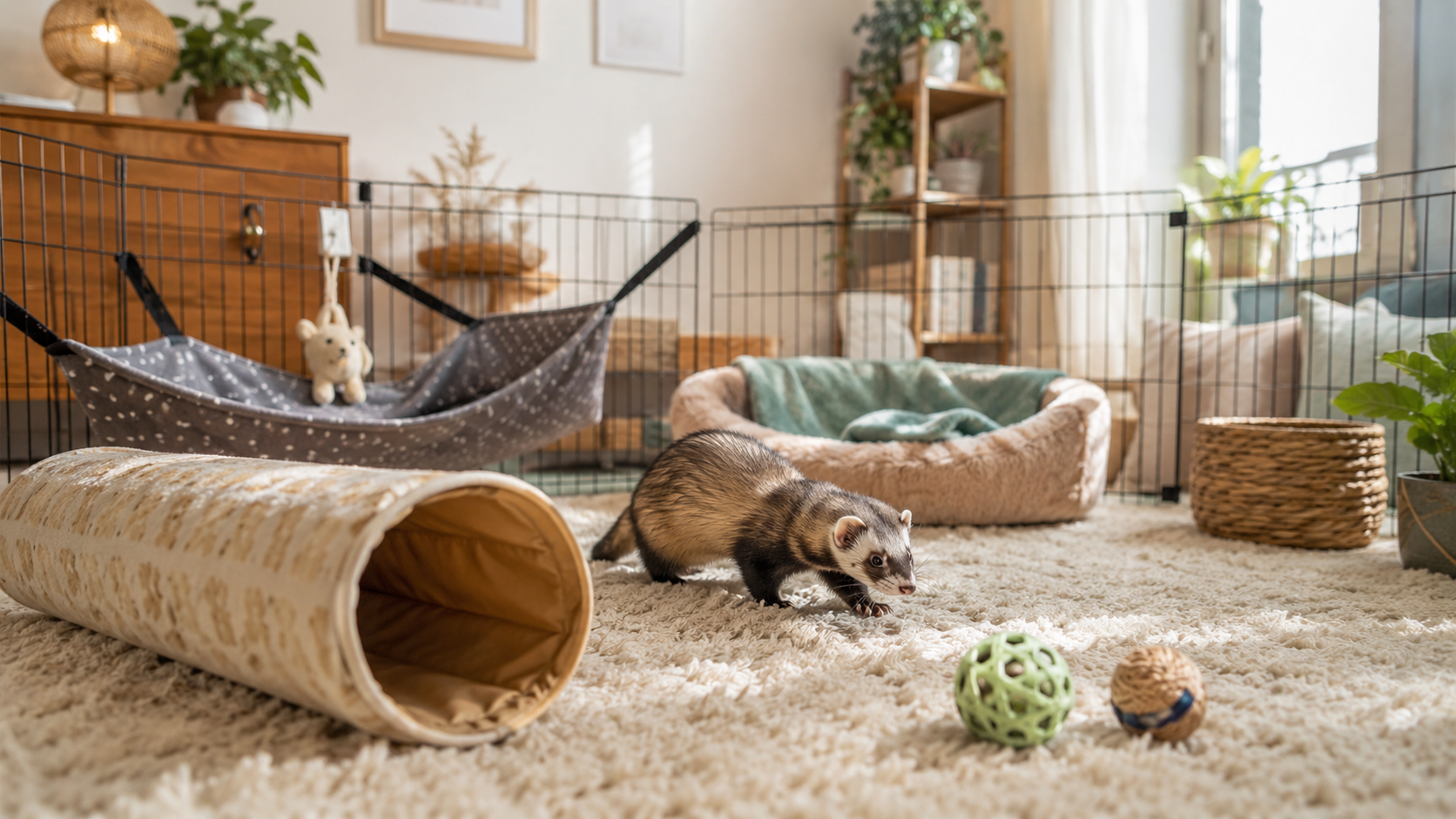
A practical ferret setup combines a safe enclosure with a supervised play zone.
The enclosure should provide secure places for sleeping, eating, drinking, and using a litter area.
Useful setup elements include:
- spacious multi-level enclosure
- solid flooring
- hammocks
- soft sleeping beds
- litter tray
- stable food bowl
- water bowl or suitable bottle
- washable blankets
- tunnels
- safe toys
- secure doors
- easy-clean surfaces
Avoid wire flooring, loose hazards, damaged toys, or accessories with parts that can be swallowed.
The enclosure should feel like a secure bedroom, not permanent confinement.
Sleeping Areas and Hammocks
Ferrets enjoy soft, enclosed sleeping spaces.
They may curl up inside hammocks, fleece beds, fabric tunnels, or blankets. Providing more than one resting option allows the ferret to choose where it feels most comfortable.
Good sleeping-area features include:
- washable materials
- secure attachment
- no loose threads
- soft texture
- dark or sheltered spaces
- enough room to stretch or curl up
- easy access
Check fabric items regularly for damage.
Replace anything that becomes torn or unsafe.
Tunnels and Exploration
Tunnels are especially useful because they support natural curiosity and movement.
You can use:
- fabric tunnels
- sturdy pet tunnels
- cardboard boxes
- paper bags without unsafe handles
- connected play tubes
- blanket forts
- supervised maze setups
Change the arrangement occasionally to keep the environment interesting.
A tunnel that stays in the exact same position for months may eventually become less exciting.
Litter Setup and Cleaning Reality
Some ferrets can learn to use litter trays, but beginners should not expect perfect litter habits.
They often prefer specific corners, so placing a tray in a chosen corner can help. More than one tray may be useful in a larger play area.
A simple cleaning routine may include:
- removing waste daily
- replacing soiled litter
- wiping nearby surfaces
- washing bowls
- checking bedding
- washing hammocks regularly
- cleaning the enclosure more deeply each week
- removing hidden food or objects
Ferrets can develop a noticeable natural odor, and poor cleaning makes it stronger.
Perfumes and strong fragrances are not a substitute for hygiene.
Daily Routine: What Life With a Ferret Can Look Like
Morning
Check food, refresh water, clean the litter area, and inspect the enclosure.
The ferret may be active briefly or may return to sleep.
Daytime
Many ferrets spend a large part of the day resting. Keep the sleeping area calm, secure, and comfortable.
Evening
This is often a good time for supervised play, tunnels, interaction, exploration, and toy rotation.
Before Bed
Return the ferret to a safe enclosure, check water, remove damaged toys, and secure all doors.
Weekly
Wash hammocks, clean resting areas, inspect the play zone, rotate toys, and perform a deeper enclosure clean.
A predictable routine makes care easier and helps prevent long periods of boredom.
Best For / Avoid If
A Ferret May Be Best For:
- experienced or well-prepared pet owners
- people who enjoy interactive pets
- owners with time for daily supervision
- homes that can be carefully secured
- people who enjoy playful animal behavior
- owners willing to clean regularly
- adults or responsible older children with supervision
- people who can access exotic veterinary care
Avoid a Ferret If:
- you want a pet that stays in one small enclosure
- you dislike frequent cleanup
- your home cannot be ferret-proofed
- you are away for very long periods
- you want a quiet observation-only pet
- you cannot supervise out-of-cage activity
- you dislike natural animal odors
- local ownership laws do not allow ferrets
This is a pet for owners who want to be involved.
Can Ferrets Live in Apartments?
Ferrets can live in apartments if the home allows them and the owner can provide a safe, enriched environment.
They do not necessarily need a large yard, but they do need room for supervised exploration.
An apartment setup should include:
- secure enclosure
- designated play area
- blocked gaps
- protected wires
- safe flooring
- litter trays
- washable bedding
- tunnels and toys
- good ventilation
- consistent cleaning
Noise may be less of a concern than with some pets, but odor control, cleaning, and landlord rules can be important.
For general small-home pet planning, read Best Pets for Apartments.
Are Ferrets Good Pets for Children?
Ferrets are not ideal as unsupervised pets for young children.
They are fast, flexible, delicate, and may become overstimulated. Young children may also hold them incorrectly, chase them, or accidentally leave doors open.
A better family setup includes:
- adult responsibility for care
- supervised interaction
- calm handling
- secure play areas
- clear household rules
- respect for resting time
- no rough play
The adult should remain the primary caregiver.
A child’s excitement should not be the reason a ferret enters an unprepared home.
Interaction and Handling
Trust usually develops through calm, consistent interaction.
Helpful handling habits include:
- supporting the body securely
- moving slowly
- keeping sessions short at first
- allowing the ferret to approach
- using toys during play
- respecting signals to move away
- avoiding rough grabbing
- rewarding calm behavior
Ferrets can be playful and mouthy, especially when excited. A qualified trainer or experienced ferret professional can help if biting or handling becomes difficult.
Enrichment Ideas That Do Not Require a Huge Budget
Ferret enrichment can be simple.
Try:
- cardboard box mazes
- rotated tunnels
- hidden toys
- supervised paper bags
- fabric hammocks
- treat-search activities
- safe digging boxes
- lightweight balls
- blanket piles
- interactive play with the owner
Always supervise new activities and remove damaged materials.
The goal is not to fill the room with products.
The goal is to provide safe variety.
Common Beginner Ferret Mistakes
Mistake 1: Not Checking Local Laws
Always verify legal ownership before making plans.
Mistake 2: Treating the Enclosure as the Entire Habitat
Ferrets need supervised exploration and play outside the enclosure.
Mistake 3: Skipping Ferret-Proofing
A room that is safe for a cat or dog may still contain serious hazards for a ferret.
Mistake 4: Underestimating Cleaning
Litter areas, bedding, bowls, and hidden mess require consistent attention.
Mistake 5: Buying Too Few Enrichment Items
A bare enclosure does not meet the needs of a curious animal.
Mistake 6: Leaving Unsafe Objects Within Reach
Rubber, foam, wires, small objects, and damaged toys can become dangerous.
Mistake 7: Expecting Perfect Litter Habits
Use realistic expectations and provide several easy-to-reach litter areas.
Mistake 8: Allowing Unsupervised Free Roaming
Even a well-prepared room should be checked before each session.
Ferret Home Audit
Before bringing a ferret home, ask:
| Question | Why It Matters |
|---|---|
| Are ferrets legal here? | Ownership restrictions vary |
| Can I access an exotic veterinarian? | Specialized care may be needed |
| Can I secure one full room? | Safe play requires ferret-proofing |
| Do I have time for supervision? | Ferrets need regular interaction |
| Can I clean daily? | Litter and bedding need attention |
| Can I manage natural odor? | Routine cleaning is important |
| Can I provide enrichment? | Curiosity needs safe outlets |
| Is everyone in the home prepared? | Doors and hazards must stay controlled |
If several answers are no, wait before getting a ferret.
Product Suggestions for Ferret Owners
- spacious multi-level ferret enclosure
- washable hammock
- soft sleep sack
- ferret tunnel
- secure playpen
- corner litter tray
- heavy ceramic bowls
- washable fleece liners
- interactive ferret toys
- small pet toy balls
- storage basket
- cleaning scoop
- pet-safe surface cleaner
- protective cable covers
- washable pet blankets
Real-Life Decision Help: Should You Get a Ferret?
A ferret may be a strong match if you want an animal that is playful, clever, social, and actively involved in your home.
It may be the wrong match if you want simple cage care and very little supervision.
Before deciding, imagine the real routine:
- checking the enclosure every morning
- cleaning litter areas
- securing a room
- supervising play
- washing bedding
- rotating enrichment
- checking every gap and wire
- arranging veterinary care
- repeating this consistently for years
Do not decide based only on a funny video.
Decide based on the daily work behind the funny moments.
Final Thoughts: Is a Ferret the Right Pet for You?
A ferret can be a joyful, entertaining, affectionate companion for a prepared owner.
It can also be overwhelming in a home that expects a simple small pet.
Ferrets need more than an enclosure. They need supervision, enrichment, cleaning, safety planning, interaction, and a home designed around their curiosity.
Choose a ferret if you enjoy active companionship and are ready to participate in daily care.
Avoid choosing one only because it looks playful or unusual.
The right home will see ferret mischief as part of the fun.
The wrong home may see the same behavior as a constant problem.
Preparation makes the difference.
Read Next
- Is a Hedgehog a Good Pet? What Beginners Should Know Before Getting One
- Best Pets for First-Time Owners
- Best Pets for Apartments
- Guinea Pig Cage Setup for Beginners: What Your Pet Really Needs
- Hamster vs Rabbit: Which Small Pet Fits Your Home Better?
- Best Hamster Toys: Keep Your Hamster Busy and Happy