Canary as a Pet: Is This Singing Bird Right for Your Home?
A canary is not usually the bird you choose for cuddles.
It is the bird you choose for song, routine, beauty, and a calmer kind of companionship.
Canaries are often best for people who enjoy watching and listening to birds rather than handling them every day. They can bring a peaceful presence into a home, especially when placed in a bright, calm, well-kept space with a proper cage, fresh water, clean perches, and a predictable routine.
But a canary is still a real pet with real daily needs.
It needs a suitable cage, clean food and water, a safe location, regular cage cleaning, quiet rest, and careful observation. A canary may not demand attention the way a parrot or cockatiel does, but that does not mean it can be ignored.
This guide explains what canaries are really like as pets, who they may suit, who should think twice, and what beginners should prepare before bringing one home.
The Pet Room provides general pet lifestyle information, not veterinary diagnosis or treatment. For illness, appetite changes, breathing changes, feather problems, injuries, sudden behavior changes, or any health concern, contact a qualified avian veterinarian.
Quick Answer: Is a Canary a Good Pet?
A canary can be a good pet if you want a beautiful, generally lower-handling bird that brings song and calm daily routine into your home.
A canary may suit you if you want:
- a singing bird;
- a pet to observe more than handle;
- a calmer bird than many parrots;
- a bird that can work in an apartment;
- a simple but consistent daily routine;
- a bright indoor pet area;
- a bird that does not need constant hands-on play.
A canary may not suit you if you want:
- a cuddly bird;
- a bird that wants to sit on your hand often;
- a highly interactive companion;
- a pet that is silent;
- a bird for rough handling;
- a cage that can be placed anywhere;
- a pet that needs very little cleaning.
A canary can be a lovely choice, but only if you understand that it is mainly a watch-and-listen bird, not a hands-on social companion.
What a Canary Is Really Like
Canaries are small songbirds known for their color, movement, and song.
Many people are drawn to canaries because they imagine a bright yellow bird singing peacefully in a sunny room. That can be part of the experience, but the real care is more practical.
A canary is often:
- alert;
- active in short bursts;
- sensitive to environment;
- more independent than many parrots;
- enjoyable to observe;
- not usually cuddly;
- dependent on routine;
- happiest in a clean, stable setup.
Canaries usually do not need the same level of daily handling as some pet birds. That can make them attractive to beginners who want a bird but do not want constant interaction.
However, less handling does not mean no care.
A canary still needs daily attention from the owner through feeding, cleaning, cage checks, and observation.
Song: The Main Reason Many People Choose a Canary
The canary’s song is one of its biggest appeals.
Many male canaries are known for singing, although individual birds vary. A canary may sing more in certain seasons, when comfortable, and when the environment feels stable. Not every canary will perform exactly the same way.
If you are choosing a canary mainly for song, understand that:
- males are usually more associated with strong song;
- some birds sing more than others;
- stress can reduce singing;
- a quiet, clean, bright environment helps;
- health, age, season, and routine may influence behavior.
Do not choose a canary only because you expect constant music.
Choose one because you enjoy the whole bird: its routine, movement, presence, and care.
Best For / Think Twice If
A Canary May Be Best For:
- people who enjoy birdsong;
- apartment owners who want a small bird;
- calm homes;
- owners who prefer observation over handling;
- beginners willing to clean daily;
- people who enjoy a consistent routine;
- homes with a safe, bright cage location.
Think Twice If:
- you want a bird that enjoys cuddles;
- you expect frequent hand interaction;
- you dislike morning birdsong;
- your home is noisy and chaotic;
- you cannot clean the cage regularly;
- you want a bird for young children to handle often;
- you want a pet that stays silent.
A canary is not a replacement for a parrot, cockatiel, or budgie.
It is its own kind of companion.
For a more interactive bird setup, you can also read Budgie Cage Setup for Beginners: What Your Pet Bird Really Needs.
Is a Canary Good for Apartments?
A canary can work well in an apartment when the cage is placed thoughtfully.
Canaries are usually smaller and often less disruptive than larger parrots, but they are not silent. Their singing may be noticeable, especially in the morning or during active periods.
A canary may fit apartment life if:
- you enjoy birdsong;
- neighbors are not extremely sensitive to sound;
- the cage is not placed against a shared thin wall;
- the room has natural light without harsh direct sun;
- the cage is away from drafts and kitchen fumes;
- you can maintain a daily cleaning routine.
A canary is not usually a good apartment choice if you need complete silence.
If your apartment is small but calm, a canary may be more realistic than a louder, more demanding bird.
For more small-home pet ideas, read Best Pets for Apartments.
Cage Setup: Width Matters More Than Decoration
A canary needs a cage that allows movement.
Decorative cages may look charming, but many are too small or poorly shaped for daily life. A canary benefits from horizontal space because it moves between perches.
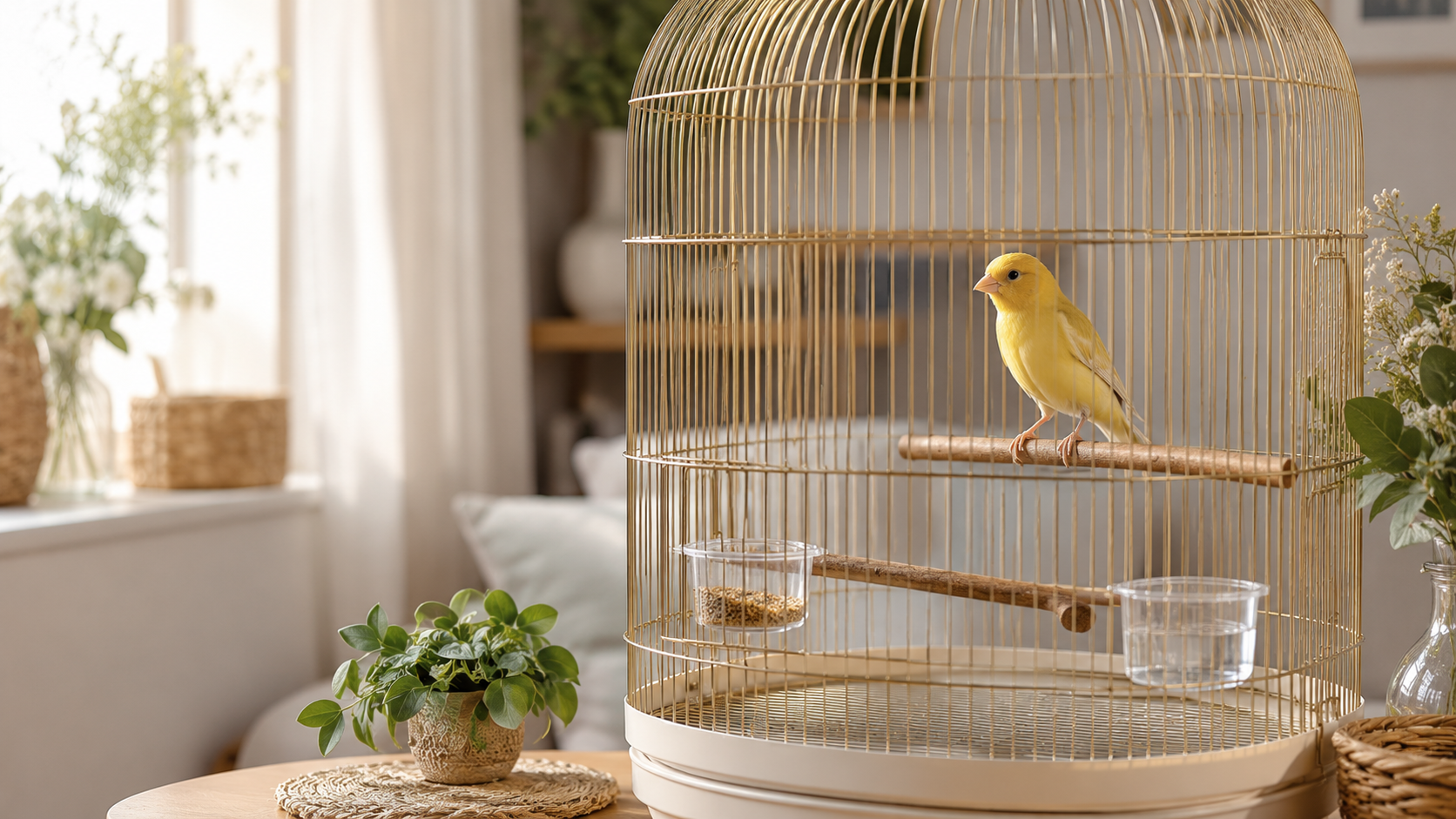
A useful canary cage should have:
- enough width for short flights;
- safe bar spacing;
- stable perches;
- food and water cups;
- easy-clean base;
- room for movement;
- secure doors;
- simple layout;
- good ventilation.
Avoid cages that are tall but narrow, crowded with accessories, or designed mainly for decoration.
A canary does not need a cage filled with clutter. It needs usable space, clean surfaces, and safe perches.
Where to Place the Cage
Cage placement affects daily comfort.
A good cage location should be:
- bright but not harsh;
- away from direct midday sun;
- away from drafts;
- away from kitchen fumes;
- away from smoke;
- away from loud speakers;
- away from heavy foot traffic;
- stable and secure;
- easy for you to clean daily.
The kitchen is usually not ideal because fumes, heat, and sudden temperature changes can be risky for birds.
A calm living room corner or quiet bright room often works better.
Place the cage where your canary can feel part of the home without being constantly disturbed.
Daily Canary Routine
A canary’s routine is simple, but it should be consistent.
Morning
Refresh food and water, check the cage, and allow natural light into the room. Observe whether the bird looks active and alert.
Daytime
Keep the environment calm, airy, and safe. Let the canary sing, move, rest, and observe the room.
Evening
Check food and water again, remove obvious mess, and keep the room calm as the bird settles.
Weekly
Clean perches and cups more thoroughly, wipe cage bars, replace liners, and review the cage layout for safety.
A canary does not need constant entertainment, but it does need clean surroundings and predictable care.
Interaction: Observation More Than Handling
This is where many beginners misunderstand canaries.
Canaries are not usually chosen for hands-on bonding. Some birds may become comfortable with a person nearby, but many prefer not to be touched or held.
A good relationship with a canary may look like:
- sitting near the cage calmly;
- speaking softly;
- keeping the routine predictable;
- avoiding sudden movements;
- watching behavior daily;
- respecting space;
- not forcing handling.
If you want a bird that enjoys stepping onto your hand, training sessions, and social interaction, a budgie or cockatiel may be a better fit.
If you enjoy a bird that adds song and life to a room without needing constant touch, a canary may be more suitable.
Noise Level: Pleasant Song, But Still Sound
A canary’s song can be beautiful.
It can also be noticeable.
Before choosing a canary, ask yourself whether you will still enjoy the sound every morning, not just during the first week.
Canary sound is often best for people who:
- like natural birdsong;
- do not need a silent home;
- enjoy morning activity;
- want a peaceful sound rather than loud talking;
- understand that individual birds vary.
A canary is usually not the right choice for someone who becomes annoyed by repeated bird sounds.
Food and Water Basics
A canary needs fresh water every day and a suitable bird diet.
Keep feeding simple and consistent. Use food intended for canaries or small songbirds, and ask an avian veterinarian about diet details if unsure.
Basic feeding care includes:
- fresh water daily;
- clean food cups;
- suitable seed or pellet mix for canaries;
- safe fresh greens when appropriate;
- removal of spoiled food;
- clean feeding areas;
- no random human snacks.
This article does not provide a medical diet plan. If your canary stops eating, loses weight, changes droppings, or looks unwell, speak with an avian veterinarian.
Common Canary Owner Mistakes
Buying a Canary Expecting Cuddles
A canary is usually better for song and observation than handling.
Choosing a Tiny Decorative Cage
The cage should support movement, not just look pretty.
Placing the Cage in the Kitchen
Kitchen fumes, heat, and drafts can be dangerous for birds.
Ignoring Daily Water and Cleaning
Small birds still need clean cups, fresh water, and cage hygiene.
Overcrowding the Cage
Too many accessories can reduce usable space.
Expecting Guaranteed Singing
Individual birds vary. Sex, age, comfort, season, and environment may affect song.
Handling Too Much Too Soon
Forcing interaction can create stress and reduce trust.
Simple Canary Setup Checklist
Before bringing home a canary, prepare:
- roomy cage with width for movement;
- natural perches of safe sizes;
- food cups;
- water cup or suitable drinker;
- cage liner;
- bath dish;
- safe small bird toys;
- cuttlebone or mineral option if recommended;
- quiet cage location;
- cleaning supplies kept away from the bird;
- access to an avian veterinarian.
Focus first on the cage, location, and routine.
Accessories come after the basics are correct.
Two Products That Actually Help
A canary does not need a room full of products.
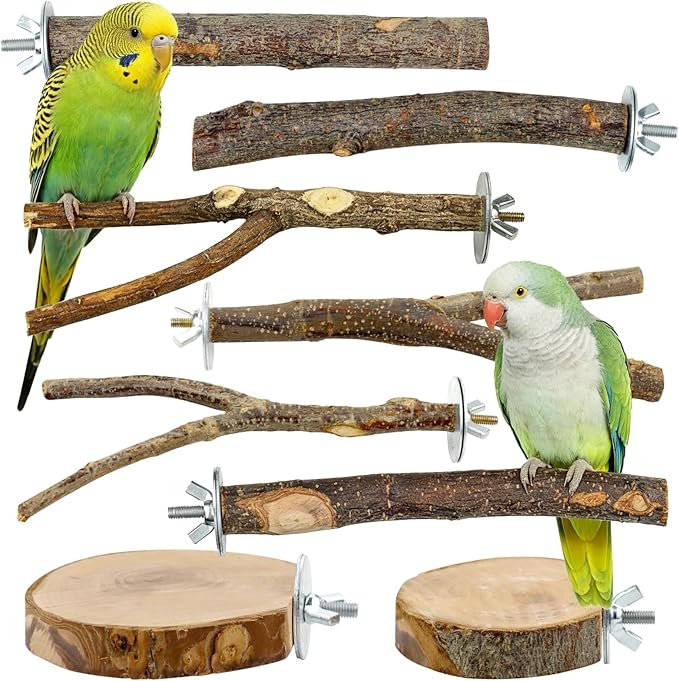
The two most useful upgrades are usually a properly sized cage and natural perches. These directly affect daily movement, comfort, and foot health.

Choose practical products over decorative items.
A beautiful cage is not useful if it is too narrow, hard to clean, or placed in the wrong room.
Final Decision: Who Should Choose a Canary?
A canary is a good choice for someone who wants a small singing bird, enjoys calm observation, and can provide a clean, bright, stable home environment.
It is not a good choice for someone who wants a cuddly, highly interactive bird or a pet for frequent handling.
Choose a canary if you want song, routine, beauty, and a peaceful daily presence.
Avoid choosing one if you expect it to behave like a tiny parrot.
The right owner will appreciate a canary for what it is: a bright, delicate songbird that can make a home feel more alive without needing constant hands-on attention.
Read Next
- Budgie Cage Setup for Beginners: What Your Pet Bird Really Needs
- Best Pets for Apartments
- Best Pets for First-Time Owners
- Cockatiel as a Pet: Is This Friendly Bird Right for You?
- Is a Hedgehog a Good Pet? What Beginners Should Know Before Getting One
- Ferret as a Pet: Is This Playful, Curious Animal Right for You?