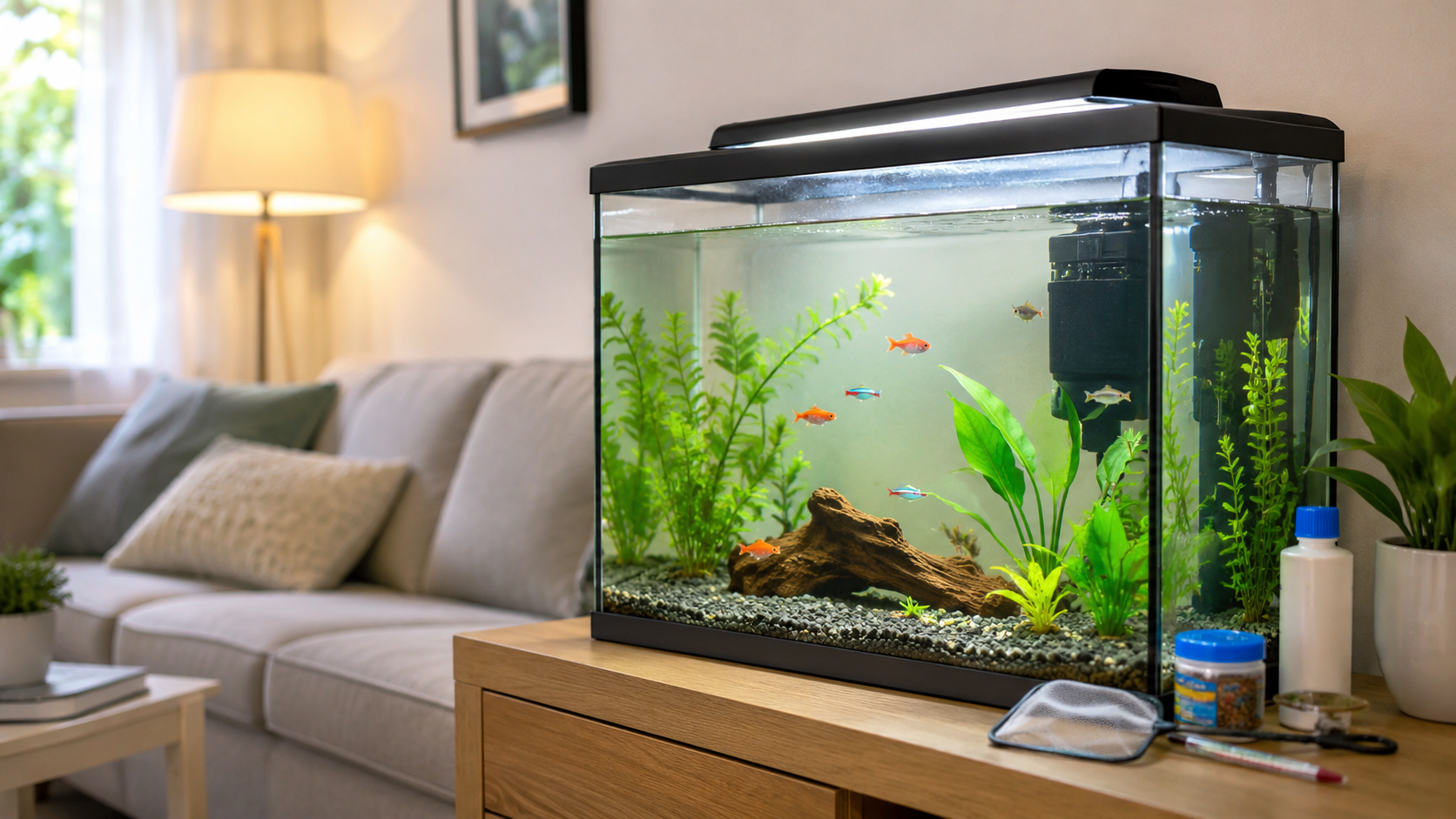
First Fish Tank Mistakes: What Beginners Should Avoid Before Setting Up an Aquarium
Setting up your first fish tank is exciting.
You choose the aquarium, imagine the fish swimming through the plants, pick the gravel, add the filter, fill the tank, and suddenly it feels like you are almost ready.
But a first aquarium can go wrong very quickly when beginners rush the setup.
Many new fish owners make the same mistakes: choosing a tank that is too small, adding fish too early, skipping water testing, overfeeding, overstocking, or cleaning the tank in a way that disrupts the balance.
The good news is that most first fish tank mistakes are easy to avoid if you slow down and plan the setup properly.
This guide explains what beginners should avoid before setting up an aquarium, what to do instead, and how to create a simple routine that helps your fish tank stay cleaner, calmer, and easier to manage.
The Pet Room shares general pet lifestyle and beginner care information. We do not provide veterinary or medical advice. For fish illness, unusual behavior, water emergencies, sudden deaths, or species-specific health concerns, contact an experienced aquarium professional or aquatic veterinarian.
Quick Checklist: What Beginners Should Do Before Adding Fish
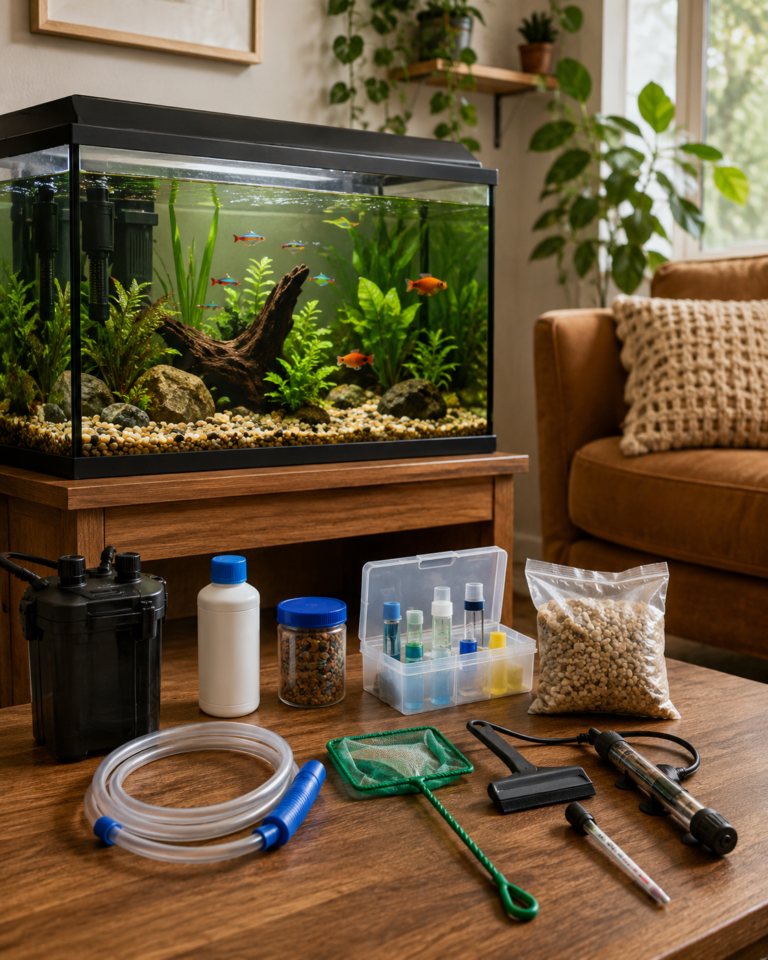
Before you bring fish home, make sure you have:
- the right tank size
- a working filter
- water conditioner
- aquarium test kit
- thermometer
- suitable heater if needed
- gravel or substrate
- safe decor or plants
- fish net
- beginner fish food
- a basic cleaning routine
- time to cycle the tank
- a plan for how many fish you can safely keep
A fish tank is not ready just because it has water in it.
A stable aquarium takes preparation, patience, and routine.
If you are still buying your first setup, you may also like this guide: Aquarium Supplies for Beginners: What You Really Need for Your First Fish Tank
Mistake 1: Choosing a Tank That Is Too Small
A small tank may seem easier for beginners.
It is cheaper, takes less space, and looks simple. But very small tanks can be harder to keep stable because water conditions can change quickly.
A larger beginner tank often gives you more room for error. It can be easier to manage temperature, filtration, water quality, and fish comfort.
A tiny bowl or tiny tank is usually not a good long-term setup for most fish.
Better Choice
Choose a tank size based on:
- the type of fish you want
- adult fish size
- swimming space
- filter size
- maintenance routine
- how many fish you plan to keep
- where the tank will safely sit in your home
Do not buy the smallest tank just because it is convenient.
Think about the fish first.
Mistake 2: Adding Fish Too Fast
This is one of the biggest first fish tank mistakes.
Many beginners set up the aquarium, fill it with water, turn on the filter, and add fish the same day.
That may look fine at first, but a new tank needs time to become stable. An aquarium is a small living environment. It needs helpful bacteria to develop so the tank can handle fish waste.
This process is often called cycling the tank.
Better Choice
Before adding fish:
- set up the tank
- run the filter
- condition the water
- monitor water quality
- learn the nitrogen cycle basics
- add fish slowly, not all at once
Patience matters more than speed.
A calm setup is better than a rushed one.
Mistake 3: Skipping Water Testing
Clear water does not always mean safe water.
A tank can look clean while still having water problems. Beginners often judge the tank by appearance only, but water quality needs to be checked.
An aquarium test kit can help you understand what is happening inside the tank.
Beginners Should Monitor
- ammonia
- nitrite
- nitrate
- pH
- temperature
You do not need to become an expert overnight, but you do need to understand that fish live in the water, so water quality affects everything.
Better Choice
Use a test kit regularly, especially:
- before adding fish
- after adding fish
- during the first weeks
- after major cleaning
- if fish behavior changes
- if water looks cloudy or unusual
Testing helps you catch problems before they become bigger.
Mistake 4: Overstocking the Tank
Adding too many fish is very tempting.
A colorful tank with lots of movement looks exciting, but too many fish can quickly make the aquarium harder to manage.
Overstocking can lead to:
- poor water quality
- more waste
- more stress
- aggression
- less swimming space
- harder maintenance
- faster algae or cloudiness problems
A peaceful tank needs balance.
Better Choice
Start with fewer fish than you think you need.
Research each species before buying. Some fish stay small. Others grow larger. Some need groups. Some prefer more swimming space. Some are not good tankmates.
Do not rely only on the pet store display tank. Fish in stores are often temporary, not long-term home setups.
Mistake 5: Picking Fish Before Researching Them
Beginners often choose fish because they look colorful or cute.
That is understandable, but fish have different needs.
Some need warmer water. Some prefer groups. Some are active swimmers. Some need more space. Some may nip fins. Some grow larger than expected.
Better Choice
Before buying fish, research:
- adult size
- water temperature needs
- group size
- temperament
- tank size
- feeding habits
- compatibility
- care difficulty
A fish that looks perfect in the store may not be right for your first aquarium.
Good beginner fish choices depend on your tank size, water setup, and experience level.
Mistake 6: Overfeeding
Overfeeding is very common.
New owners often worry that their fish are hungry, so they add more food than needed. Uneaten food sinks, breaks down, and can affect water quality.
Overfeeding can make the tank dirty faster and create more work.
Better Choice
Feed lightly and watch how much your fish actually eat.
General beginner rule:
- give small amounts
- remove obvious uneaten food
- avoid dumping food into the tank
- use the right food for the species
- do not feed just because the fish beg at the glass
Fish often act interested in food even when they do not need more.
A little control goes a long way.
Mistake 7: Skipping the Filter
A filter is not optional for most beginner aquariums.
The filter helps move water, collect debris, and support beneficial bacteria. Without proper filtration, the tank can become much harder to maintain.
Better Choice
Choose a filter suitable for:
- tank size
- fish type
- flow needs
- maintenance level
- beginner ease of use
Do not turn the filter off for long periods. The filter is part of the aquarium’s life support system.
If the flow is too strong for your fish, choose a better filter setup rather than removing filtration completely.
Mistake 8: Cleaning Everything Too Aggressively
Beginners sometimes think a fish tank needs to be scrubbed completely clean every time.
They may wash gravel, replace all filter media, empty the tank, clean decor harshly, and change too much water at once.
This can disrupt the tank’s balance.
Better Choice
Keep cleaning simple and consistent.
A normal routine may include:
- partial water changes
- gravel vacuuming
- wiping algae from glass
- rinsing filter parts carefully when needed
- removing debris
- checking equipment
Avoid deep-cleaning the entire aquarium all the time.
The goal is a stable tank, not a sterile tank.
Mistake 9: Using Tap Water Without Conditioning It
Tap water may contain chemicals that are not safe for fish.
Beginners sometimes fill the tank directly from the tap and add fish without using water conditioner.
Better Choice
Use a water conditioner made for aquariums whenever adding tap water to the tank.
This is a basic aquarium supply that beginners should have from the start.
Keep it near your aquarium supplies so you do not forget it during water changes.
Mistake 10: Ignoring Temperature
Some fish need stable warm water. Others may need cooler conditions.
Temperature changes can stress fish, and beginners may not realize how much the room temperature affects the tank.
Better Choice
Use a thermometer.
If you keep tropical fish, you may need an aquarium heater suitable for your tank size. Check that the temperature stays within the range needed for your fish.
Do not place the tank near:
- direct harsh sunlight
- heaters
- air conditioners
- drafty windows
- busy doors
- areas with big temperature swings
A stable location helps create a more stable tank.
Mistake 11: Putting the Tank in the Wrong Place
Aquarium placement matters.
A fish tank filled with water is heavy, so it needs a strong, level surface. It also needs a location that makes maintenance easy.
Avoid placing your first tank:
- in direct sunlight
- on weak furniture
- near loud speakers
- near heat sources
- where it gets bumped often
- where outlets are unsafe
- too far from cleaning access
Better Choice
Choose a place that is:
- stable
- level
- away from direct harsh sun
- close enough for maintenance
- safe from bumps
- easy to observe
- near power access but used safely
A good aquarium location makes daily care much easier.
Mistake 12: Buying Decor Without Thinking About Safety
Decor makes a tank look beautiful, but not all decor is useful or safe.
Sharp edges, peeling paint, unsuitable materials, or overcrowded decorations can create problems.
Better Choice
Choose aquarium-safe decor with:
- smooth edges
- stable placement
- enough swimming space
- easy cleaning
- no sharp plastic pieces
- no random household objects
Plants, rocks, driftwood, caves, and simple hiding spots can be useful when chosen carefully.
Decor should support the fish, not just fill the tank.
Fish Tank Setup: Do This Instead
Here is a simple beginner-friendly order.
| Step | What To Do | Why It Matters |
|---|---|---|
| 1 | Choose the right tank size | Gives fish more stable space |
| 2 | Add filter and equipment | Supports water movement and maintenance |
| 3 | Add substrate and decor | Creates structure and hiding spots |
| 4 | Fill and condition water | Makes tap water safer for aquarium use |
| 5 | Run the tank before fish | Helps the tank begin stabilizing |
| 6 | Test water | Shows what is happening inside the tank |
| 7 | Add fish slowly | Reduces sudden stress on the system |
| 8 | Build a routine | Keeps care predictable and manageable |
Best For / Avoid If
A Beginner Fish Tank Is Best For You If:
- you like calm home pets
- you enjoy routines
- you can be patient with setup
- you want a relaxing indoor aquarium
- you are willing to test water
- you can do regular maintenance
- you want to learn before buying fish
Avoid Starting a Fish Tank Right Now If:
- you want a no-maintenance pet
- you do not want to test water
- you plan to rush setup
- you want many fish immediately
- you cannot place the tank safely
- you do not have time for regular care
Fish tanks can be beautiful, but they are not decoration only.
They need routine.
Beginner Product Suggestions
Useful products for this article include:
- beginner aquarium kit
- aquarium filter
- water conditioner
- aquarium test kit
- thermometer
- aquarium heater
- gravel vacuum
- fish net
- aquarium-safe decor
- live or silk plants
- fish food
- algae scraper
- water change bucket
- aquarium stand
Simple First Fish Tank Routine
A routine makes aquarium care easier.
Daily
- check fish behavior
- check temperature
- feed lightly
- make sure filter is running
- look for uneaten food
Weekly
- test water
- wipe glass if needed
- check equipment
- do a partial water change if needed
- remove visible debris
Monthly
- inspect decor and plants
- check filter condition
- review stocking level
- replace worn supplies
- adjust routine if needed
A fish tank becomes easier when you stop guessing and start following a routine.
Final Thoughts: Patience Builds a Better Aquarium
Most first fish tank mistakes come from rushing.
Rushing the setup. Adding fish too soon. Buying too many fish. Feeding too much. Cleaning too aggressively. Skipping water testing.
A better aquarium starts with patience.
Choose the right tank, use a filter, condition the water, test regularly, add fish slowly, and keep the routine simple.
Your first fish tank does not need to be perfect on day one.
It needs to be stable, safe, and thoughtfully planned.
Clear water does not always mean safe water. A beautiful tank is not just about how it looks. It is about balance, space, routine, and care.
Start slow, learn as you go, and your aquarium will be much easier to enjoy.
Read Next
- Aquarium Supplies for Beginners: What You Really Need for Your First Fish Tank
- Best Pets for First-Time Owners
- Best Pets for Apartments
- Budgie Cage Setup for Beginners: What Your Pet Bird Really Needs
- Best Cat Trees for Indoor Cats: How to Choose the Right One for Your Home
- Best Hamster Toys: Keep Your Hamster Busy and Happy