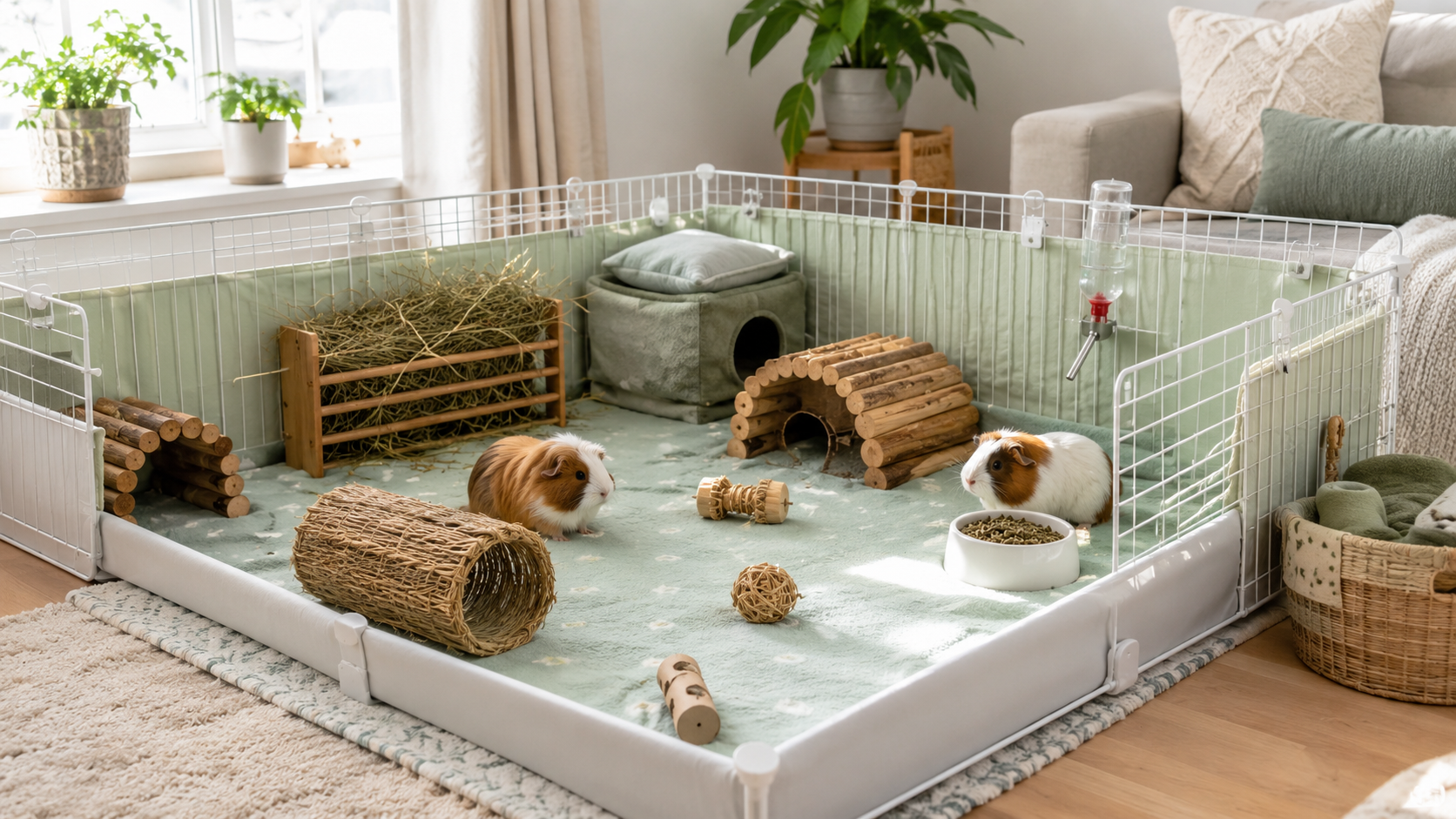
Guinea Pig Cage Setup for Beginners: What Your Pet Really Needs
A guinea pig is small, but its cage should not feel small.
Many beginners imagine guinea pigs as simple cage pets that only need a small enclosure, food, water, and bedding. In reality, guinea pigs need floor space, safe hiding places, hay available every day, soft flooring, fresh water, regular cleaning, and a calm setup that helps them feel secure.
A good cage setup can make daily care easier for you and daily life much better for your guinea pig.
This beginner guide explains what a guinea pig cage really needs, how to arrange the space, what mistakes to avoid, and how to build a simple routine that keeps the habitat cleaner, calmer, and more comfortable.
The Pet Room shares general pet lifestyle information. We do not provide veterinary or medical advice. For appetite changes, weight loss, breathing issues, dental concerns, unusual behavior, injuries, or health questions, always contact a qualified veterinarian.
Quick Guinea Pig Cage Setup Checklist
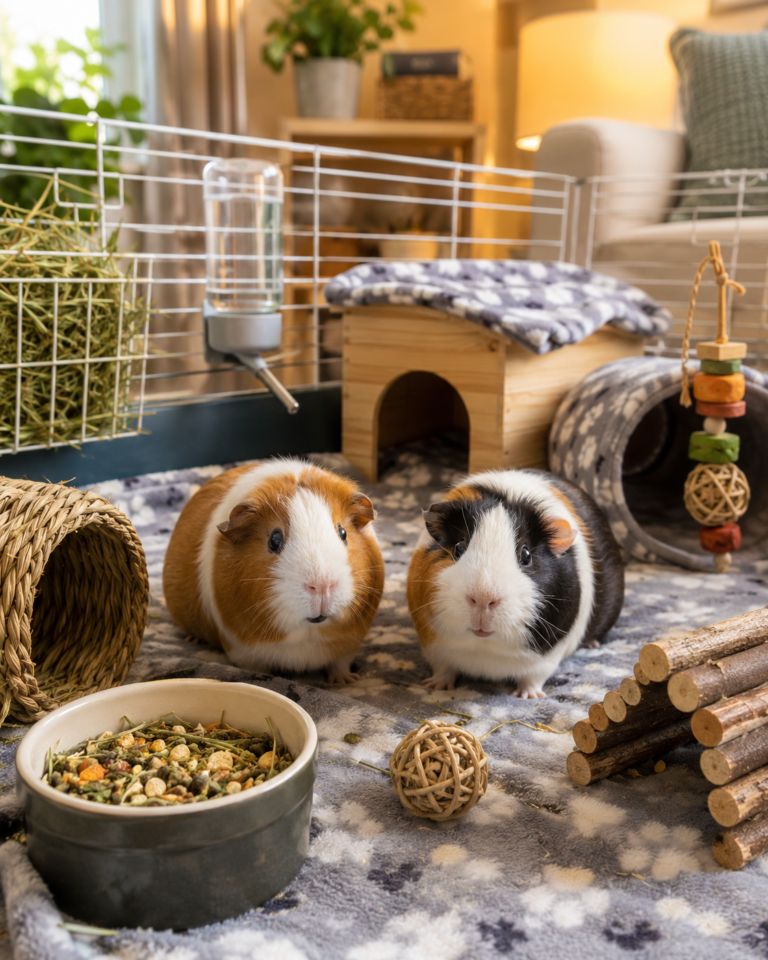
A beginner-friendly guinea pig cage should include:
- spacious enclosure
- soft bedding or fleece liner
- hay rack or hay area
- fresh water bottle or bowl
- pellet bowl
- at least one hideout per guinea pig
- chew toys
- tunnels
- easy-clean flooring
- safe enrichment
- daily spot cleaning
- weekly deeper cleaning
The most important idea is simple: guinea pigs need room to move, hide, eat, rest, and explore.
If you already have guinea pigs and want more enrichment ideas, read this too: Best Guinea Pig Toys: Keep Your Guinea Pig Busy and Happy
Why Cage Setup Matters
A guinea pig cage is not just a container.
It is the space where your pet spends most of its day. A poor setup can feel cramped, messy, boring, or stressful. A better setup gives your guinea pig places to move, hide, eat hay, drink water, rest, and feel safe.
A good cage setup can help with:
- easier cleaning
- better daily routine
- less mess
- more natural movement
- more confidence
- safer hiding spaces
- better enrichment
- calmer interaction
- a more organized pet area
Guinea pigs are prey animals, so they often feel safer when they have hiding places and predictable routines.
A clean, roomy, well-arranged cage is one of the best things a beginner can provide.
Start With Space First
Space is the biggest cage setup mistake beginners make.
Guinea pigs need floor space. Tall levels do not replace a roomy ground area, because guinea pigs are not climbing pets like some other animals.
They need space to walk, run short bursts, explore, turn around, and move between different areas of the cage.
A cage that looks “big enough” in a store may still be too small for daily comfort.
Why Floor Space Matters
More floor space gives your guinea pig room for:
- hay area
- hideouts
- food and water
- toys
- tunnels
- resting space
- movement
- play
- easier cleaning
A cramped cage gets messy faster and gives your guinea pig fewer choices.
Bigger is usually better when it comes to guinea pig housing.
How Many Guinea Pigs Should You Keep?
Guinea pigs are social animals, and many do best with a compatible companion.
This does not mean you should place random guinea pigs together without planning. Introductions, sexing, compatibility, and space matter. But beginners should understand that guinea pigs are not usually meant to live isolated, lonely lives with no social contact.
If you plan to keep more than one guinea pig, you need more space, more hideouts, more food access, and a layout that prevents one guinea pig from blocking the other.
A good rule for setup planning is:
- provide enough room for each guinea pig
- include more than one hideout
- offer multiple food and water access points if needed
- avoid narrow dead-end spaces
- watch for chasing, bullying, or food guarding
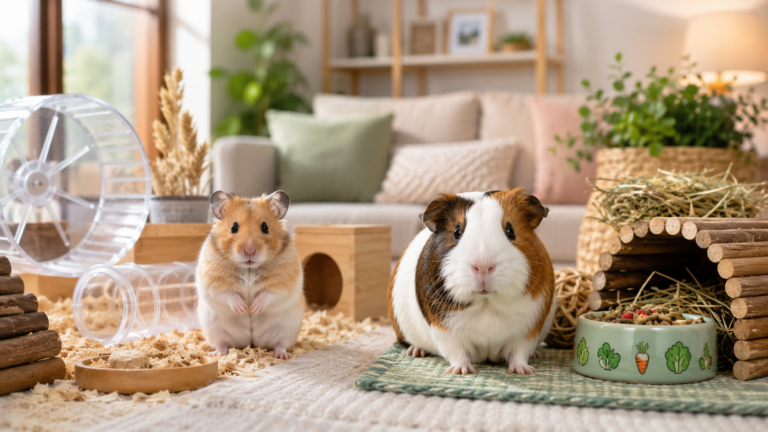
For help choosing between small pets, you may also like: Hamster vs Guinea Pig: Which Small Pet Is Right for You?
Bedding or Fleece: Which Is Better?
Guinea pigs need soft, absorbent flooring.
Their feet are sensitive, so hard wire floors or rough surfaces are not a good choice. The cage floor should be comfortable, dry, and easy to clean.
Two common options are fleece liners and disposable bedding.
Fleece Liners
Fleece liners can be soft, reusable, and tidy-looking. They work best when used with an absorbent layer underneath.
Pros:
- soft on feet
- reusable
- cozy appearance
- can be easier to spot clean
- less loose bedding around the room
Cons:
- needs regular washing
- must stay dry
- requires laundry routine
- may smell if not cleaned often enough
Disposable Bedding
Paper-based bedding or safe small-pet bedding can be easier for some beginners.
Pros:
- absorbent
- simple to replace
- good for burrowing areas
- no laundry needed
Cons:
- ongoing cost
- can scatter outside the cage
- needs frequent changing
- some types may be dusty
Avoid scented, dusty, or unsafe bedding. Strong smells are not a substitute for cleaning.
Hay Area: The Heart of the Cage
Hay is one of the most important parts of a guinea pig setup.
A guinea pig should have hay available every day. A hay rack or dedicated hay area helps keep hay cleaner and easier to manage.
A good hay setup should be:
- easy to reach
- kept dry
- away from water spills
- not too high
- large enough for daily use
- easy for you to refill
- placed where mess is manageable
Many guinea pigs spend a lot of time around the hay area, so plan this part of the cage carefully.
A messy hay area is normal, but a wet, dirty hay area should be cleaned quickly.
Hideouts: Every Guinea Pig Needs Safe Places
Hideouts are not optional.
Guinea pigs need places to hide, rest, and feel protected. Because they can be nervous, a cage with no hideouts can feel stressful.
A good setup should include at least one hideout per guinea pig.
Good hideout options include:
- wooden hideout
- fleece hidey
- tunnel
- small pet house
- cardboard hideout
- soft cave
- open-ended shelter
Open-ended tunnels can be especially useful because they reduce the chance of one guinea pig trapping another inside.
Avoid a cage with only one tiny hideout if you have multiple guinea pigs.
Food and Water Setup
A guinea pig feeding area should be simple and easy to clean.
You will usually need:
- pellet bowl
- fresh water bottle or bowl
- hay rack or hay area
- space for fresh vegetables
- clean feeding surface
Use a heavy bowl that is harder to tip over.
Water bottles can help keep water cleaner, but some guinea pigs may also use bowls. If using a bowl, choose a heavy one and place it where bedding will not be pushed into it constantly.
Check water every day.
Food and water areas should not be buried under hay, bedding, or toys.
Chew Toys and Enrichment
Guinea pigs need things to do.
A bare cage can become boring. But an overcrowded cage can reduce movement space. The goal is to add enrichment without making the habitat cluttered.
Good enrichment ideas include:
- chew toys
- tunnels
- hay toys
- willow balls
- cardboard tubes
- forage mats
- safe wooden bridges
- paper bags with hay
- rotating toys
Rotate toys instead of filling the cage with everything at once.
This keeps the cage interesting and easier to clean.
For more ideas, read: Best Guinea Pig Toys: Keep Your Guinea Pig Busy and Happy
Cage Layout: How to Arrange Everything
A good guinea pig cage should feel like a small home with different zones.
Try to create:
- hay zone
- food and water area
- hideout area
- open movement area
- enrichment area
- easy-clean spot
Do not place everything in one corner.
Spread the essentials out so your guinea pig moves naturally through the cage. This also helps prevent one area from becoming too crowded or messy.
Beginner Layout Example
One side of the cage can have the hay rack and feeding area.
The middle can stay more open for movement.
The opposite side can include hideouts, tunnels, and enrichment toys.
Keep water easy to reach and check daily.
Keep hay dry and away from water leaks.
Daily Guinea Pig Cage Care Routine
A simple routine makes cage care much easier.
Morning
- refresh hay
- check water
- check food bowl
- remove obvious mess
- make sure hideouts are clean and dry
Midday
- check water level
- tidy scattered hay if needed
- make sure bedding or fleece is dry
- observe your guinea pig’s normal behavior
Evening
- top up hay
- refresh food as needed
- spot clean damp areas
- reset tunnels or toys
- offer calm interaction
Weekly
- wash bowls
- clean water bottle or bowl
- change bedding or wash liners
- wipe cage base
- refresh toys
- check hideouts
- clean hay area more deeply
Small daily cleaning prevents the cage from becoming overwhelming.
Common Guinea Pig Cage Setup Mistakes
Avoid these beginner mistakes:
- choosing a cage that is too small
- using hard wire flooring
- providing no hideout
- keeping hay in a messy wet area
- not cleaning damp bedding
- placing food and water where they get dirty quickly
- overcrowding the cage with toys
- using unsafe or scented bedding
- keeping only one hideout for multiple guinea pigs
- forgetting daily hay
- making the cage hard to clean
- assuming small pet means small space
A good setup should be roomy, soft, clean, and practical.
Guinea Pig Cage Setup Comparison Table
| Cage Feature | Better Choice | Avoid |
|---|---|---|
| Cage size | Spacious floor area | Tiny cage |
| Flooring | Fleece liner or safe bedding | Wire floor |
| Hay | Clean hay rack or hay area | Wet hay pile |
| Hideouts | At least one per guinea pig | No hiding place |
| Water | Fresh daily water | Empty or dirty bottle |
| Food | Heavy bowl, clean area | Tipped bowl in bedding |
| Toys | Rotated chew toys and tunnels | Overcrowded cage |
| Cleaning | Daily spot clean | Waiting until it smells |
Best For / Avoid If
A Guinea Pig May Be Best For You If:
- you want a gentle small pet
- you can provide a roomy setup
- you enjoy daily routine
- you can clean regularly
- you like social small pets
- you have space for a larger cage
- you want a pet to observe and interact with calmly
A Guinea Pig May Not Be Ideal If:
- you only have space for a tiny cage
- you want a very low-maintenance pet
- you dislike daily cleaning
- you cannot provide hay every day
- you want a pet that needs very little attention
- you cannot manage bedding or fleece laundry
- you do not have space for proper housing
Guinea pigs are sweet pets, but they need more housing space and routine than many beginners expect.
Apartment Fit: Can Guinea Pigs Live in Small Homes?
Guinea pigs can live in apartments, but only if you can provide enough cage space.
The challenge is not whether the home is an apartment. The challenge is whether the cage has enough floor space and whether you can keep the area clean, dry, and organized.
Apartment-friendly tips:
- use a C&C-style cage or roomy enclosure
- place it in a calm area
- use washable liners or easy-clean bedding
- keep hay in a rack
- store supplies nearby
- spot clean daily
- avoid blocking walkways
- keep the cage away from loud appliances
If your space is extremely limited, a guinea pig may not be the easiest small pet choice.
For more ideas, read: Best Pets for Apartments
Product Suggestions for Guinea Pig Cage Setup
Useful product ideas for this article:
- spacious guinea pig cage
- C&C cage panels
- fleece cage liners
- paper-based bedding
- hay rack
- wooden hideout
- fleece hidey
- tunnel
- heavy ceramic food bowl
- water bottle
- water bowl
- chew toys
- willow balls
- forage mat
- small pet cleaning scoop
- cage-safe cleaning spray
- storage bin for hay and bedding
Real-Life Decision Help: What Should You Buy First?
If you are setting up a guinea pig cage from zero, start with the essentials.
Priority order:
- spacious enclosure
- safe bedding or fleece liner
- hay rack or hay area
- hideouts
- water bottle or bowl
- pellet bowl
- chew toys
- tunnel
- cleaning supplies
- storage for hay and bedding
Do not start with decorations first.
Start with space, comfort, cleanliness, and daily function.
A beautiful cage is not useful if it is too small, hard to clean, or missing basic needs.
Final Thoughts: A Happy Guinea Pig Starts With a Better Cage
A guinea pig may be small, but its home should be roomy, clean, soft, and enriching.
The best beginner cage setup includes enough floor space, safe bedding or fleece, daily hay, fresh water, a food bowl, hideouts, chew toys, tunnels, and a routine you can maintain.
Avoid tiny cages, hard floors, damp bedding, messy hay areas, and setups with no hiding places.
A good cage makes daily care easier and helps your guinea pig feel safer and more comfortable.
Start with the basics, keep the layout simple, and build a routine that works every day.
A happier guinea pig begins with a home that actually fits its needs.
Read Next
- Best Guinea Pig Toys: Keep Your Guinea Pig Busy and Happy
- Hamster vs Guinea Pig: Which Small Pet Is Right for You?
- Hamster vs Rabbit: Which Small Pet Fits Your Home Better?
- Small Pets for Kids: Which Pets Are Easier to Care For?
- Best Pets for Apartments
- Is a Hedgehog a Good Pet? What Beginners Should Know Before Getting One
One Comment