Best No-Pull Dog Harnesses for Walking
The best no-pull dog harnesses for walking can turn a stressful daily tug-of-war into a calm, enjoyable routine for both you and your dog.
A dog that pulls hard on the leash is not being stubborn on purpose. In most cases, it simply has not learned loose-leash walking yet, and the wrong gear can make training harder instead of easier. A well-designed no-pull harness gives you better control without choking or straining your dog’s neck, which makes daily walks safer and far less frustrating.
If you have a large, high-energy breed like a Labrador or a German Shepherd, the right harness matters even more. Our guides on Labrador Retriever as a Pet and German Shepherd as a Pet both cover just how much daily exercise these breeds need, and the right harness makes that exercise far easier to manage.
The Pet Room shares general pet lifestyle information. We do not provide veterinary or medical advice. For behavior concerns tied to anxiety, reactivity, or aggression, speak with a qualified trainer or veterinarian.
Quick Answer: What Makes a Good No-Pull Harness?
The best no-pull dog harnesses for walking generally share a few key features:
- a front-clip leash attachment, which redirects a pulling dog back toward you instead of forward
- padded, breathable straps that will not chafe or rub
- an adjustable, secure fit across the chest and body
- no pressure on the neck or throat, unlike a standard collar
A harness alone will not fully train a dog out of pulling, but the right design makes walks far more manageable while training is still in progress.
Why a Harness Beats a Collar for Pulling
A standard collar puts all the pulling pressure directly on a dog’s neck and throat, which can lead to choking, coughing, or even tracheal strain in dogs that pull hard or frequently.
A properly fitted harness distributes pressure across the chest and body instead, making walks safer and more comfortable, especially for strong or enthusiastic breeds that have not yet mastered loose-leash walking.
Front-Clip vs Back-Clip: Which Should You Choose?
Leash attachment placement makes a real difference in how much control you have.
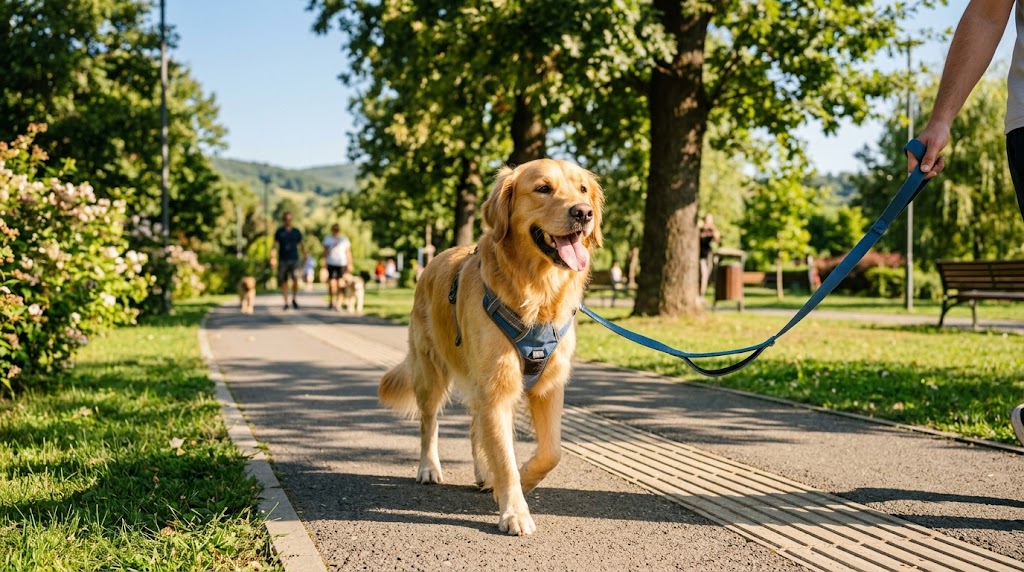
- Front-clip harnesses: the leash attaches at the chest, which gently redirects a pulling dog sideways, making it harder to pull forward with full force. Generally the better choice for dogs still learning not to pull.
- Back-clip harnesses: the leash attaches at the top of the back, which is more comfortable for dogs that already walk well, but offers less control over a strong puller.
- Dual-clip harnesses: offer both options, giving you flexibility to switch between training walks and relaxed walks.
Getting the Right Fit
Fit matters just as much as harness design.
- measure your dog’s chest girth before ordering, since sizing varies by brand
- you should be able to fit two fingers comfortably under any strap
- check for rubbing or chafing after the first few walks
- readjust as needed, especially with growing puppies
A harness that is too loose can allow a dog to back out of it, while one that is too tight can cause discomfort or restrict movement.
Our Picks: Best No-Pull Dog Harnesses
1. Best Overall: PetSafe Easy Walk No-Pull Harness
2. Best for Large Breeds: rabbitgoo No-Pull Harness
3. Best Budget Pick: ShawnCo Essential No-Pull Harness
4. Best With Included Leash: tobeDRI No-Pull Harness and Leash Set
5. Best Premium Pick: 2 Hounds Design Freedom No-Pull Harness
How to Introduce a Harness to Your Dog
- let your dog sniff and investigate the harness before putting it on
- reward calm behavior with treats during the first few fittings
- start with short indoor sessions before heading outside
- keep initial walks short and positive
A dog that has a negative first experience with a new harness may resist wearing it later, so a slow, positive introduction is worth the extra few minutes.
Common Mistakes When Choosing a Harness
- guessing at size instead of measuring chest girth
- choosing a back-clip only harness for a dog that pulls hard
- ignoring signs of chafing or discomfort
- assuming any harness will fully stop pulling without training
- not adjusting the fit as a puppy grows
Final Checklist Before You Buy
- ☐ Front-clip or dual-clip design for better pulling control
- ☐ Padded, breathable straps
- ☐ Correct size based on measured chest girth
- ☐ Adjustable fit with room to grow if needed
- ☐ No pressure on the neck or throat
Final Verdict
The right no-pull harness will not replace training, but it makes daily walks safer, more comfortable, and far less of a struggle while your dog learns proper leash manners. A front-clip design with a secure, well-measured fit is the best starting point for most dogs.
Read Next
- Labrador Retriever as a Pet: Is This Family Dog Right for You?
- German Shepherd as a Pet: Is This Loyal Dog Right for You?
- Best Dog Toys for Bored Dogs
This post may contain affiliate links. As an Amazon Associate, we earn from qualifying purchases at no extra cost to you.